Field Notes from the Susquehanna Ledges
In this edition we explore Pennsylvania’s calcareous ridges — steep, exposed summits where siltstone, sandstone, and conglomerate largely dictate the vegetation. These ledges hold prairie remnants, drought‑adapted shrubs, and cliff‑edge gardens that persist only where extreme geology keeps the forest at bay.
Notes from the Ledges
Along the cliffs and summits of Northeastern Pennsylvania, the bedrock largely dictates the canopy. Where the skeletal soils, exposed stone, and intense sun exclude the typical forest matrix, nature builds the greatest gardens. These are places where specialized geology preserves living relics, and a well timed trip to the ledges reveals an entirely different side of Pennsylvania’s flora.
To start, let's go to the upper Susquehanna river, along the Trimmers Rock formation to a circumneutral-to-acidic cliff plant community.
I first arrived in spring and was greeted by what looked like a well manicured garden, sculpted by fast draining calcareous siltstone, mudstone, and baking sun. Packera obovata (ragworts), Aquilegia canadensis (columbines), Phlox subulata (moss phlox), and Asclepias quadrifolia (four-leaved milkweed), were in full bloom, painting the upper slope of the cliff and open woods in pink, white, yellow and red.
The trees here are stunted by drought and gnarled by winds, just the way the smaller flowering plants "like" it. Hickories, chestnut oak, Virginia pine, and serviceberry make up the canopy now but I can imagine at one time American chestnut and ash held space in the overstory, evidenced by the saplings and root shoots that still appear scattered across the ridge.
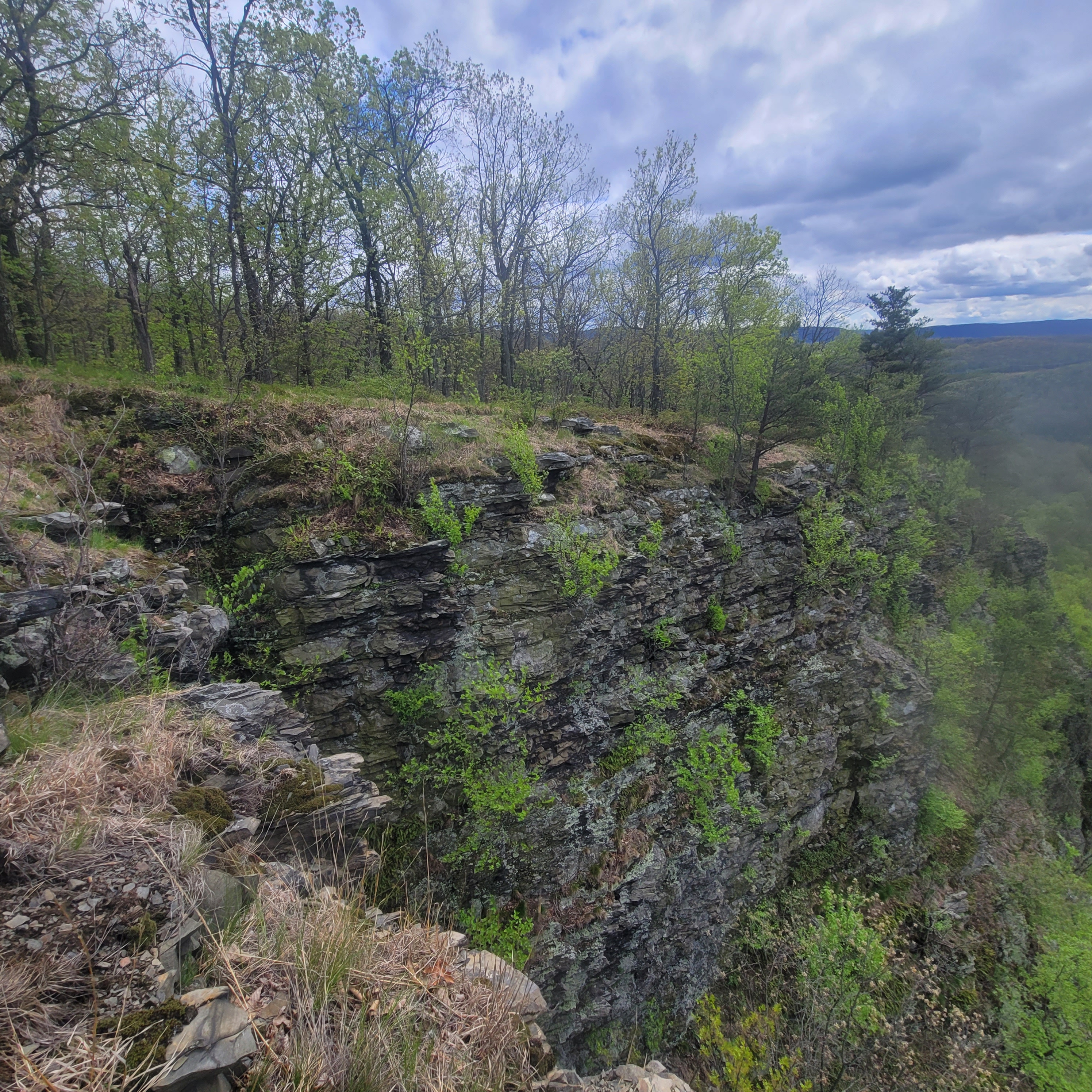
Circumneutral to acidic cliff
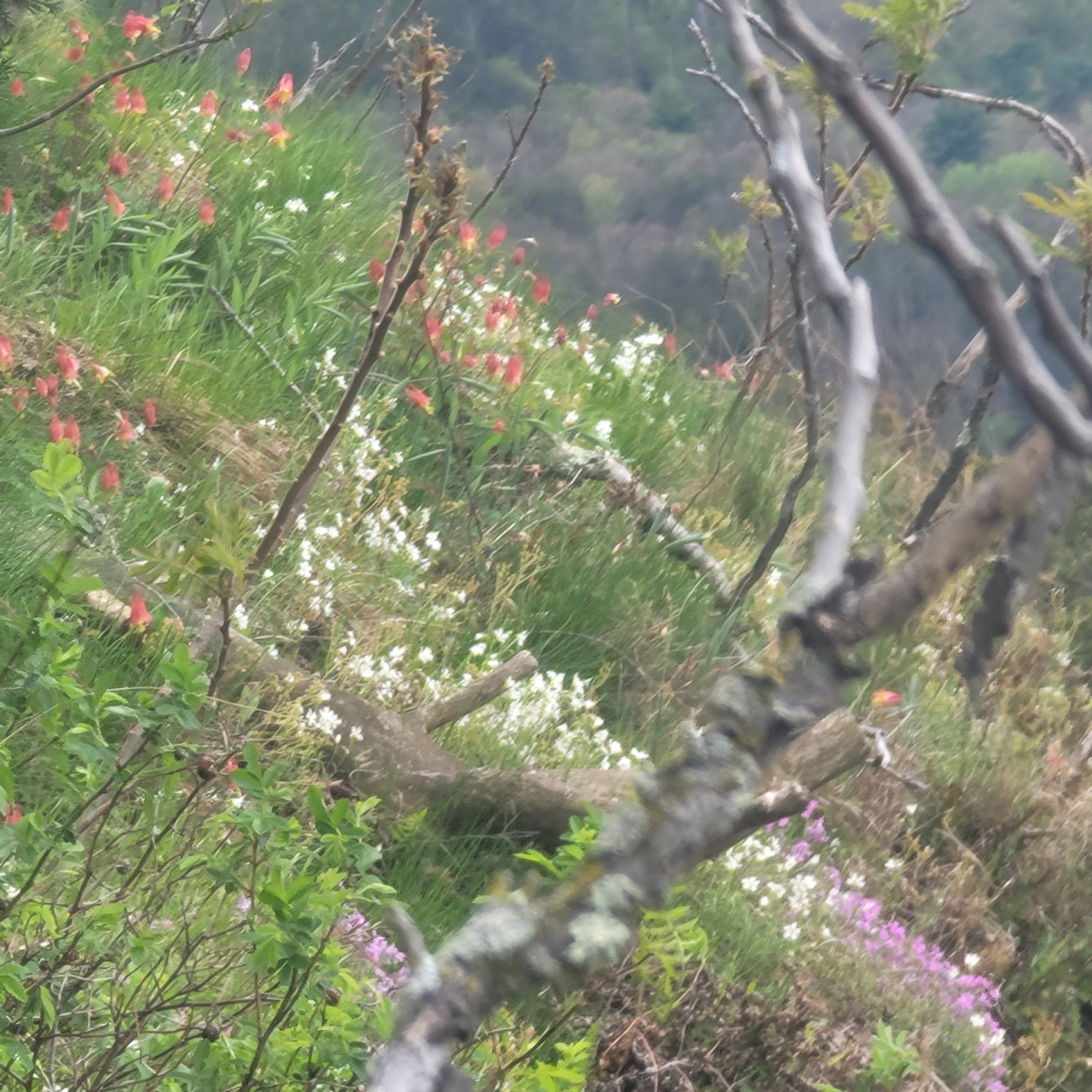
Cliffs in bloom
Next we go above the conglomerate pitch pine barrens and away from the river to a section of the Mauch Chunk formation on greyish calcareous sandstone, home to an Appalachian circumneutral rocky summit plant community.
This habitat really resembles a Midwest tallgrass prairie in its higher quality remnants. Indian grass, big and little bluestems create a mosaic of habitats alongside various shrubs and stunted trees over just a fifty yard wide stretch of rocky summit on this NEPA outcrop.
In spring you can find almost a dozen species of forbs hidden among the thatch and woodland edges — Packera, Aquilegia, Lupinus and Phlox, just to name a few.
Among the diverse woody plants, we find scattered throughout the summit Prunus susquehanae (sand cherry), Amelanchier stolonifera (serviceberry), Quercus prinoides (dwarf chinkapin oak), Viburnum rafinesqueanum (downy arrowwood), Rhus aromatica (fragrant sumac), and multiple hawthorns. All of these species are drought- and fire-adapted and thrive in these prolonged early successional habitats.
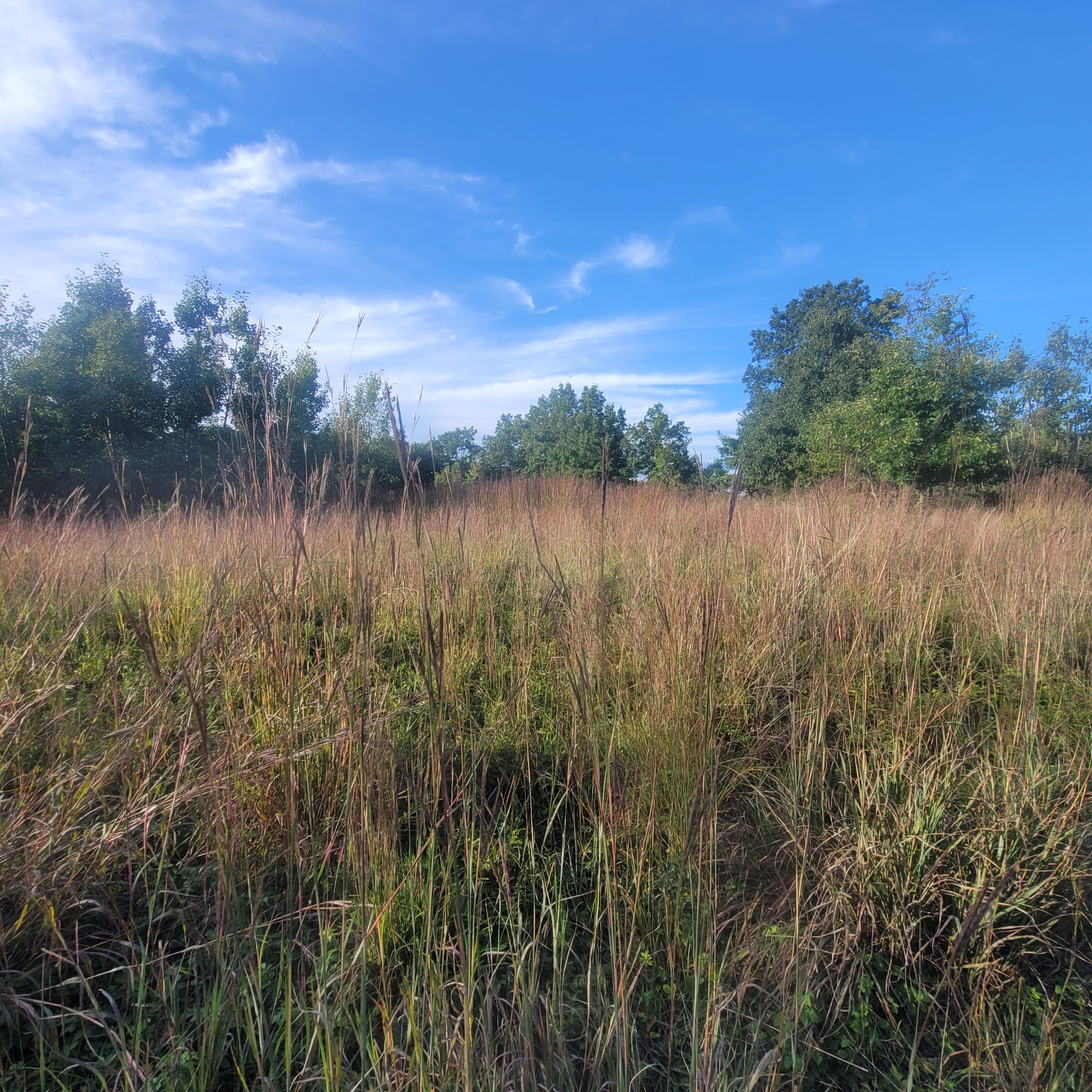
Big bluestem grassland
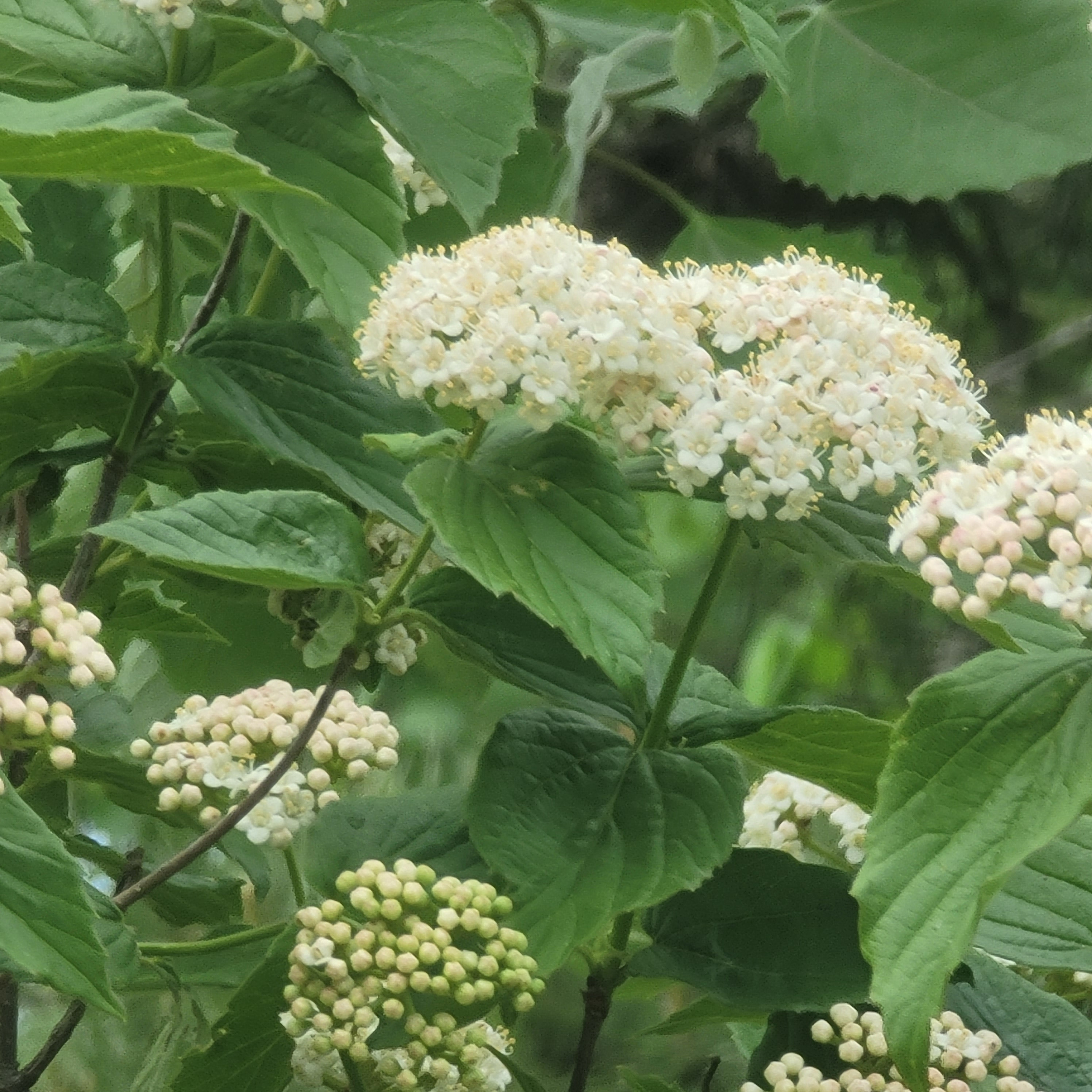
Downy arrowwood
Summer here gives way to oppressive sun, but still, life persists. Multiple Spiranthes species, Heuchera, Lilium, and Rosa feed the summer pollinators before fall gives way to a dizzying array of the aster family.
Arguably the most interesting insect to inhabit this space isn't a pollinator at all, but the Allegany mound ant (Formica exsectoides), which creates huge, bald, sandy mounds throughout the grassland. Surprisingly, to some extent they help reduce woody plant encroachment on the grasslands. Because they don't want shade over their mounds, they will girdle young trees and spray formic acid in the wounds in an effort to maintain their meadow.
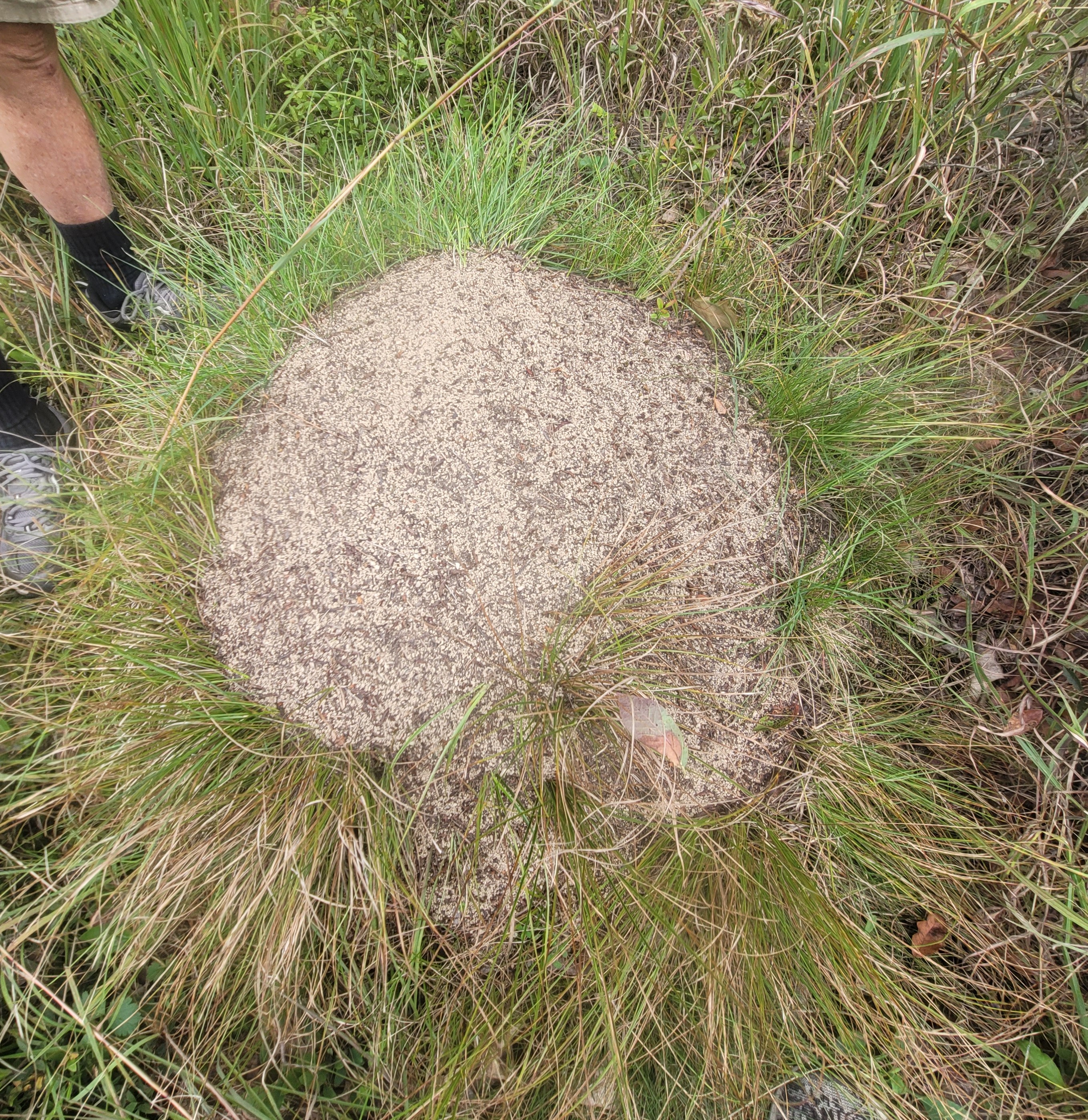
Allegany mound ant
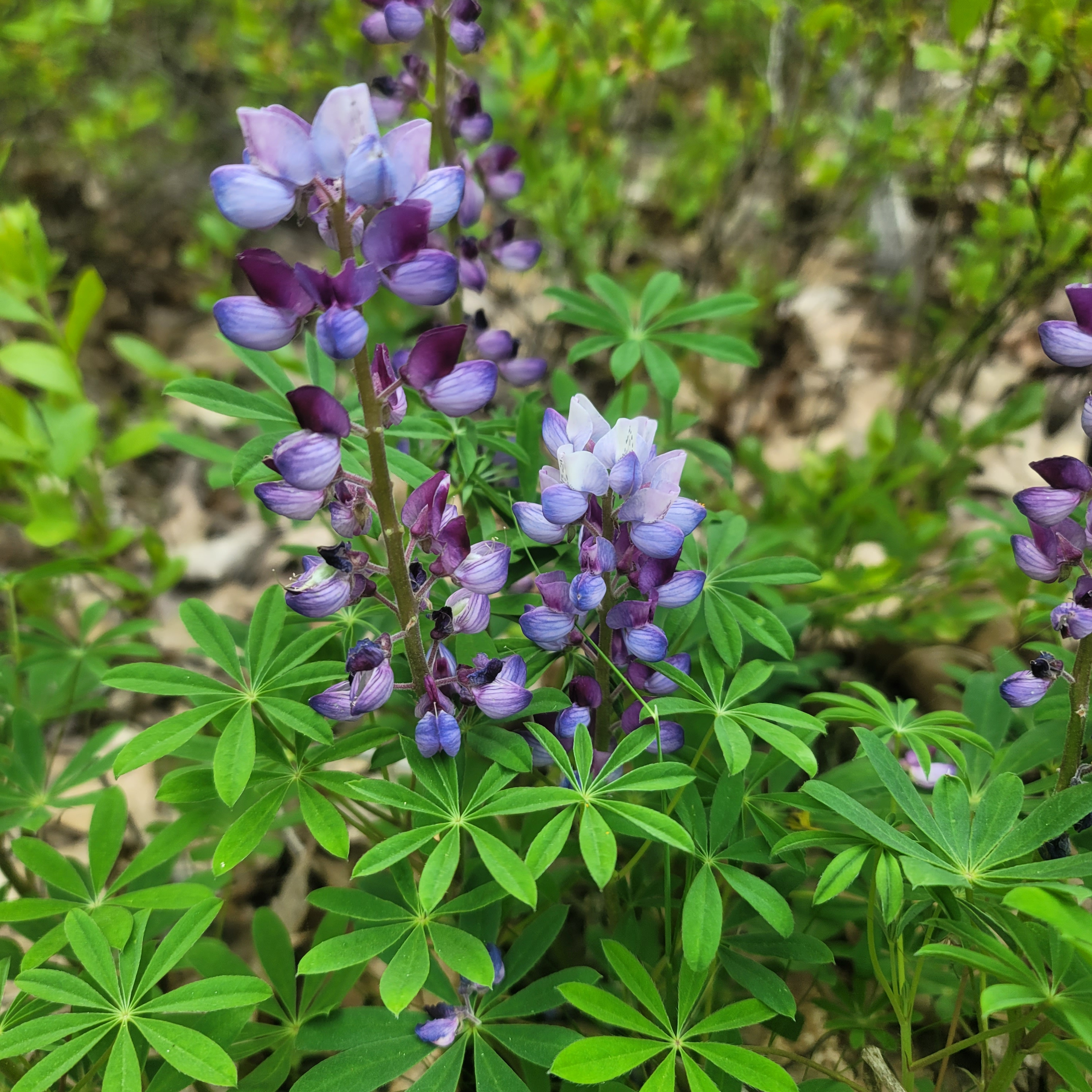
Lupinus perennis
This habitat is likely a living relic of the Hypsithermal interval, a warm, dry period 8,000-5,000 years ago when our state hosted larger portions of prairie/grassland in Pennsylvania. Today, these habitats are reduced to the most extreme geology or maintained through prescribed disturbance.
Lastly, we're staying on the Mauch Chunk formation, shifting towards its red sandstone members along the Susquehanna to explore a Northern Appalachian Calcareous Cliff Natural Community. After a true march up almost 900 ft of elevation in just a mile of deer trails, you leave the tall oak canopy and enter the summit complex, dominated by little and big bluestems, mountain mints, many Lespedeza species, and Eupatorium sessilefolium (upland boneset), with a sprinkling of hickory, birch, and oak, creating a picturesque savanna.
Lespedeza stuvei, a long state-extirpated species lives here, hybridized with L. violacea to create a very hairy offspring (known as L. x neglecta) with a vigor best suited for this drought-prone environment. Ionactis linariifolia (flax-leaved aster), Asclepias tuberosa (butterfly milkweed), blankets of Tephrosia virginiana, and over a dozen more forbs form one of the greatest rock gardens I've seen in all of Penn's woods along the cliff's edge and lower ledges.
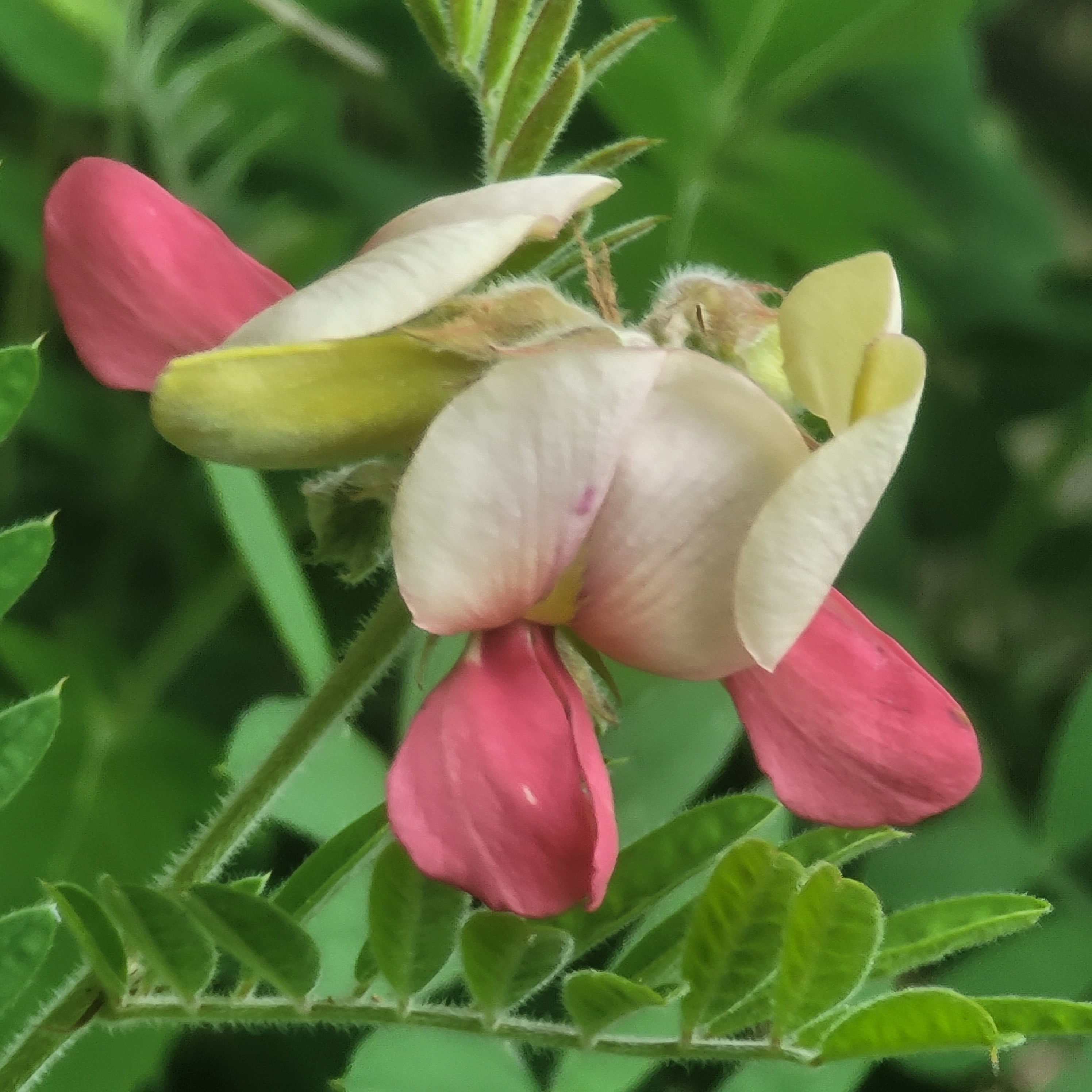
Tephrosia virginiana
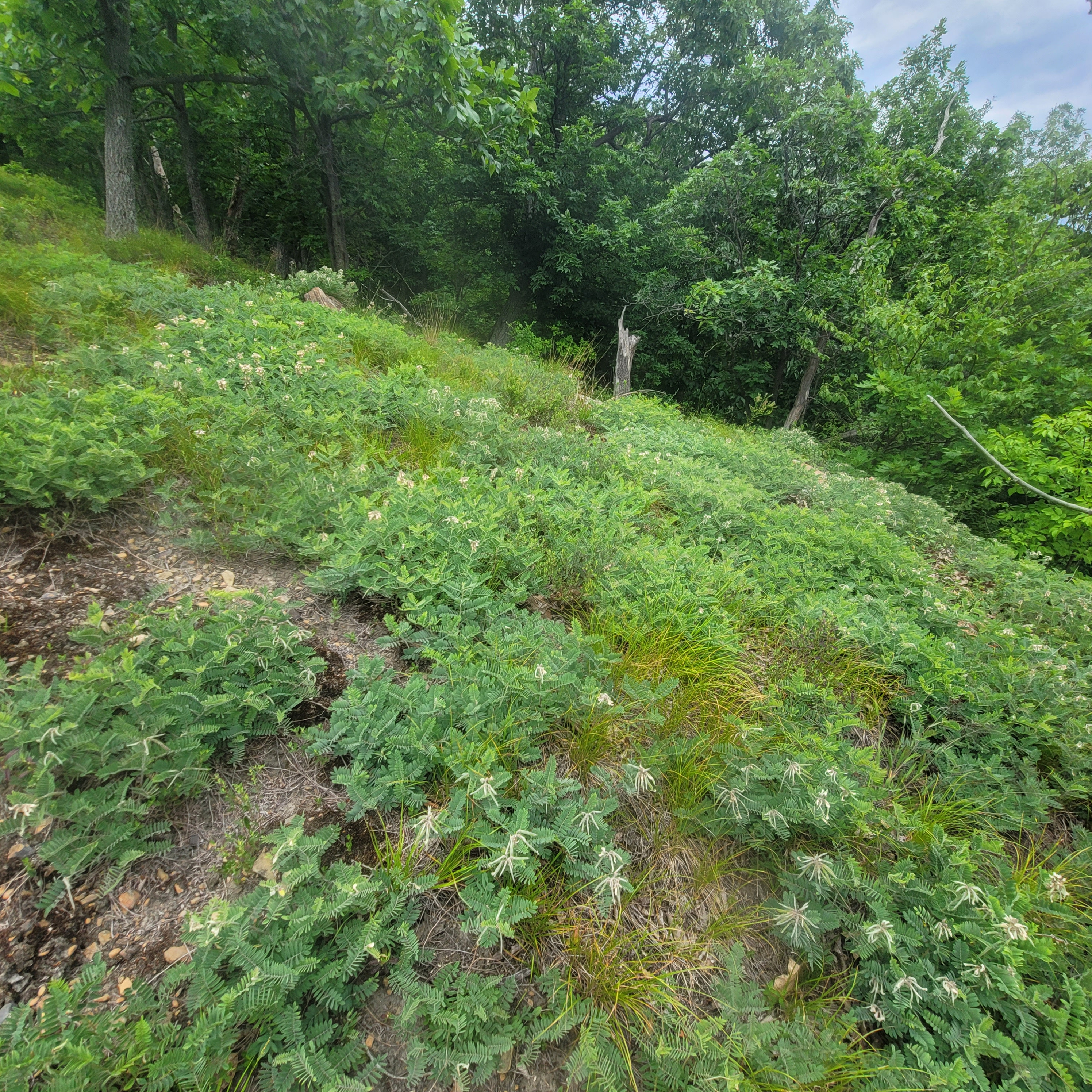
Tephrosia blanket on cliff edge
Even the oaks produce summer flowers here — sort of. Aureolaria is a genus of oak hemiparasites, primarily found in fire-adapted oak-dominated ecosystems. While capable of photosynthesis, they depend on the oak for minerals and water which they acquire through a root connection called a haustorium that's formed around the time of the forb's germination. This genus provides an abundance of nectar and pollen during the hottest, driest time of year.
Behind the woodline is an incredibly steep, dry oak woodland with an understory of Cunila origianoides (common dittany), Desmodium rotundifolium (roundleaf tick-trefoil), and various woodland grasses and sedges, with great hawthorn (Crataegus) diversity thriving in the midstory openings.
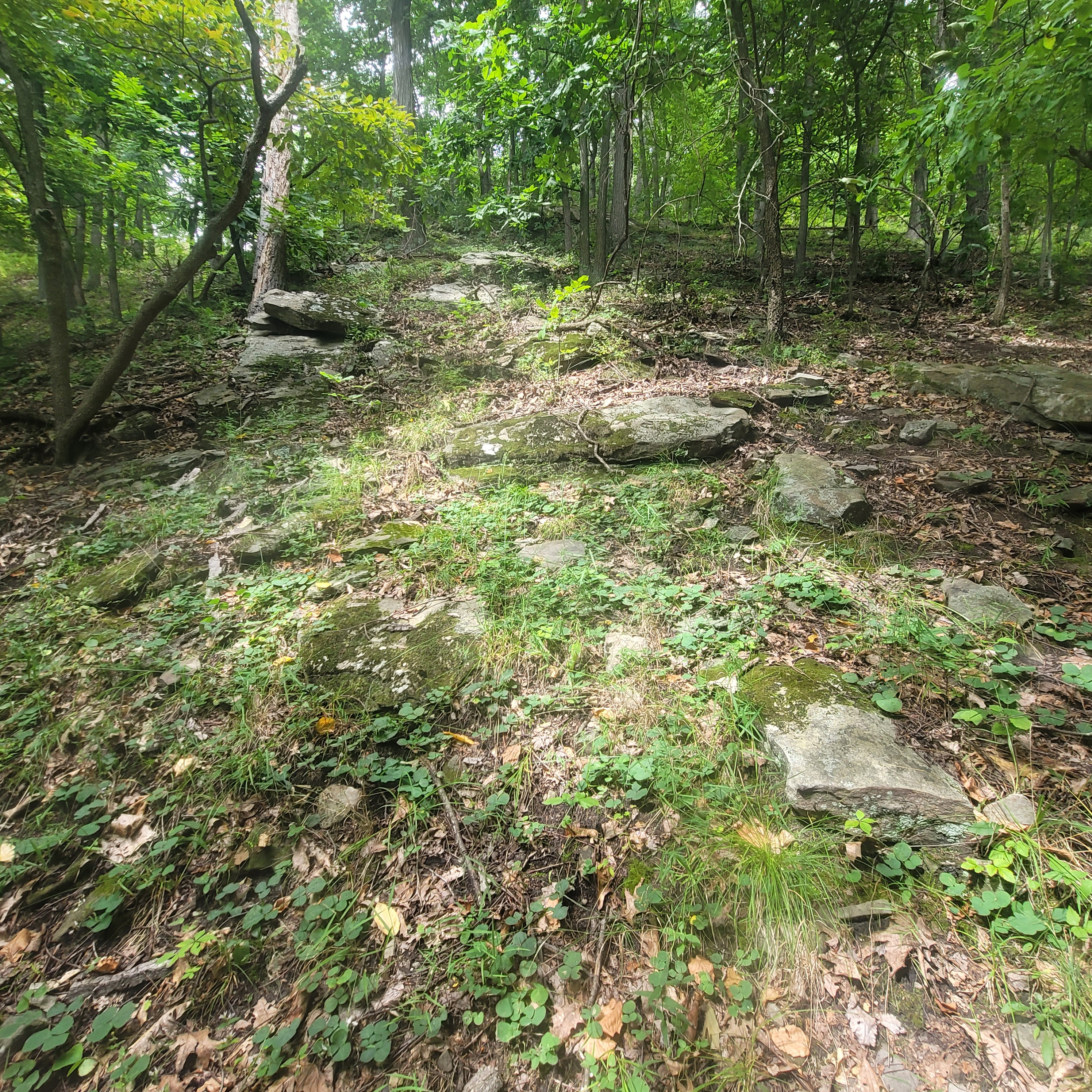
Steep oak slope with roundleaf tick-trefoil
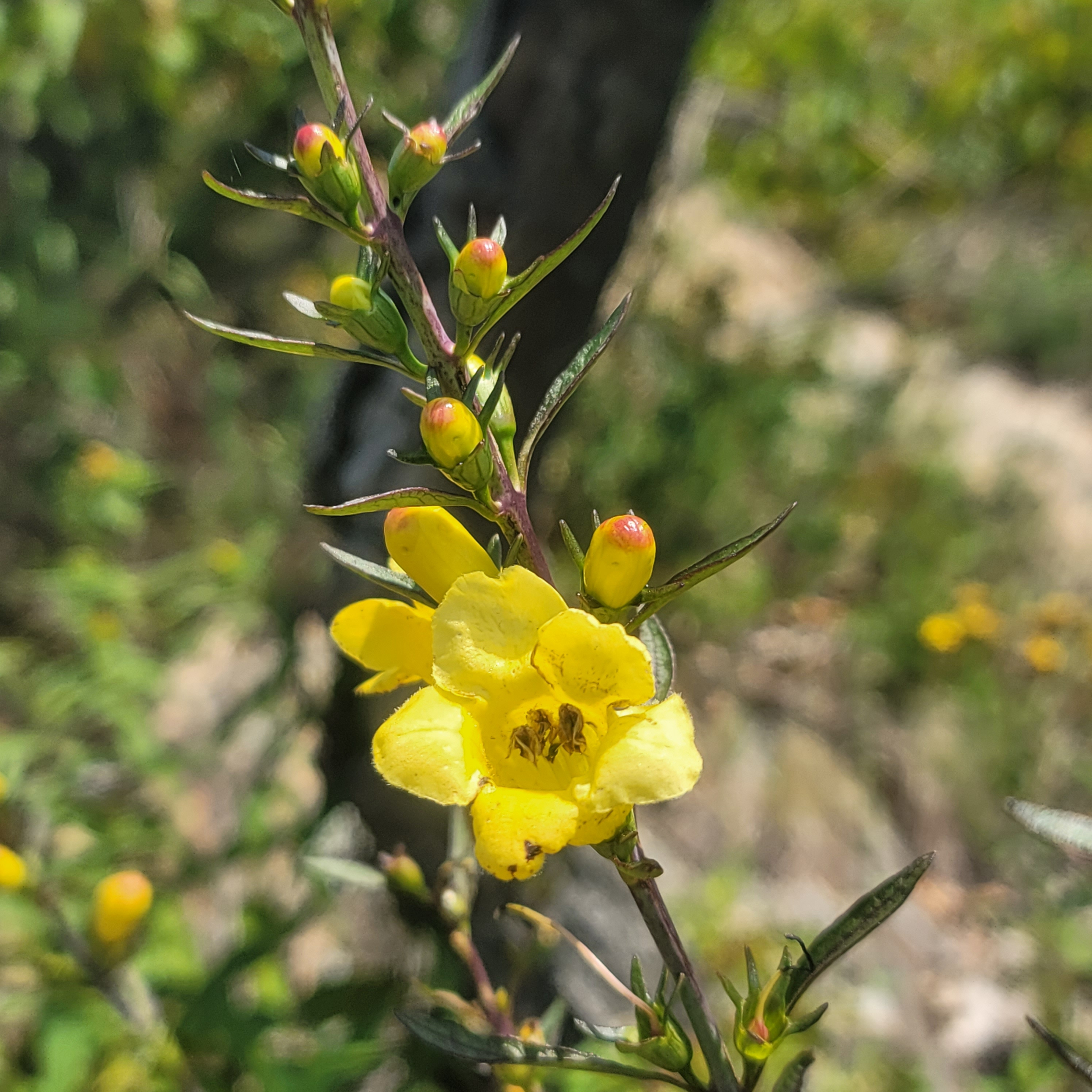
Aureolaria flava on chestnut oak
On these rims, localized calcium pockets act as a harsh chemical filter. While low water capacity and wind keep the canopy stunted and open, the base-rich chemistry does the rest of the work crafting these gardens. High calcium buffers the ph and locks up critical nutrients like phosphorus and iron, causing severe nutrient stress for our typical acid-loving forest flora.
These ecosystems share some defining characteristics: shallow soil, strong geology with unique chemistry, south to west facing exposure, and a reliance on periodic disturbance. Fire resets the successional clock on these ridges, clearing the woody competition, and exposing the raw mineral soil and sunlight many of the rare plants in these habitats depend on.
Ultimately, these ridges serve as reminders that the plant communities we see today aren't static — they are shaped by deep time and extreme chemistry.
Where the the conditions align, Pennsylvania’s mountain pocket prairies still wave in the wind.
Comments
Moderated before posting.