Community Forum
Welcome to the PA Plant Community Forum!
This community space is for asking and answering plant-related questions, including plant IDs, sharing ecological knowledge, seeking advice, and offering feedback about the site. Whether you're a seasoned naturalist or just beginning your journey, your insights and inquiries are welcome here.
- Discussions >
- American Mountain-Ash in Pennsylvania's Forests
American Mountain-Ash in Pennsylvania's Forests

admin
0
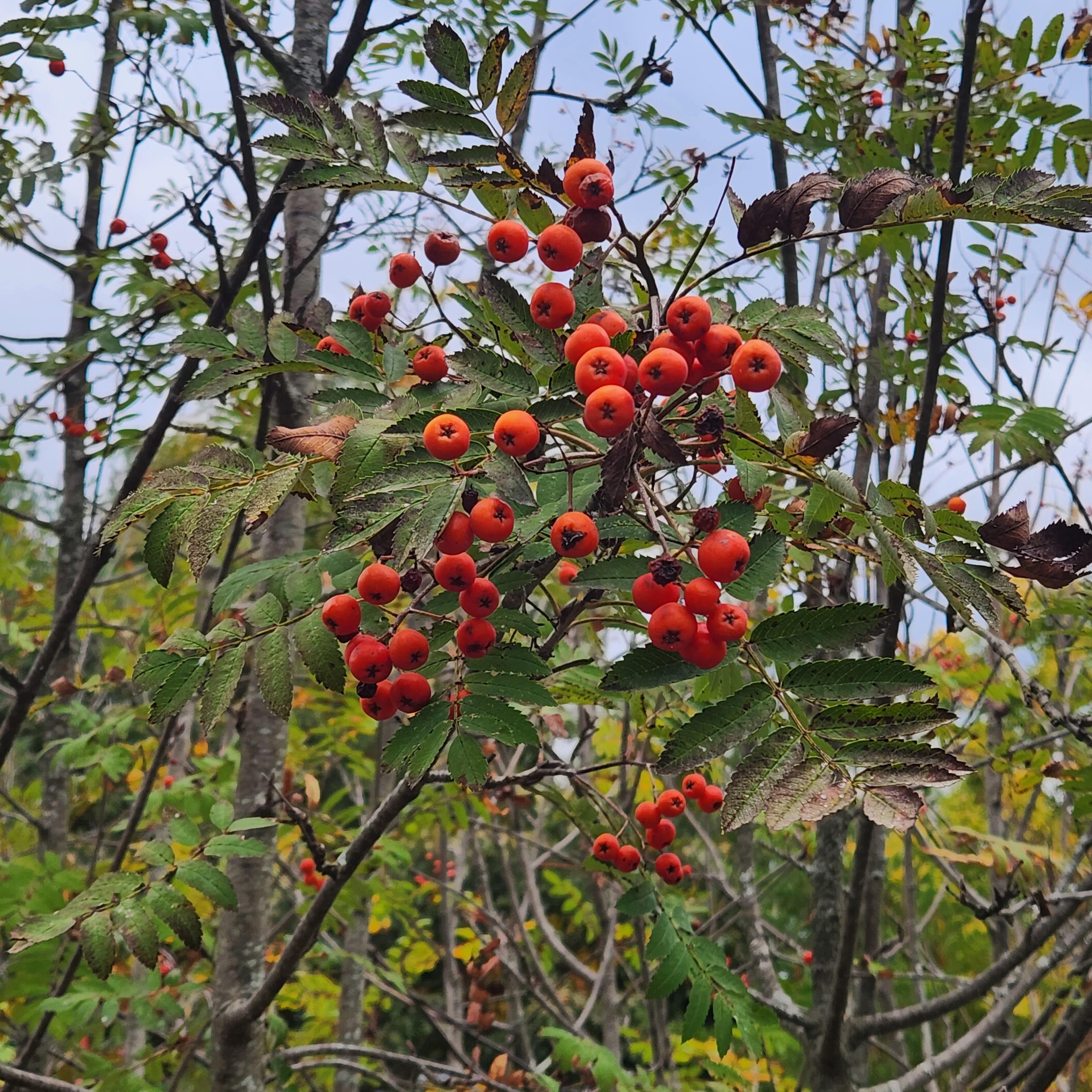
American Mountain-Ash (Sorbus americana) is a quiet dweller of Pennsylvania’s northern woodlands, offering both ecological nourishment and seasonal grace. In the Allegheny Plateau and Appalachian Mountains, this small deciduous tree finds its home in cool, moist forests and rocky slopes. With its feathered compound leaves and clusters of creamy white flowers, moutain-ash blends into the understory until autumn, when its brilliant red-orange berries blaze against the fading green. Though often mistaken for true ashes, it belongs to the rose family, and its presence signals a forest still intact — acidic soils, clean air, and a rhythm untouched by urban sprawl. In Pennsylvania’s mixed hardwood forests, the American mountain-ash plays a vital role in sustaining wildlife. Its berries ripen in late summer and persist into winter, feeding cedar waxwings, robins, and ruffed grouse long after other fruits have fallen. Black bears and small mammals forage its fruit, while deer browse its twigs and foliage. The tree’s blossoms attract native pollinators, and its open crown allows light to reach the forest floor, supporting a layered community of ferns, mosses, and shade-tolerant herbs. Though vulnerable to fireblight, habitat fragmentation, and the stresses of drought and heat, mountain-ash endures in Pennsylvania’s cooler elevations, where its decline has prompted calls for habitat protection and ecological recognition. Valued in restoration not only for its wildlife support but for its beautiful seasonal presence , the American mountain-ash offers more than function — it is a threshold tree, feeding birds, signaling frost, and reminding those who walk with poetic eyes that beauty and nourishment often come in small, unassuming forms.
Attach a file (.png,.jpg,jpeg,*) up to 3 images