Garden Notes from the Quiet Beginnings
In this edition, Kate turns our attention to the quiet, generative work of growing native plants from seed. Her story begins with the self‑sown volunteers that appeared in her garden—columbine, asters, milkweed—small surprises that revealed how readily native plants return when given space and time. From these early observations, she traces a shift in her own gardening practice: toward patience, toward abundance, and toward the long game of filling new beds not pot by pot, but seed by seed. Through her experience, she shows how a handful of seeds, a tray of soil, and a season of care can open the door to a more resilient, more economical, and more meadow‑like home landscape.
Growing a Native Garden From Seed
The first season after wild columbine (Aquilegia canadensis) bloomed in my garden, the flower heads gave way to short, spindly seed pods that looked like the plump tentacles of miniature octopuses. Each one encapsulated a multitude of seeds. Tiny black specks scattered to the ground when the pods burst, slowly but surely working their way into the soil. The proof arrived the following spring when those seeds emerged from the earth, each one an individual plant. What started as a patch of just two plants had quickly multiplied.
This spring, I witnessed the same spectacle with white wood aster (Eurybia divaricata) and swamp milkweed (Asclepias incarnata). Tiny shoots began to poke up from in between river rocks and stepping stones. At first I suspected they might be weeds, but as the leaves took shape and the seedlings gained height, I realized I had quite a few new plants on my hands. The process of letting these plants go to seed and gaining countless new ones was something of a lightbulb moment. If it was easy enough for these seeds to spread and grow without intervention, what could I achieve if I set out to purposely grow natives for my gardens from seed?
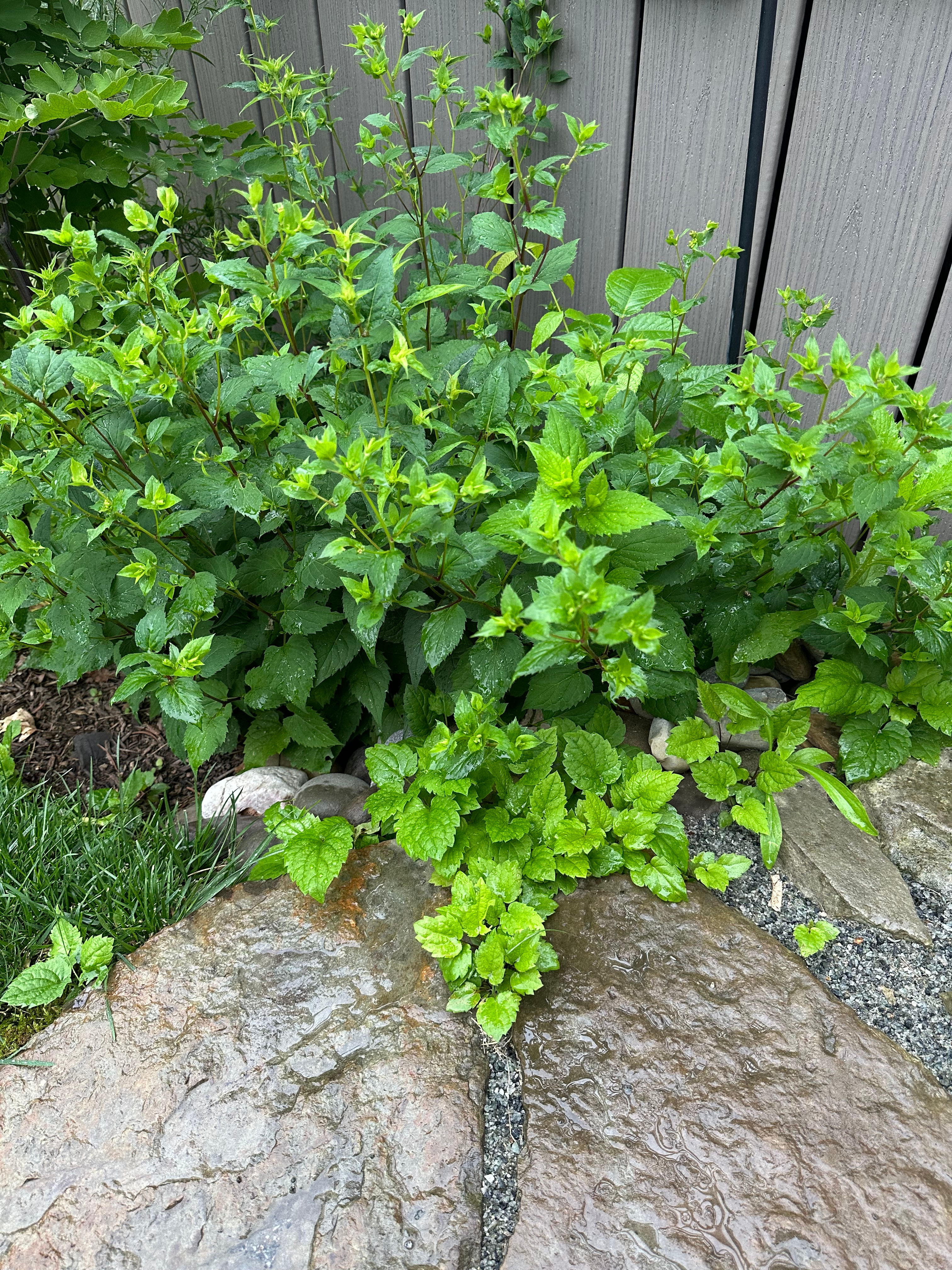
New asters coming up from seed
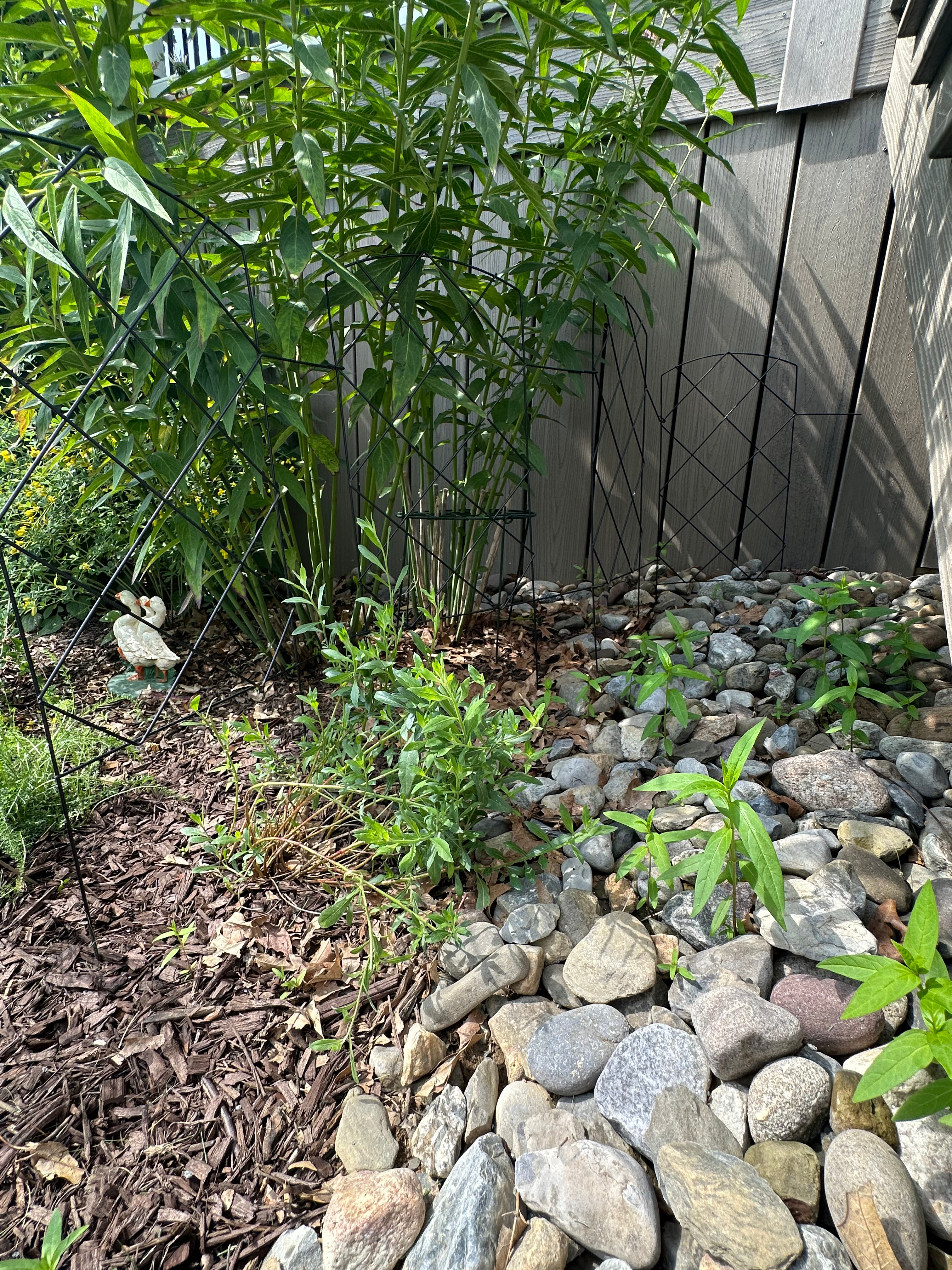
Milkweed seedlings sprouting in river rock
This question echoed in my mind as I found myself facing the demise of several perennials in one of my gardens. Suddenly there were gaping holes in between plants, hyphens of empty space where flowers used to stand. Not wanting to leave the space empty for the entire season, I rushed to buy new perennials. In the process of planting them, my thoughts traced back to the idea of starting plants from seed. How many seeds could I have bought for the same price? How many more plants could I grow at once instead of adding them to my gardens pot by pot? The instant gratification element is missing from seed starting—it takes months for seeds to develop into plants that resemble anything close to what nurseries sell, perhaps with the exception of plugs. But when you are in need of covering a large area and require more plants than any reasonable person might budget for, playing the long game begins to make sense.
I’ve had some previous success with perennial seed starting. Just this past winter, I used milk jugs for winter sowing with seeds (saved from the wild columbine, plus a purchased packet of clustered mountain mint) that required a period of cold stratification in order to germinate. Come spring, the seeds began to sprout. It blew my mind that each one would grow into a fully formed plant. This was the most logical outcome, and yet I felt as though I had cheated the system in some way. The next seeds I started came from a forgotten packet of spotted beebalm, which have just reached the point of being able to transplant.
This is good news for my young and ever-changing gardens. As I extend their edges and create completely new planting beds, using small plants started from seed gives me two clear advantages. I can use homegrown seedlings to fill in the spaces between larger established plants, which will eventually help me achieve the meadow-like aesthetic I envision. I can also fill large new beds in bulk with the quantity of plants a single seed packet allows me to grow.
Despite coming to this realization late in the growing season this year, I’ve started more seeds that already show good progress. The key was choosing seeds that do not require cold stratification. Among them are purple lovegrass (Eragrostis spectabilis), yarrow (Achillea millefolium), leafy prairie clover (Dalea foliosa), and blue sage (Salvia azurea), the latter two of which are native to the United States but not specifically Pennsylvania. There are many other seeds that fall into this germination category; I chose a manageable selection to start.
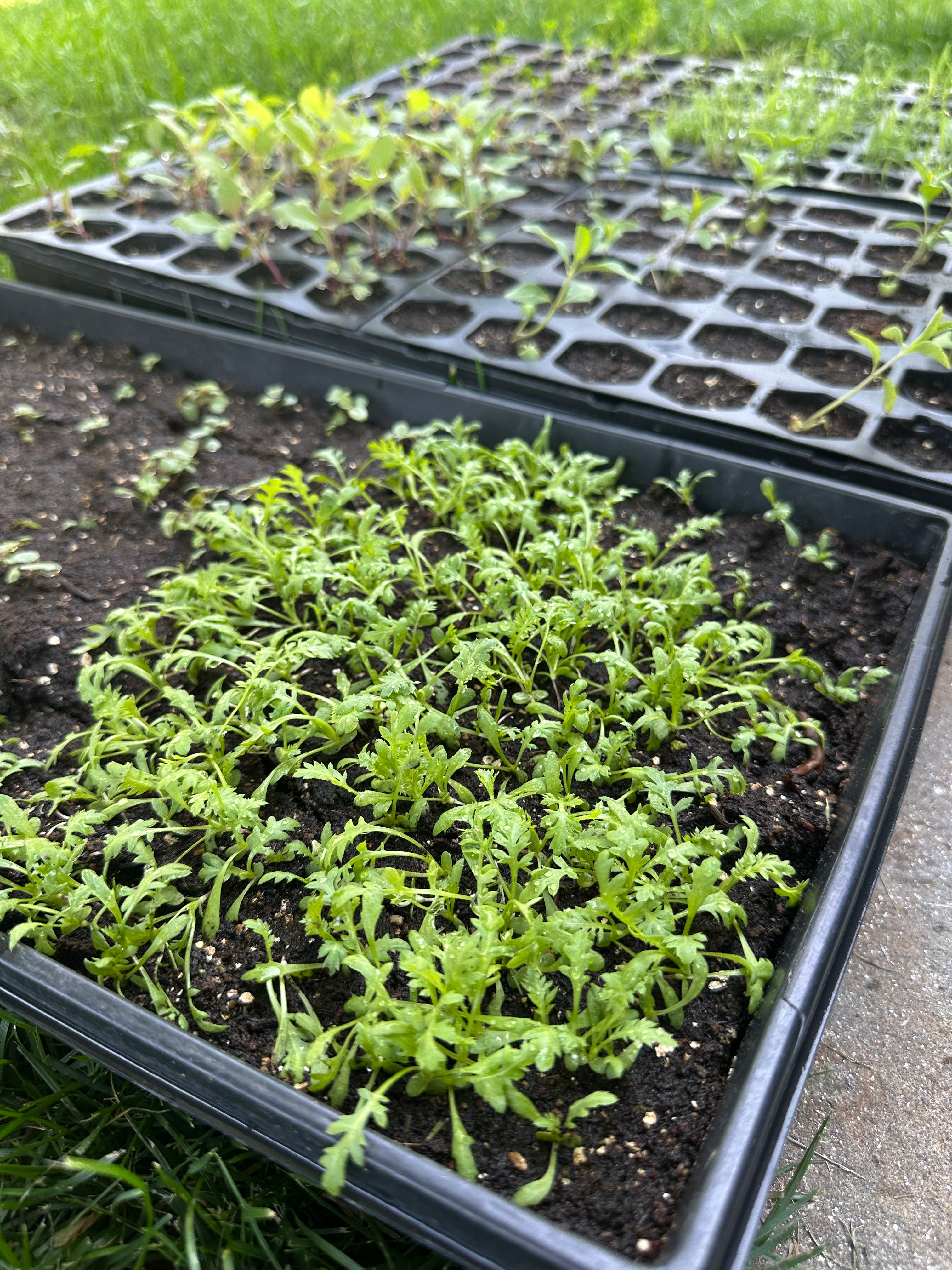
Yarrow seedlings
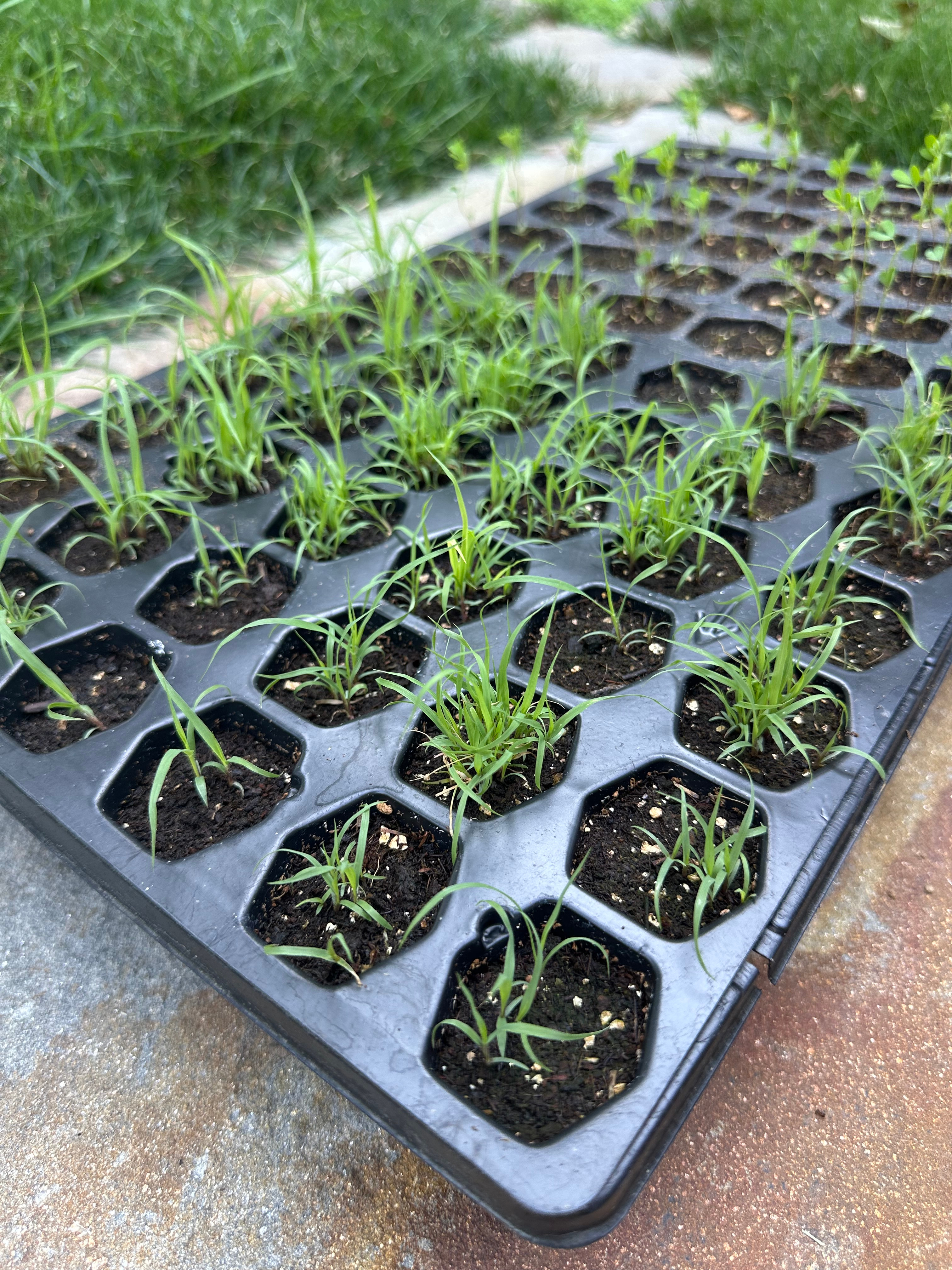
Purple lovegrass seedlings
If you decide to give native seed starting a try, let the following points guide your process.
Choose the Right Seeds for Your Site
When selecting native seeds for your garden, check that the soil and light requirements match the conditions where you intend to plant them. Seeds grouped in a mix likely have the same light, soil, and water requirements. It’s important to be aware that mixes containing several different types of seeds can include plants that are considered invasive, and this is sometimes—but not always—listed on the packet or website. Familiarize yourself with the contents to avoid planting unwanted flowers or weeds that will crowd your gardens or spread to nearby areas. If you’re aiming to grow specific flowers, packets of single seed types will give you the most control over what grows. You’ll be able to set better expectations with regard to germination, too, because you’ll know exactly what conditions each seed type requires.
Note Germination Codes
What are the conditions native seeds require for successful germination? This is what the germination code identifies. Some seeds must have their hard shell-like exteriors scratched open, some must be soaked in water, and others must be sowed outdoors in the cooler fall months. Some seeds, like the ones I recently started, require only sunlight and warmth before they start to grow. For seeds that require periods of stratification, some patience and planning is required, as it may take months or even more than a year for the seeds to germinate. Look for the germination code on the seed packet, along with instructions for planting. Many sellers provide pamphlets explaining the codes and proper seed preparation. In many cases, they can also be found online.
Provide Water and Shade
Seed starting requires a watchful eye. I find it easier to sow in trays to simplify the maintenance aspect of it. Providing water and shade are critical at the outset to prevent the soil from drying out, so I keep trays in a single location where I can monitor both soil moisture and shade levels. It’s much easier than dragging a hose to different parts of the yard and checking on multiple locations to make sure the seeds aren’t getting too much (or too little) sun. Old window screens are very effective at shading seedlings, and small sizes fit nicely over standard growing trays. Light and air filtering cloths can be used, too. Burlap is often recommended for its loose weave, which allows air and light to get through without suffocating or scorching the plants and soil. Trays can also be moved to a shady location on days when the sun is particularly strong.
Eventually the seeds will grow tall enough in their trays to reach the shade device, and if you’re using metal screens, be aware that on hot days the mesh can burn seedlings if it comes into contact with the leaves. When the seedlings are tall enough for this to be a possibility, the screen will need to be elevated, or a different method of shading will be necessary. I’ve used pavers to raise screens above the trays.
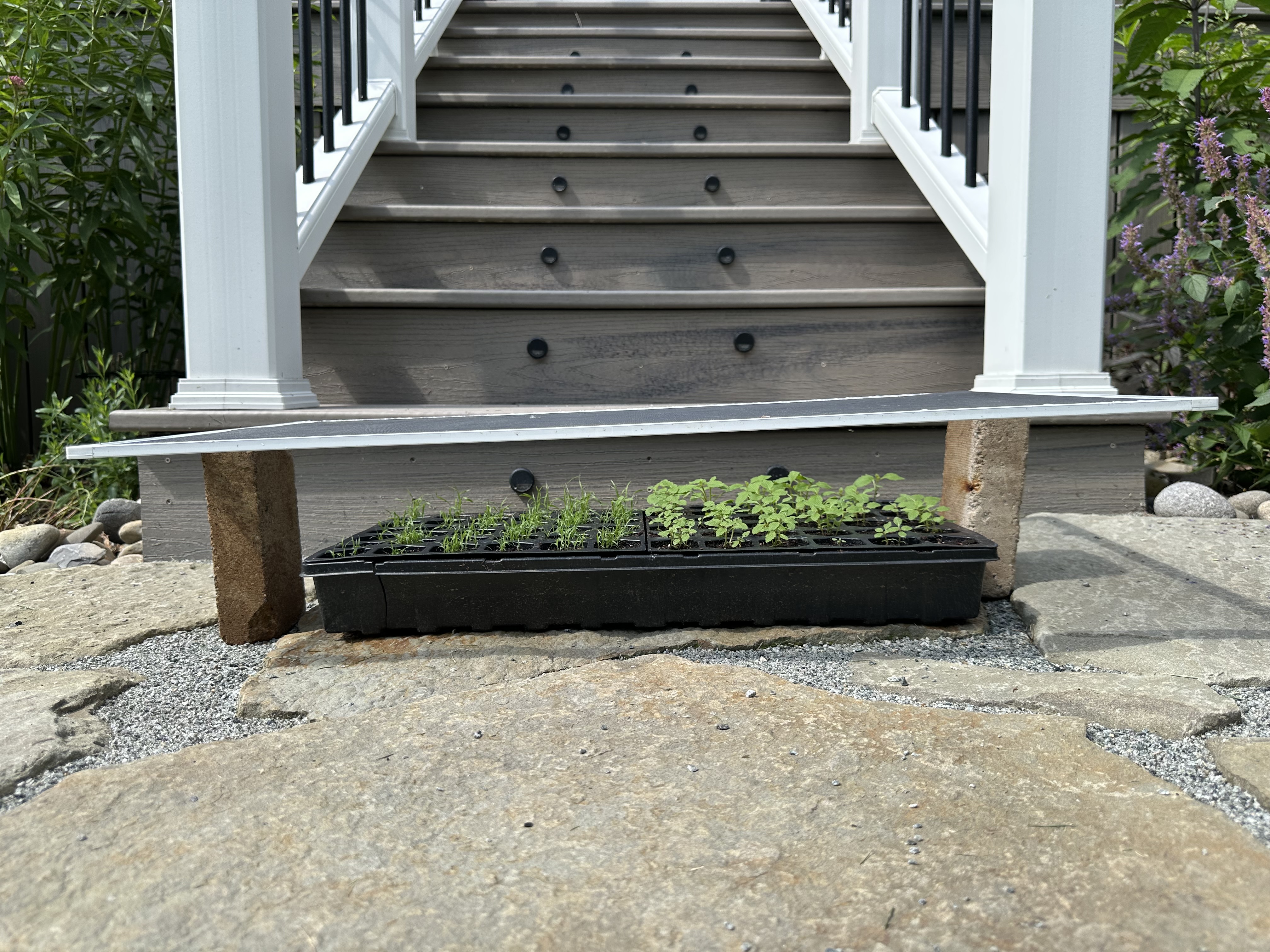
Window screen elevated above seed trays with the use of landscaping pavers
Dividing Clusters
Sowing seeds in trays or in individual cells can result in several seeds germinating close together. Thinning the seedlings by removing the smallest plants reduces competition among seedlings and encourages growth in the remaining ones. Sometimes it can be difficult to thin them without disturbing the roots of the seedlings you intend to keep. I’ve chosen to forgo thinning in these instances and plant the entire cluster in the ground with the intention to divide the plants later. Their root systems become more substantial, making the plants less fragile and more likely to survive being separated.
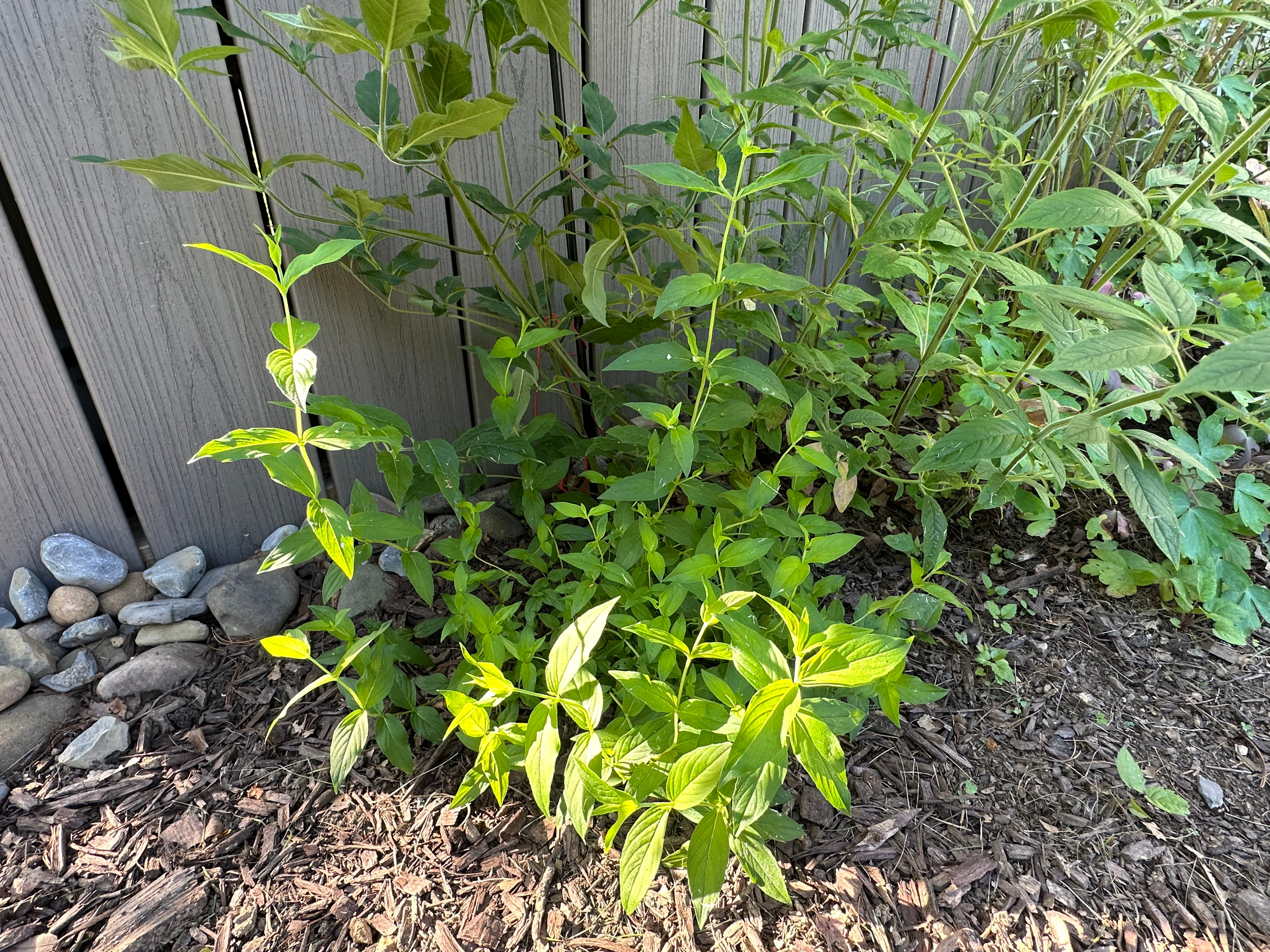
Clustered mountain mint, to be divided in the fall
Protect from Animals
Birds, deer, squirrels, chipmunks, and rabbits can wreak havoc on unprotected seeds, whether sown in trays or the ground. Shade structures can do double duty, working to keep animals from picking through the soil or eating tender greens. Vented frost covers, like the one pictured, also double as animal shields. When the seedlings are ready to be planted in the ground, a simple wire cloche can protect them from being eaten or dug up. If you’re planting a larger area with seedlings, long sections of wire fencing can be cut and staked to enclose it.
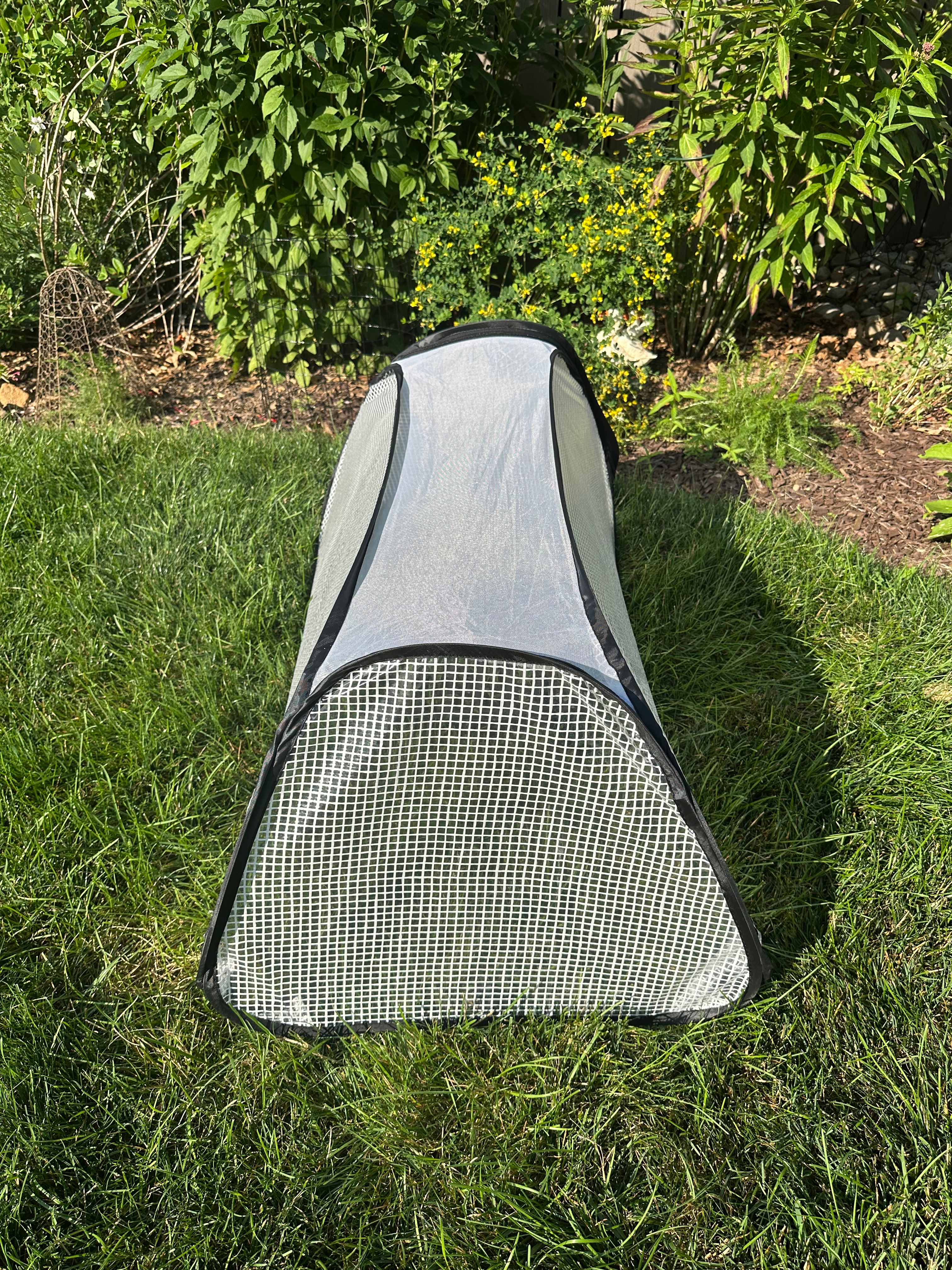
A ventilated frost covers doubles as protection against animals
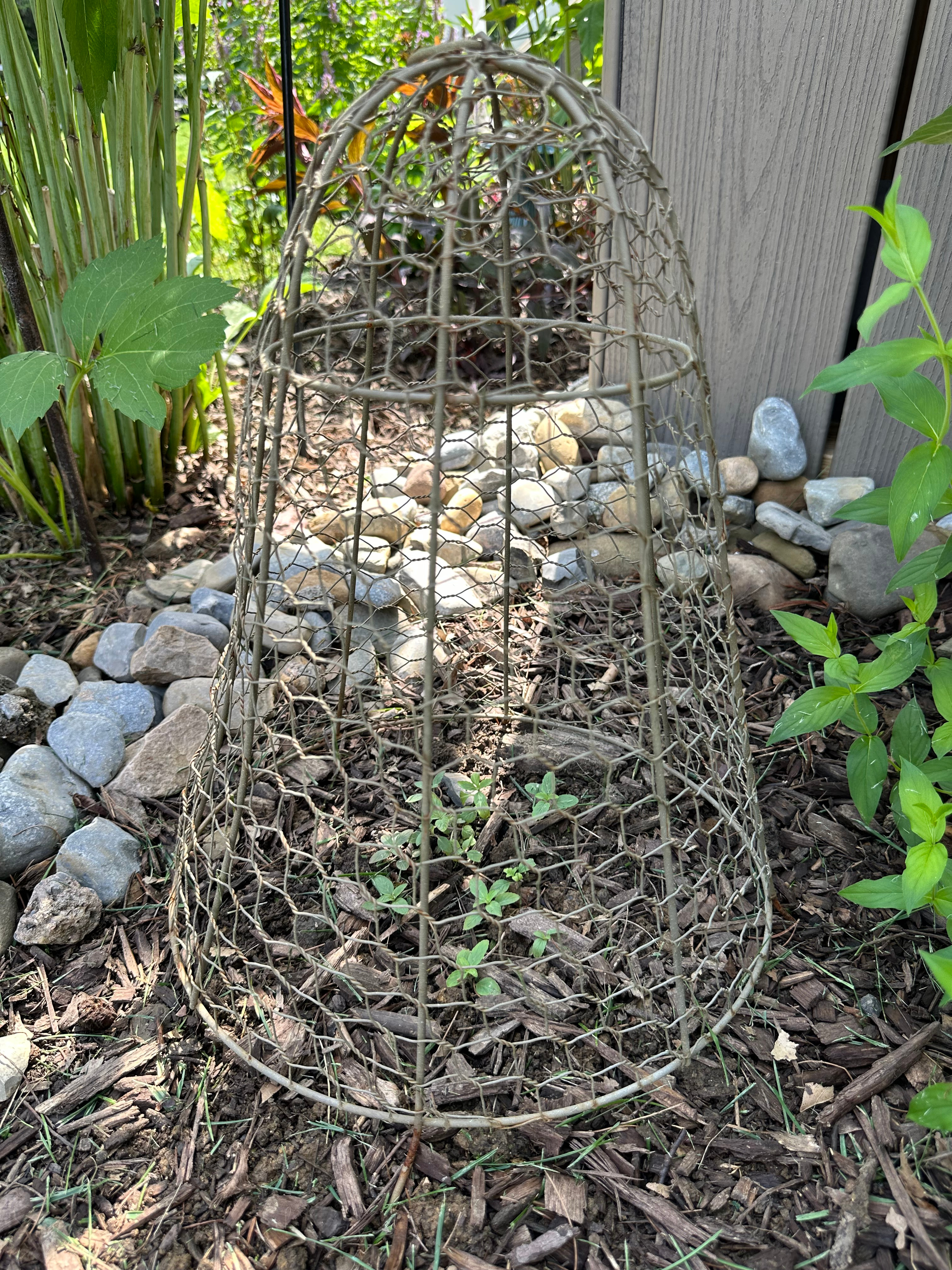
A wire cloche keeps the squirrels and rabbits away
Assist the Self-Seeders
Going back to the example of wild columbine, any seed pods that form on plants will naturally scatter seeds on their own if left to dry on the stem. You can help spread the seeds throughout your gardens, if desired, by gently removing the pods and crumbling them over the soil where you want new plants to grow. This is basically the same thing as direct sowing, although it yields less control than sowing in trays. Not every seed will take, so the more seeds you scatter, the more likely you are to see new plants emerge in the spring.
For large-scale projects, the quantity of plants that seed starting allows me to grow is the biggest draw. I keep track of the flowers I’d like to add to my gardens in a running list in my Notes app. I’m careful to include their germination requirements and where I can buy them when the timing is right. Buying potted plants again from my favorite nurseries is not out of the question, perhaps when I find one that is hard to resist. Starting natives from seed, however, will be the key to filling my gardens.