Garden Notes from the Home Landscape
In this edition, Kate Langenberg brings us into the intimate beginnings of a home landscape transformed by native plants. Her piece follows the arc from a single gifted wood poppy, “the plant that ignited my interest in native plant gardening,” into a thoughtful practice shaped by observation, small experiments, and the gradual replacement of non‑natives with ecologically meaningful species. Through her story, she reveals how one plant, one corner of shade, and one season of attention can begin to change the life of a yard.
A Guide to Adding Native Plants to the Home Landscape
One spring, I was gifted a wood poppy. I call it my spark plant: the plant that ignited my interest in native plant gardening. An early spring bloomer with cup-shaped yellow flowers and foliage reminiscent of oak leaves, it’s a friendly-looking plant appropriately matched to the task of welcoming spring’s longer days and warmer temperatures. When I considered where in my yard to plant it, I took a mental inventory of potential sites. At the time, it had been two years since I moved into my house. I had spent those years watching and waiting to see what came up in the gardens and learning the pattern of sun exposure throughout the day. I had also identified some problem plants and began removing undesirable and poorly aging non-natives, such as barberry, spirea, lilac, and weigela. The enormous burning bushes, much to my chagrin, seemed to be thriving. I learned that the tall, wide trees in the front yard were Zelkovas, which was a tree I had never heard of before. There was also one cherry tree and three plum trees, all ornamental. A Kousa dogwood sat awkwardly close to the garage, and a Japanese maple kept guard near the curb in the front yard. There were a few other evergreens, arbor vitae, and beetle-attracting shrubs scattered throughout the foundational plantings.
The wood poppy, I decided, would work best in the shade of the ornamental cherry tree where I had removed the barberry bushes. As soon as I planted it, I knew I needed more than just one. To accomplish that, I took my first trip to a popular local native plant nursey. I browsed row after row of pots identified with tags listing bullets points about each plant’s growing habits and sun and soil preferences. The tags also specified if the plants were larval hosts for butterflies and whether their flowers and berries attracted bees and birds. It became clear that incorporating natives in my landscapes wouldn’t only add life in the form of new plants but that these plants would support the lives of pollinators and birds visiting the yard, too. Butterflies would lay their eggs on the leaves and ideally complete their lifecycles there; birds would feast on the berries and come to recognize my yard as a reliable food source. I knew then that this was how I wanted to garden.
The trees and shrubs occupying my landscaping suddenly struck me as a waste of space. The best thing I could say about them was that they provided shade for my house and coverage for birds moving throughout the yard. They weren’t host plants, and nothing good came from the berry seeds spread by the birds. I was miffed that they didn’t align with my newfound enthusiasm for native gardening, and I wasn’t sure I could even call myself a native plant gardener with these species on my property. Removing every last non-native and invasive shrub would cost a small fortune, though. I was not prepared to take that on just yet. I would have to work around them, raising my yard’s ecological value plant by plant.
Looking back at how I handled introducing native plants to my landscaping, these are the guidelines I followed.
Start Small
The wood poppy I was gifted was just one plant, but it sparked an obsession with wanting to plant more wood poppies and more natives in general. After planting it in the shade of the ornamental cherry tree, I bought two more to create a trio. Then I divided native violets growing naturally in my backyard and added half a dozen of them around the wood poppies. The final addition to this spot was a cultivar of columbine, the purple-blue Aquilegia x hybrida. What began as a tentative, tidy group of plants in a neatly mulched garden bed has grown into something wild and leafy with the violets rapidly gaining groundcover status.
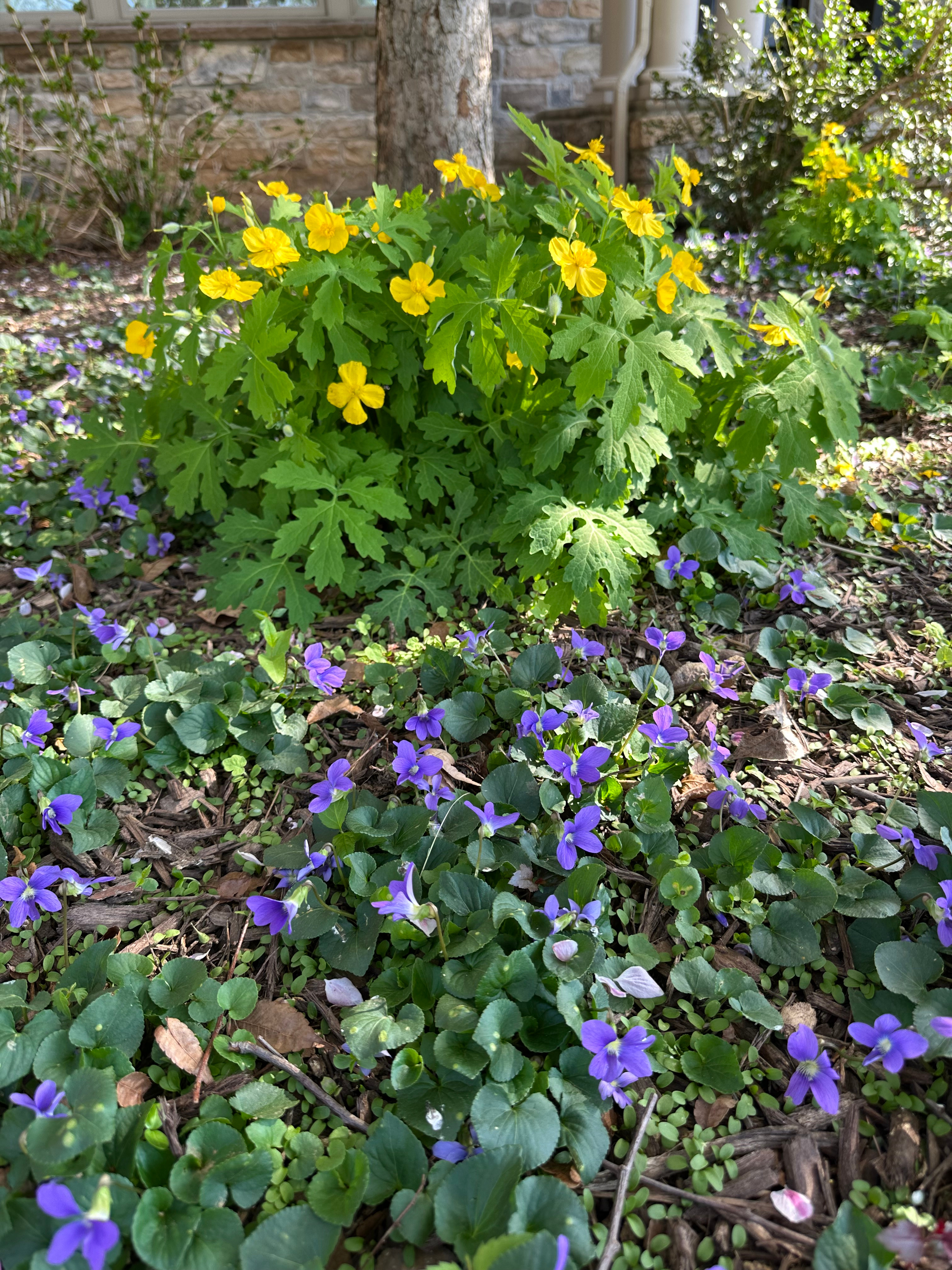
Wood poppies and violets in bloom
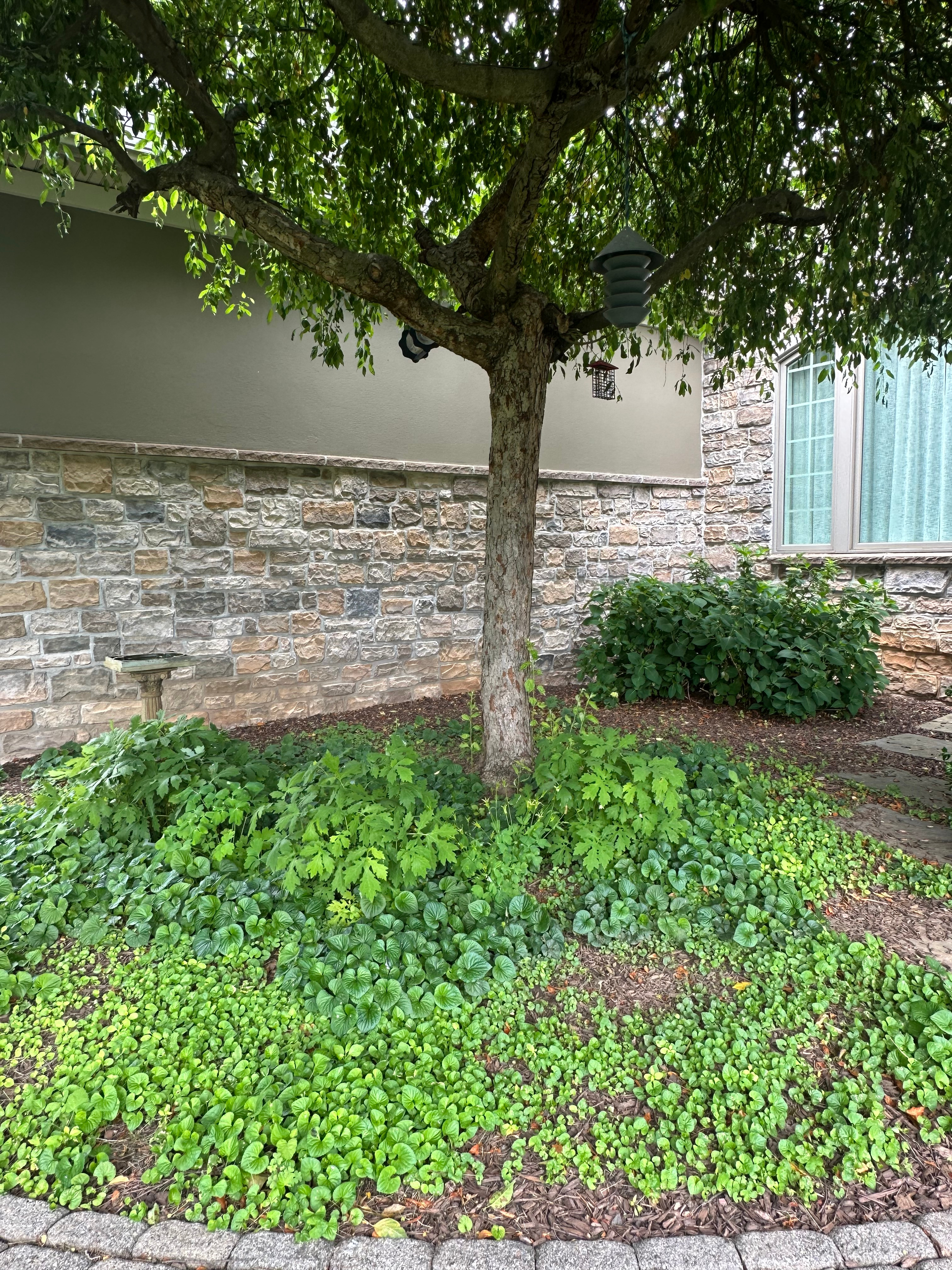
Violets showing spread as functional ground cover
Inspired by my success with these under-plantings, I decided to try again with foam flowers under a Zelkova tree in my front yard this spring. I am testing its deer- and rabbit-resistant nature by starting with six plugs. Foam flower can spread to form a groundcover, which would be welcome, as this bed relies heavily on mulch. If it proves to go ignored by deer and rabbits, which so far it has, I’ll fill in with additional plugs while leaving room for natural spread.
Starting with small quantities allows me to experiment without feeling as though I’m taking a big risk. It also allows me to edit without much guilt. It’s much easier to replace a few of anything than a whole garden bed if the plant turns out to be something I don’t like or if it doesn’t perform well. And if it seems happily sited, I’ll feel good about investing in more of it and expanding its presence.
Think in Layers and Thematic Groupings (Color, Height, Staggered Bloom Times)
Continuity and cohesion make a garden feel intentional and complete, and these are two things that my yard was lacking when I first moved in. Flowering perennials in sites not properly matched to their sun and shade requirements struggled to grow around the house, and for some reason there was always just one of them. One (non-native) bleeding heart. One sedum. One catmint. One bright magenta hydrangea fighting for its life in hot, dry soil.
Lately, I’ve been thinking about the relationships flowers have with each other in terms of color, size, and bloom time. I’ve also started to think about repetition and symmetry. Going back to the wood poppy patch, one reason I added violets and purple columbine there was to achieve a complimentary color scheme (yellow and purple are opposites on the color wheel). In a bed that I planted last year, I adapted this color scheme to yellow goldenrod, bright purple ironweed, and deep purple anise hyssop. Interspersed are white coneflowers, white yarrow, and white Culver’s root. This combination of plants will bloom at different times throughout the season, with goldenrod and ironweed providing late summer color and food when the other plants start to go dormant. There’s also a lot of play with height: Culver’s root and anise hyssop stretch toward the sky, ironweed and goldenrod fill in throughout the middle, and the coneflower and yarrow flower lower to the ground.
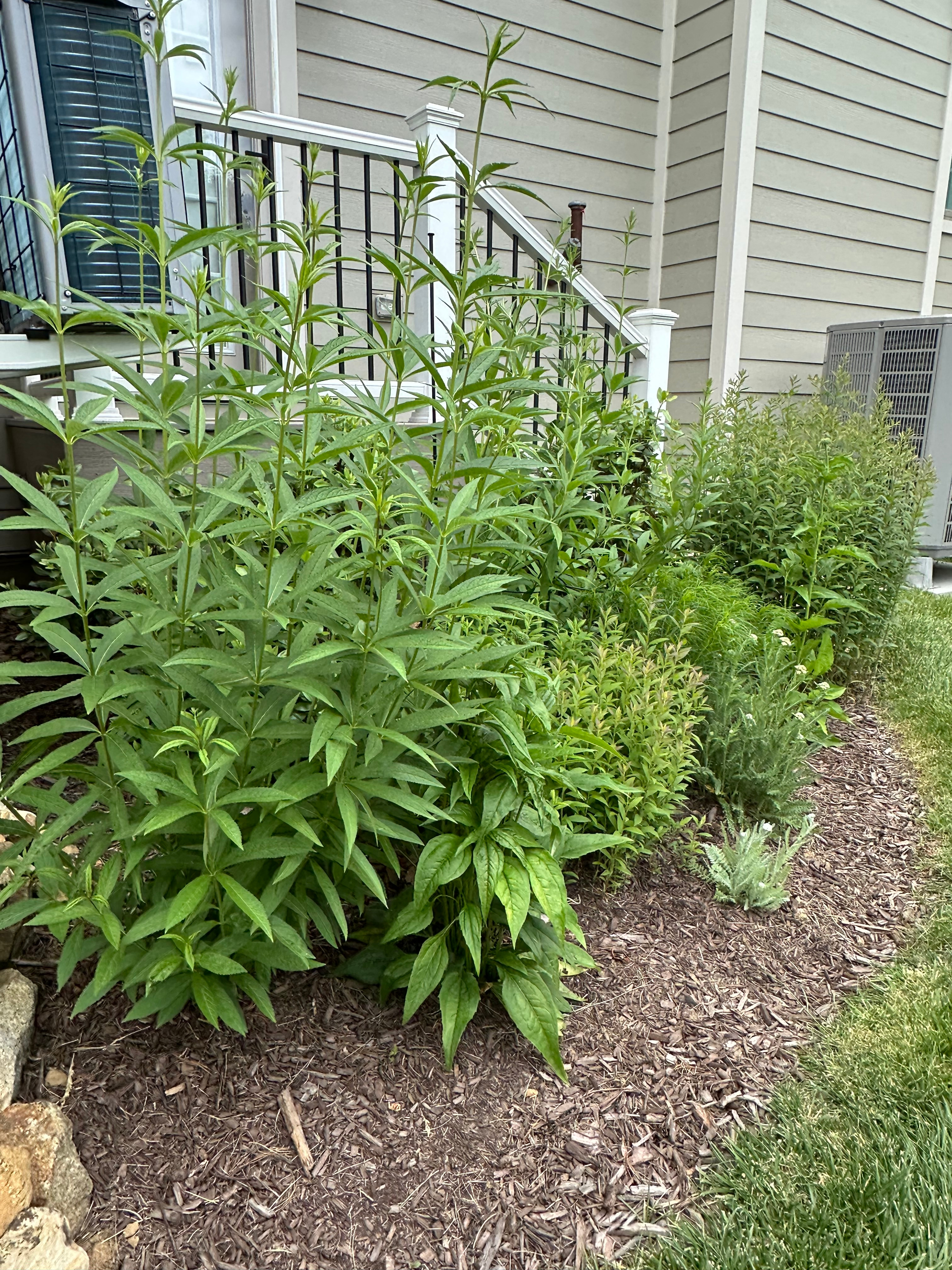
Culver’s root, goldenrod, coneflower, yarrow & anise hyssop
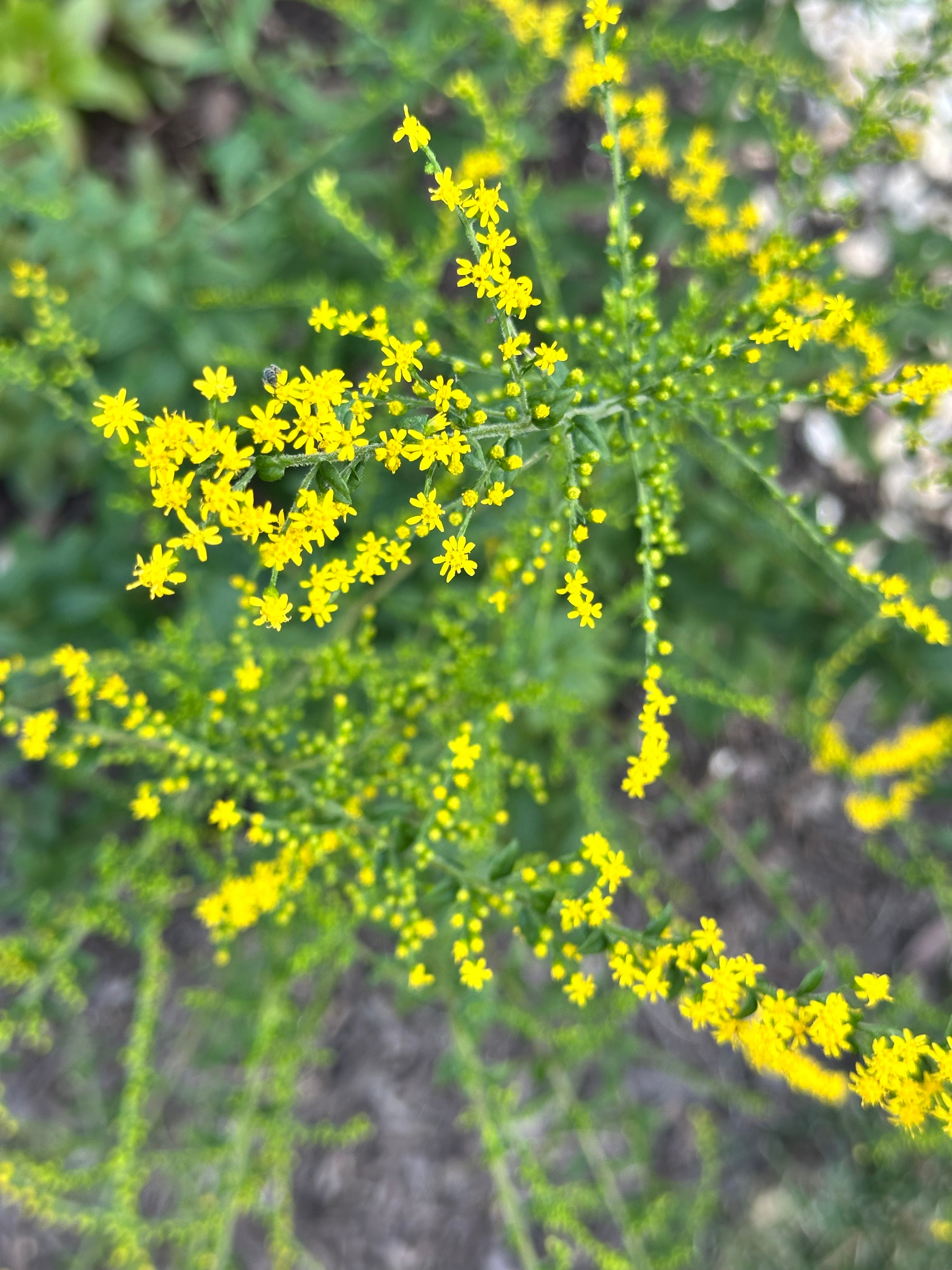
Flowers on goldenrod (Solidago rugosa ‘Fireworks’)
The bed where the magenta hydrangea withered away has only started to make sense to me with regard to symmetry and curb appeal. Last year I planted a combination of Calico and Foxglove beardtongue and spiderwort in place of the hydrangea, along with a smattering of Canada anemone (Anemone canadensis). This year, the plants came back healthy and happy, showing signs of spread. This bed is mirrored just across the driveway, where another parched hydrangea sits. Both beds border the road. I plan to repeat the same combination of penstemon, spiderwort, and Canada anemone in the other bed, which will result in two nearly symmetrical garden beds. It will also boost curb appeal by creating a cohesive welcome upon arrival.
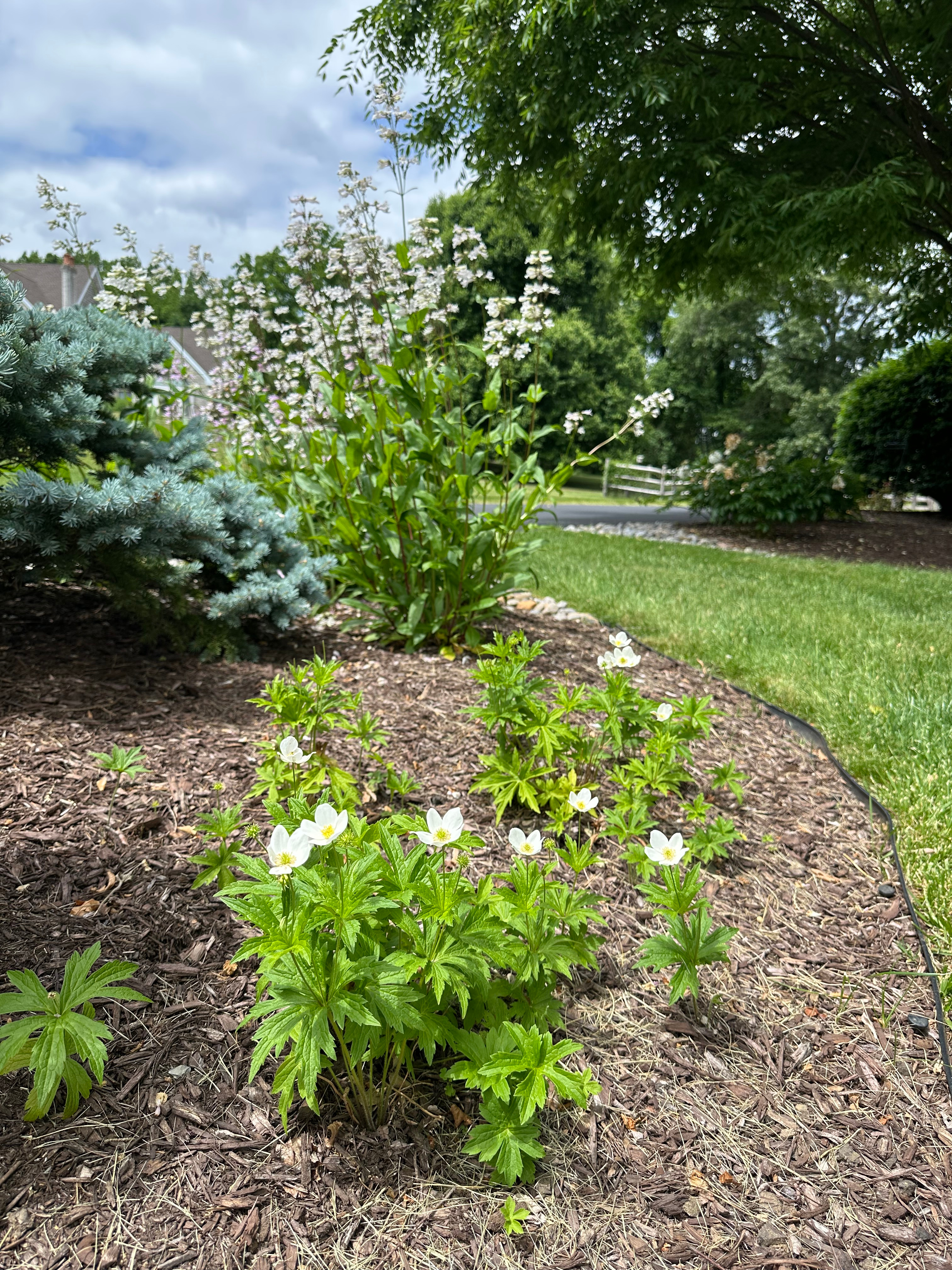
Canada anemone in bloom
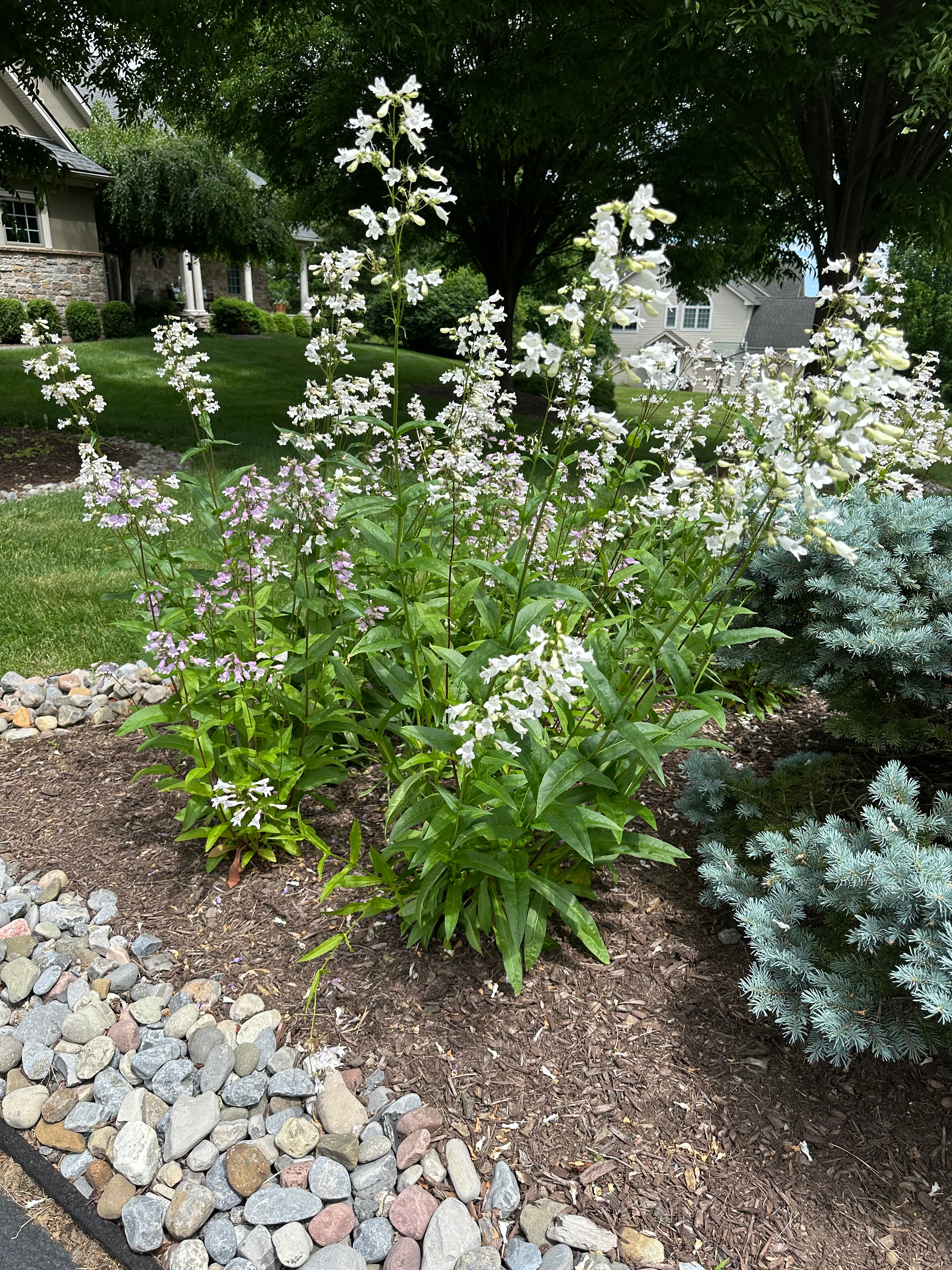
Calico and Foxglove Beardtongue
Utilize Open Space
Whether it’s a large area of grass or an empty spot in an existing bed, I’m always looking for places where I can add plants. I’ve tucked sensitive fern and blue flag iris into a bed where established hinoki cypress and astilbe grow. An empty corner of the split rail fence is now home to a serviceberry, and behind it, a woodbine clematis grows along the rails. In part shade near the Kousa dogwood, smooth witherod viburnum occupies the opposite fence corner. On the other side of my property, five newly planted river birch trees line the fence at the base of a slope, along with Storm Cloud amsonia, creating a privacy screen between my house and the one next door. Construction projects around the house lent themselves to the creation of new beds, in particular the one with the goldenrod and ironweed. There, a pair of azaleas nearly met their demise mid-construction, but in this case pruning them back to a compact size created space for native plantings. Rebuilding my deck resulted in the creation of a new native plant perimeter garden. In the front yard, when black knot left the three plum trees with bare, gnarled branches, taking them down resulted in a big gap in the landscaping. To fill the space, I selected one Carolina Silverbell and two redbuds.
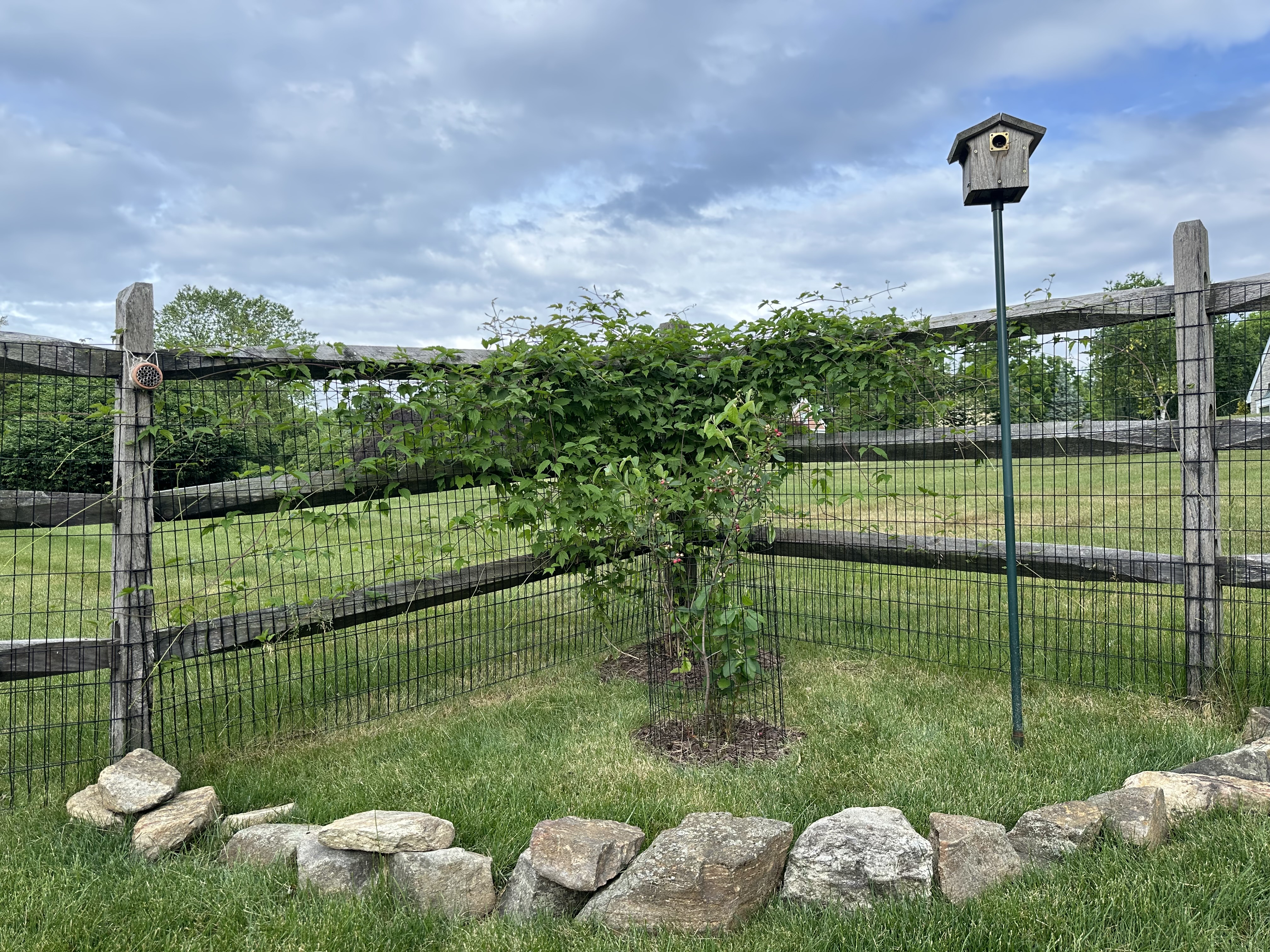
Serviceberry and woodbine clematis
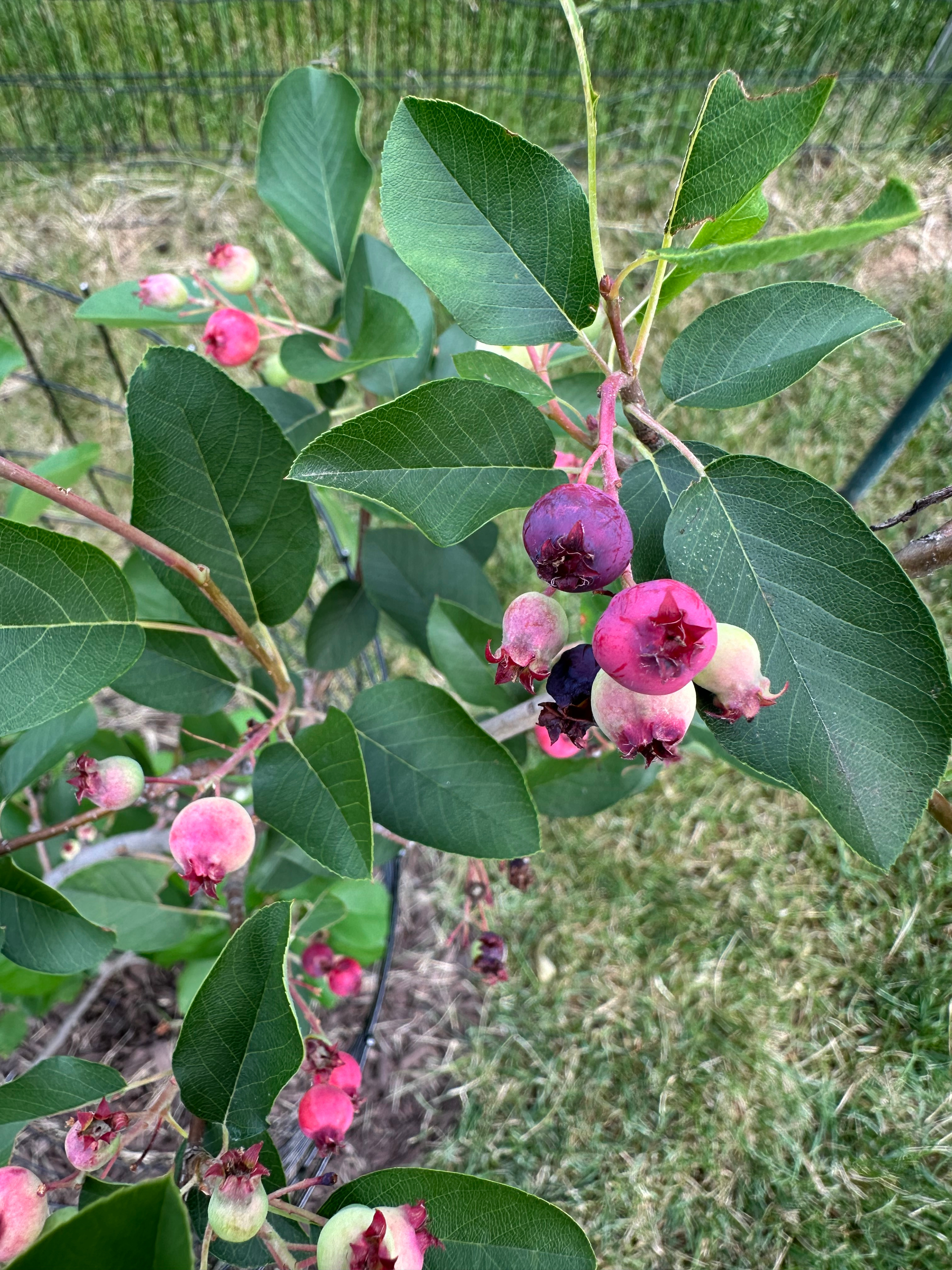
Fruit on serviceberry
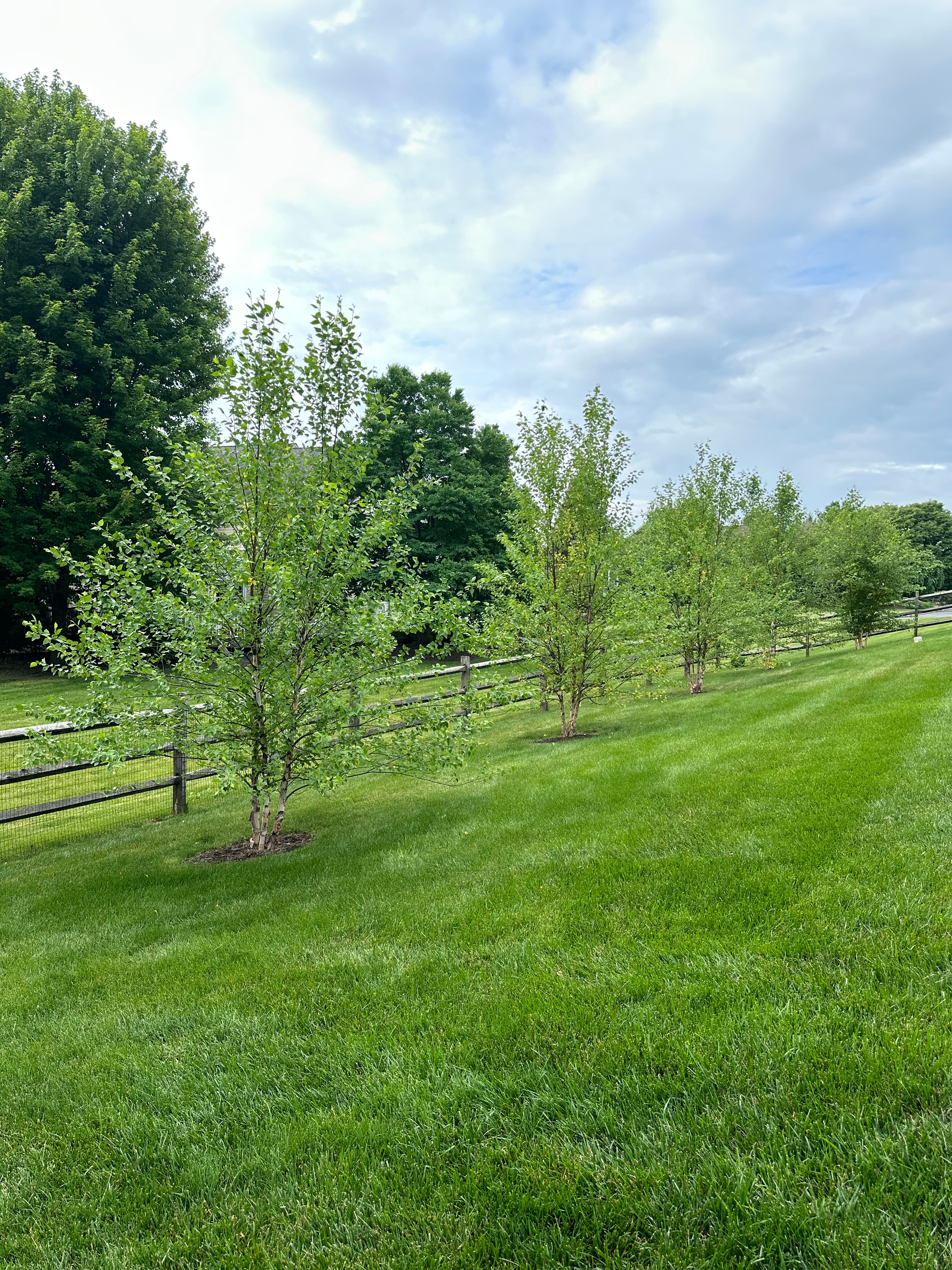
River birch trees
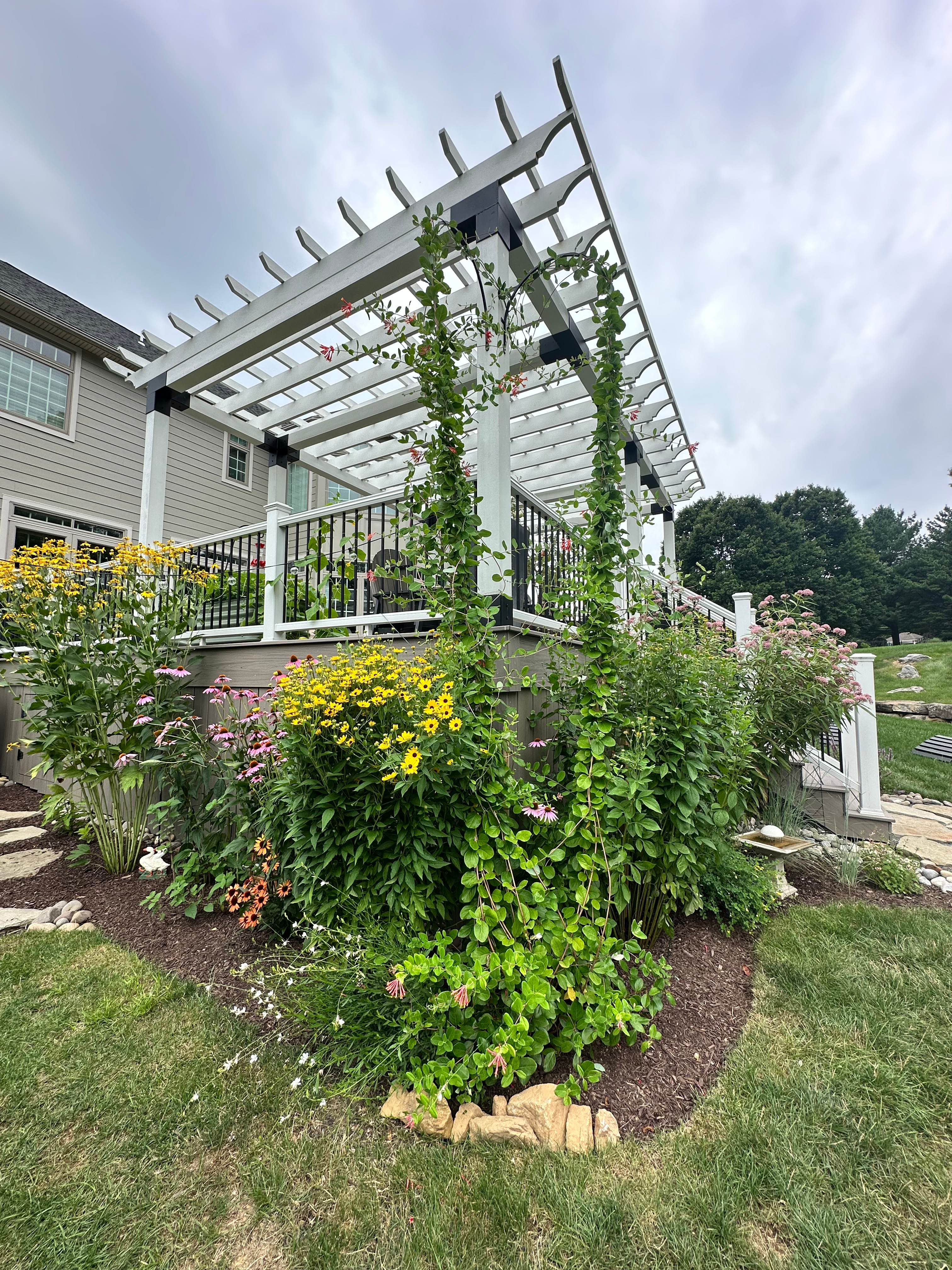
Perimeter garden with flowering natives
The septic mound has been my newest project. The boulder border and field always struck me as awkward, and camouflaging them among plants is preferable to letting them float in the grass. What excites me about this area is that it is truly a blank slate with no existing plants to work around. But what to plant? Pipes that handle output from the septic tank run the length of the mound, and it’s important to keep them clear of roots and heavy plantings. The key is using shallow-rooted plants and non-woody species to prevent root systems from infiltrating the plumbing. A variety of flowering native perennials are appropriate here, such as asters, coneflowers, geraniums, violets, and penstemon to name a few. Grasses such as little bluestem, June grass, and prairie dropseed are also safe options.[1][2]
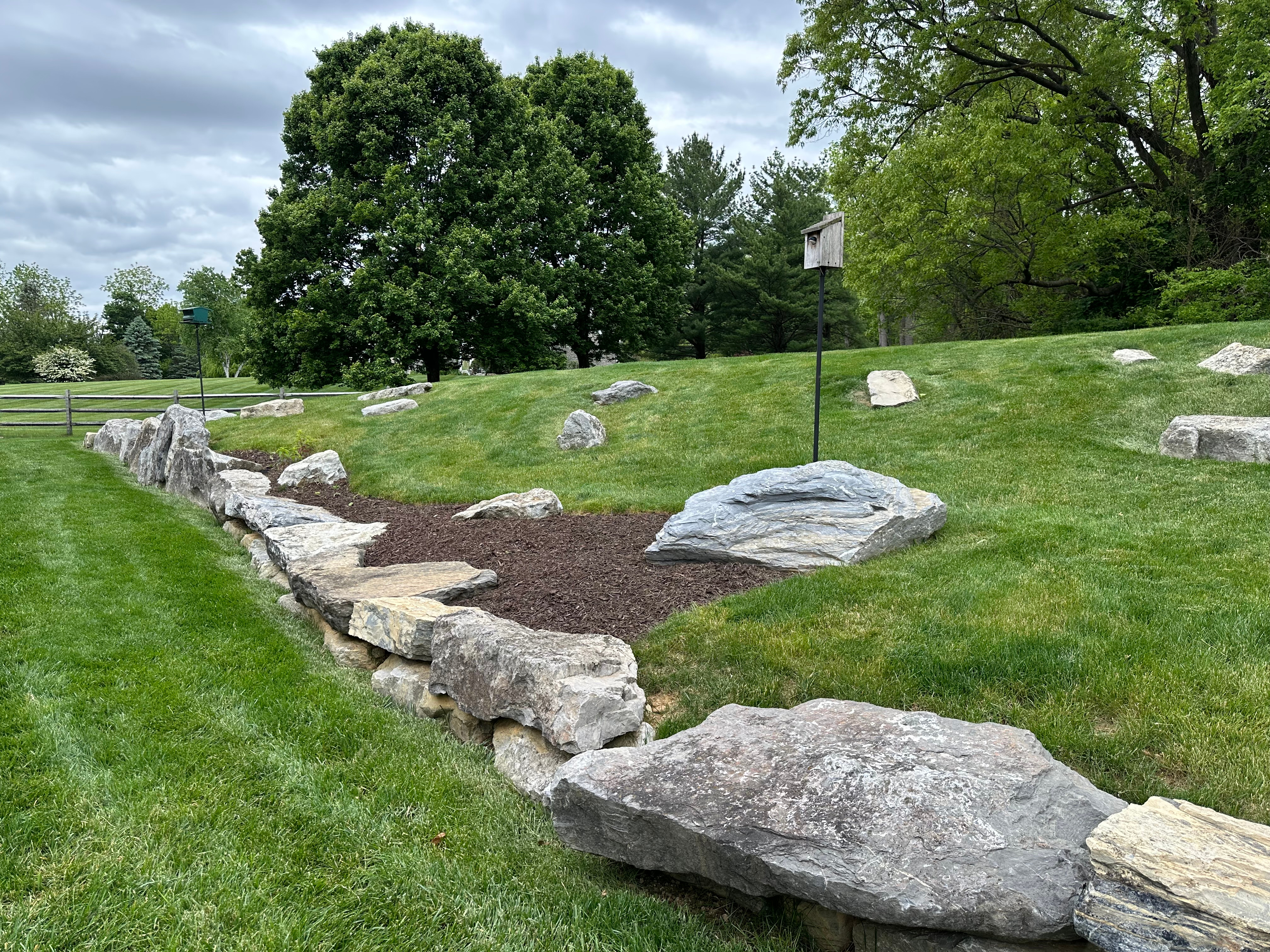
Septic bed in progress
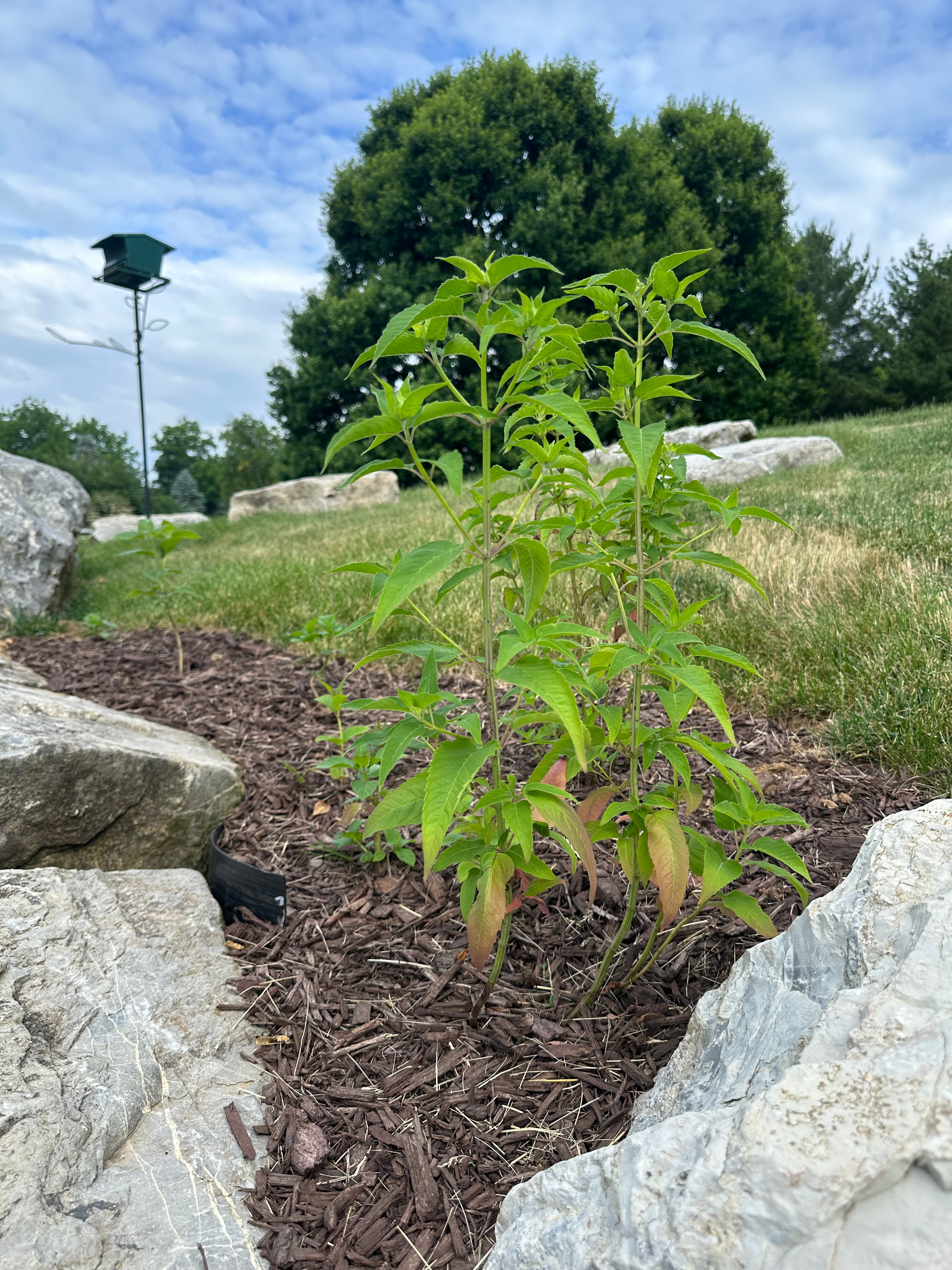
Wild Bergamot planted on septic mound
Identify Invasive Non-natives and Create a Plan to Replace According to Priority, Time, and Budget
In my gardens, I inherited several non-natives that were mostly dead. The barberry, lilac, spirea, and weigela had been planted prominently in the front yard, and it became obvious that they weren’t going to bounce back from a hard pruning. With its thorny branches, the barberry discouraged me from even looking at it, which seemed like an automatic vote for its removal. I took these bushes out within the first two years, making room for the wood poppy patch, plus Witch alder and swamp rose. There was also enough room to add a small pollinator garden.
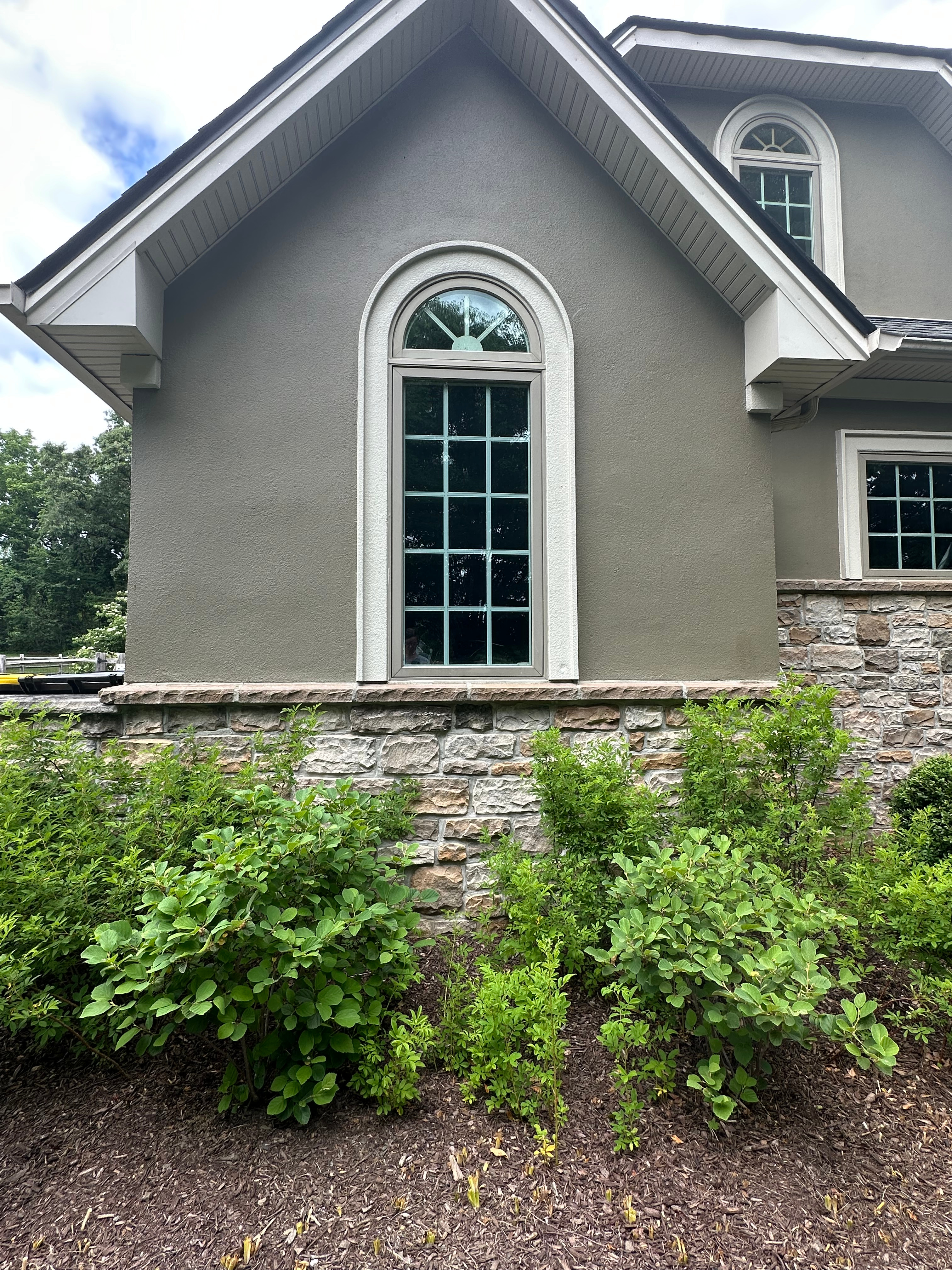
Swamp rose and Witch Alder
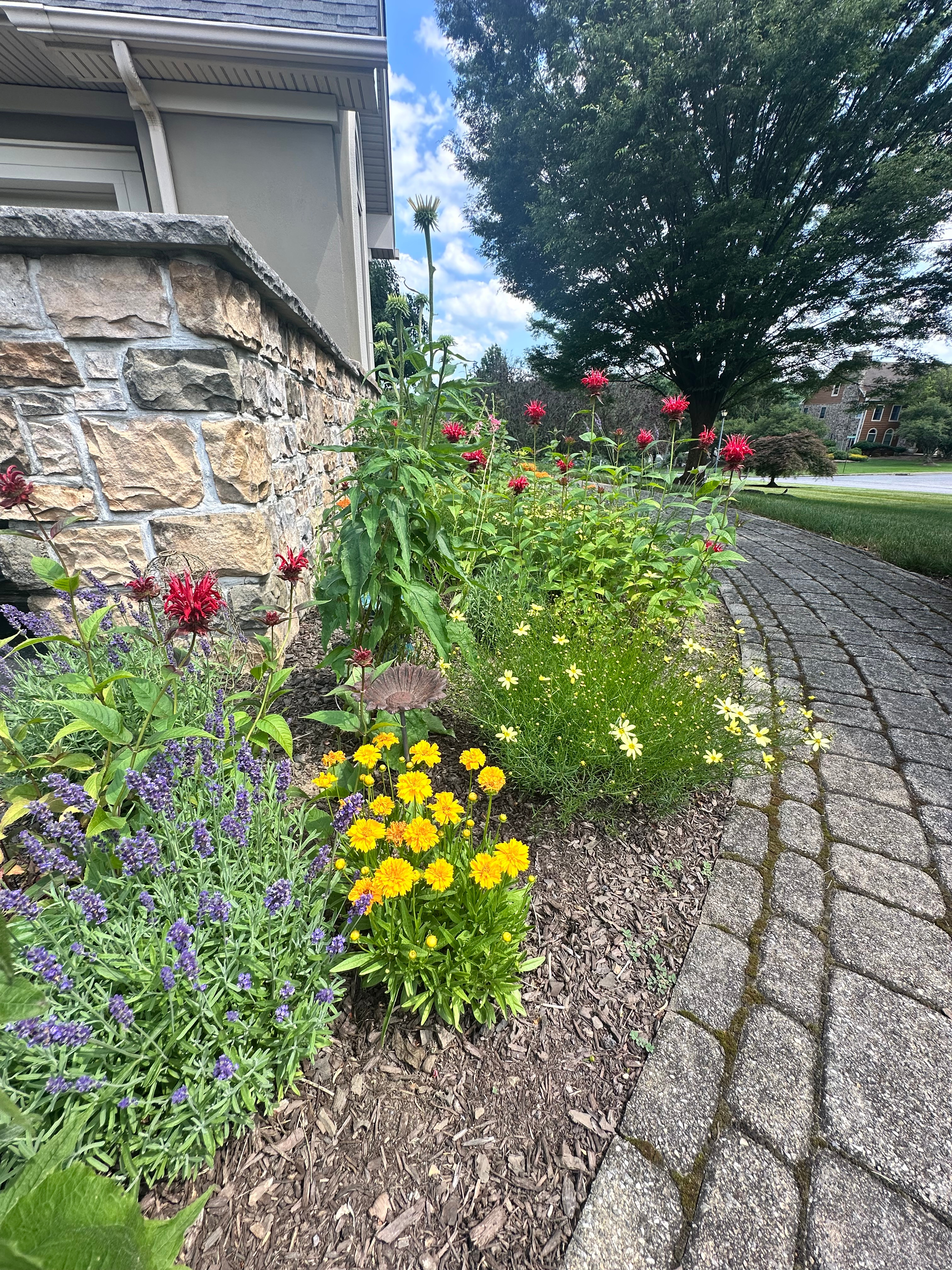
Pollinator garden
A smattering of burning bushes throughout the front landscaping remains a known issue. Some of them are situated in places that make them difficult to remove without hiring professional help. Although this would be a worthwhile project, it would also be a costly one. I’m not quite prepared to deal with the domino effect that would follow (removing adjacent creeping juniper and repairing a lengthy rock wall), so I’ve set my sights on simpler removal and replacement projects for the time being.
Observe and Take Notes
A lot of the ideas I’ve gotten for what to plant in my yard have come from seeing real-life examples and studying photos online. I take advantage of walks with my dog to scope out my neighbors’ plant choices, noting colors and textures to research back at my desk. When I visit nurseries and garden centers, I take my time reading plant tags. I tour gardens in my growing zone when possible, and I make a point to browse gardening forums and books for design ideas. I often search for professionals in my area with websites or social media accounts where they post photos of completed projects. The context is helpful—there’s usually a description accompanying the photos that describes the details and goals of the plantings, whether it’s to combat soil erosion, improve drainage, increase green mulch, or attract pollinators.
Since I’ve started gardening with natives, I’ve learned about the 70/30 rule, proposed by Doug Tallamy[3], which encourages home gardeners to aim for native biomass totaling 70 percent of their gardens. Even with 30 percent non-native plantings, a yard can still support insects, birds, and wildlife. So I call myself a native plant gardener because those are the plants that I choose to add to my landscaping. As vital as it is to eliminate invasives, it is just as important to introduce flowers, shrubs, and trees with ecological value. Each new native addition communicates to birds, bees, butterflies, and other pollinators that my yard is a place where they can find food and shelter. This is the work I can accomplish now, so it’s the work I do, one plant and one patch of garden at a time.
Plant Reference List
- Amsonia (Amsonia tabernaemontana, ‘Storm Cloud’)
- Anise hyssop (Agastache foeniculum)
- Blue flag iris (Iris versicolor)
- Blue violet (Viola sororia)
- Calico beardtongue (Penstemon calycosus)
- Canada anemone (Anemone canadensis)
- Carolina silverbell (Halesia carolina)
- Coneflower (White Swan Echinacea purpurea)
- Culver’s root (Veronicastrum virginicum)
- Earlybird Purple Blue Columbine (Aquilegia x hybrida)
- Foam flower (Tiarella cordifolia, var. collina ‘Oakleaf’)
- Foxglove beardtongue (Penstemon digitalis)
- Goldenrod (Solidago rugosa ‘Fireworks’)
- Ironweed (Veronica lettermanii, ‘Iron Butterfly’
- Red bud (Cercis canadensis)
- River birch (Betula nigra)
- Sensitive fern (Onoclea sensibilis)
- Serviceberry (Amelanchier canadensis)
- Spiderwort (Tradescantia virginiana)
- Swamp rose (Rosa palustris)
- Wild bergamot (Monarda fistulosa)
- Witch alder (Fothergilla gardenia)
- Witherod viburnum (Viburnum nudum, Smooth Witherod)
- Wood poppy (Stylophorum diphyllum)
- Woodbine clematis (Clematis virginiana)
- Yarrow (Achillea ‘Firefly Diamond’)