Garden Notes from Late Summer
In this edition, Kate turns our attention to the slow, unhurried side of summer gardening. Her story begins after the hard work of spring—after the digging, planting, and the early‑season push that sets the garden in motion. What comes next, are the small acts of care that keep the garden thriving: deadheading, cutting back, supporting the plants that have flopped under the weight of their flowers or been tossed around by summer storms. From these gentle tasks, she traces a shift in her gardening practice toward noticing and lingering, toward the late‑summer rhythm in which maintenance gives way to appreciation. Through her experience, she shows how this season invites us to admire what has grown, reflect on what’s unfolding, and find ease in a garden that asks little more of us than to look closely and be present.
A Look at the Late Summer Garden
In this Pennsylvania valley, where roads unfurl between rolling hills, summer casts a sheen over August like morning dew collecting on a finely woven spider’s web. Grass glistens beneath the spell of humid air as the rising sun promises to heat another day. Slanting rays highlight a haze that grazes the fields, an atmospheric mist visible from a distance that never seems to dissipate. It seems impossible that the air can be so damp and the ground so dry despite the torrents that sweep through in the afternoons. Every drop helps. It also helps that the weather has found a consistent beat and that the landscape has fallen into step with its current rhythm. My garden has rebounded from the early-season heat and hit its stride.
Late summer has a way of finding the native garden at its peak. Beneath an unwavering sun, steeped in simmering humidity and drenched by frequent storms, mid-season flowers bloom strong and steady. In my gardens, cutleaf coneflower and Joe-pye weed compete to see which will grow taller. Swamp milkweed wants in on the fun while butterfly weed is content with its petite stature. Mountain mint, on the other hand, branches out in every direction. Blue lobelia and cardinal flower flourish on steeple-like spires. Beebalm and yarrow sprout meandering stalks that stretch across their neighbors and reach for the sun anywhere they can find it. Each plant flowers prolifically among the shadows of fading spring foliage and the leaves of fall bloomers yet to debut. Everything that was and is and has yet to be is present.
My late summer garden asks little of me except to look and linger. The only real task I have during these slow, steamy days is to observe. The labor-intensive work of spring is behind me. I’ve traded the shovel for secateurs and don’t plan to dig again until it’s time to divide perennials after the weather cools. Some light maintenance might sneak in. A little deadheading, a little pruning. Maybe figuring out how to support the echinacea and rudbeckia flopping under the weight of their flowers or helping them stand up after having been tossed around by a gusty storm. But mostly, I stroll and study.
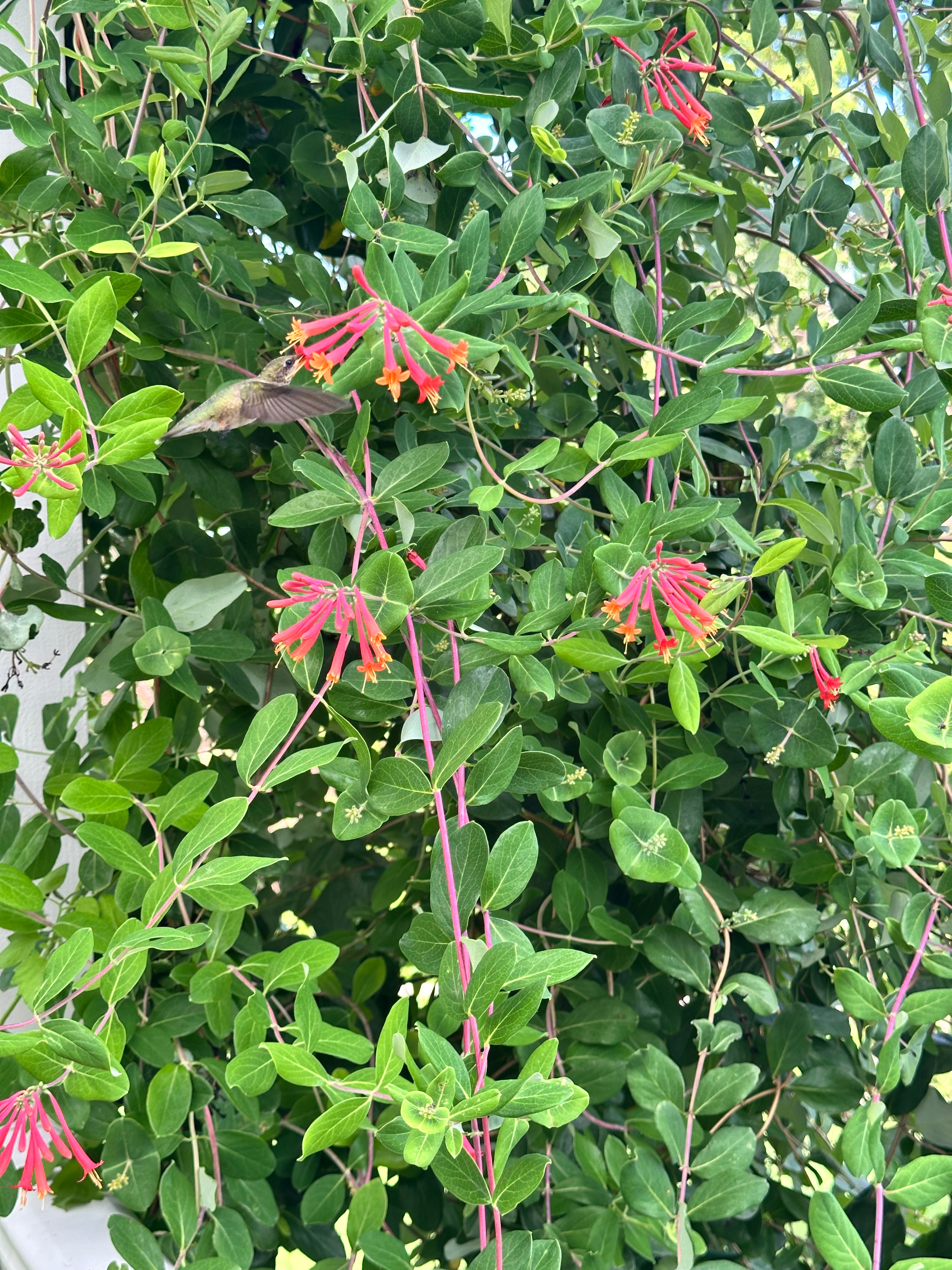
Hummingbird drinking from coral honeysuckle (Lonicera sempervirens)
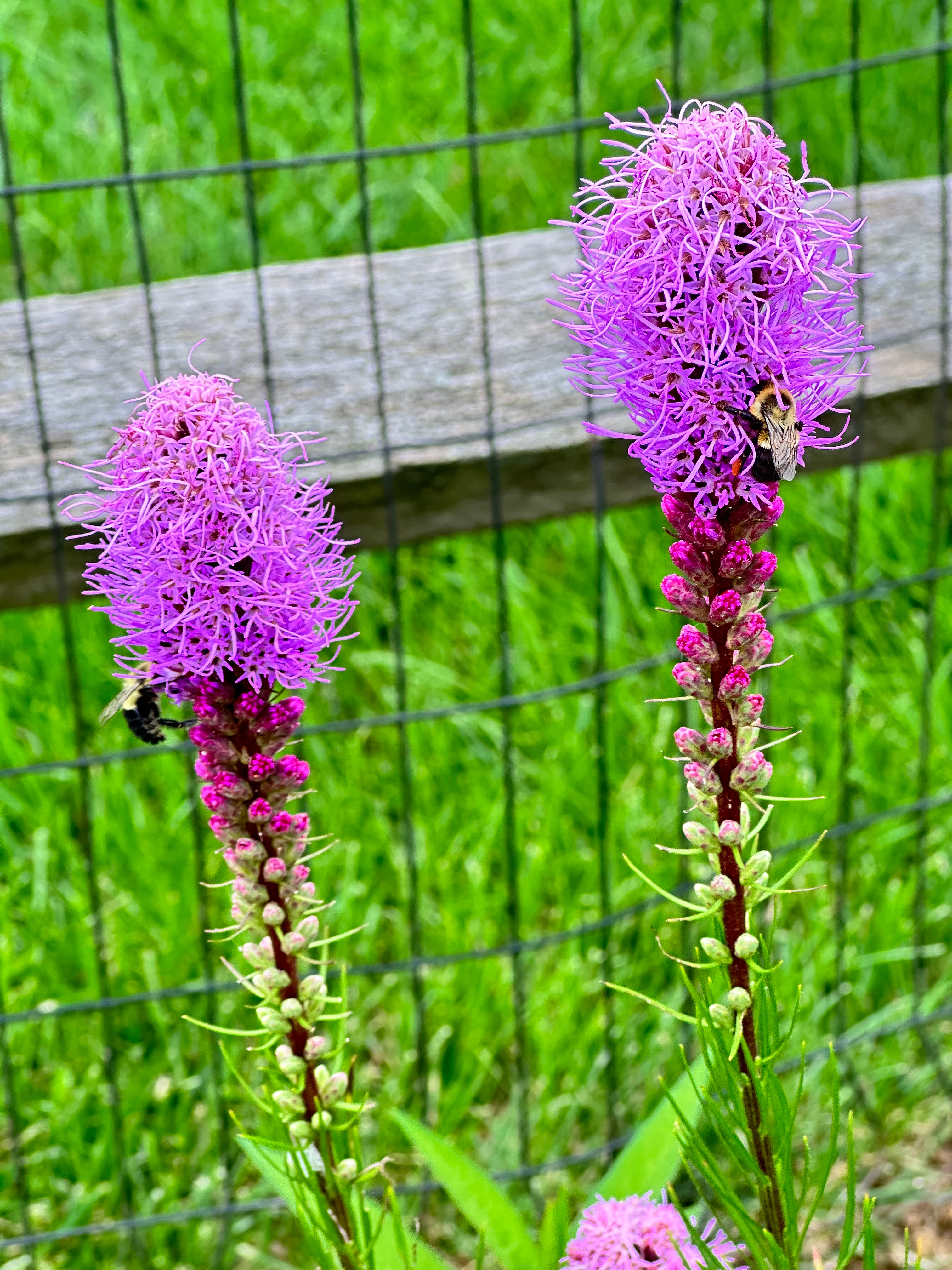
Bumble bees on dense blazing star (Liatris spicata)
It’s a welcome relief to come to the garden with no immediate agenda. Instead of seeing an endless list of garden chores, I see the results of the work I put in months and even years ago. I notice the abundant supply of green which, when I think back to the short days of early spring, seemed like a figment of the imagination. The river birches appear to be experiencing a summer-long growth spurt. Light green foliage extends from the tips of their branches where the wrens and bluebirds pause to rest. A serenade of softly buzzing bees beckons me to the flowers where they feverishly collect pollen. They’ve picked up where I’ve left off, tending the flowers in their own way. The familiar emerald flash of ruby-throated hummingbirds flickers past as they feed from hot pink coral honeysuckle, a vine that has now climbed nearly 14 feet from the ground to the top of the pergola overhead. They zip around the branches all day long, occasionally pausing in mid-air to inquire, somewhat skeptically it seems, as to the reason for my presence near their food supply. With flowers emerging daily on new growth, I no longer need to fill a nectar feeder. I’ve been relieved of duty; the honeysuckle supplies the hummingbirds with as much of it as they can handle.
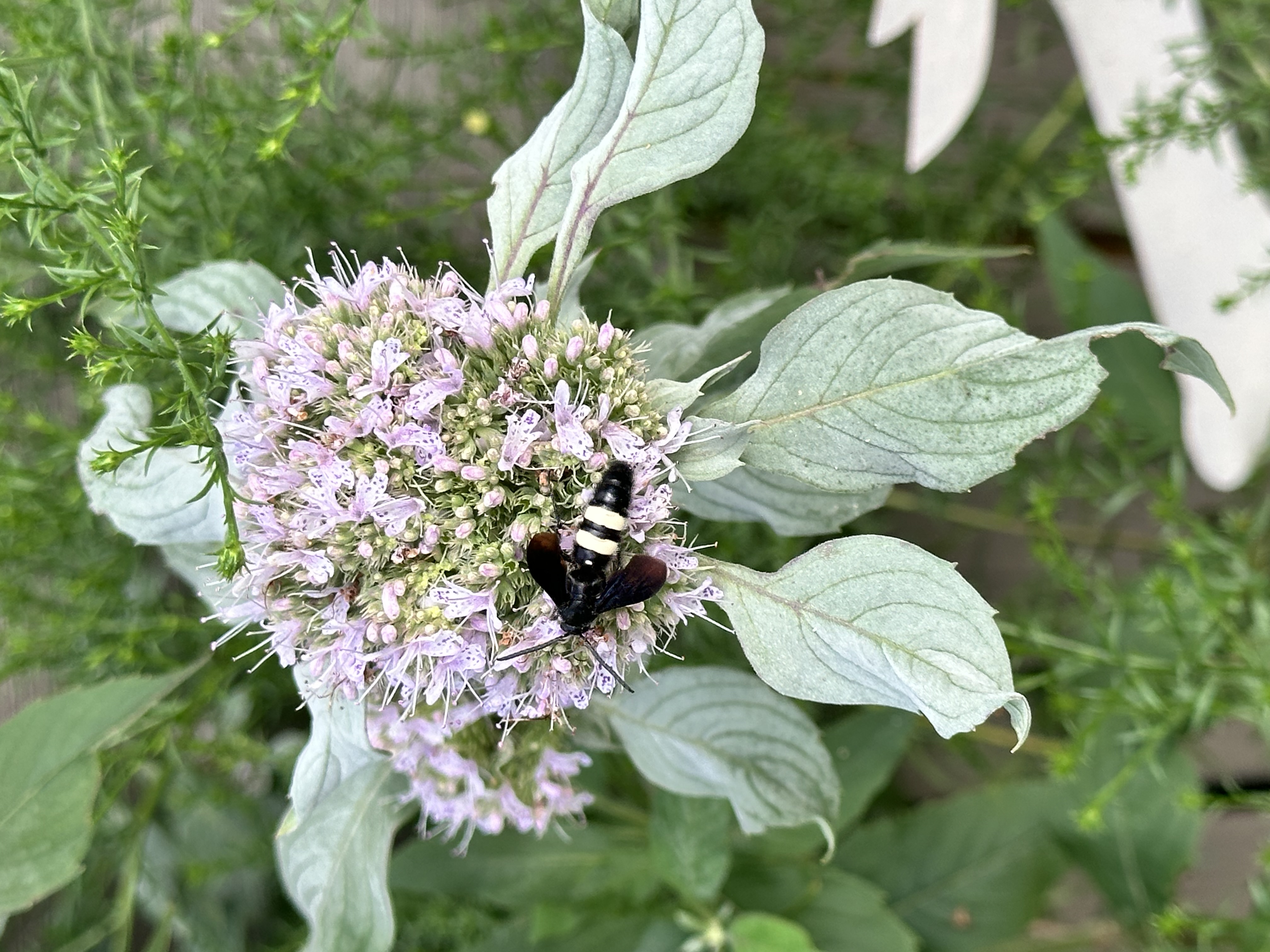
Double-banded scoliid wasp on hoary mountain mint (Pycnanthemum incanum)
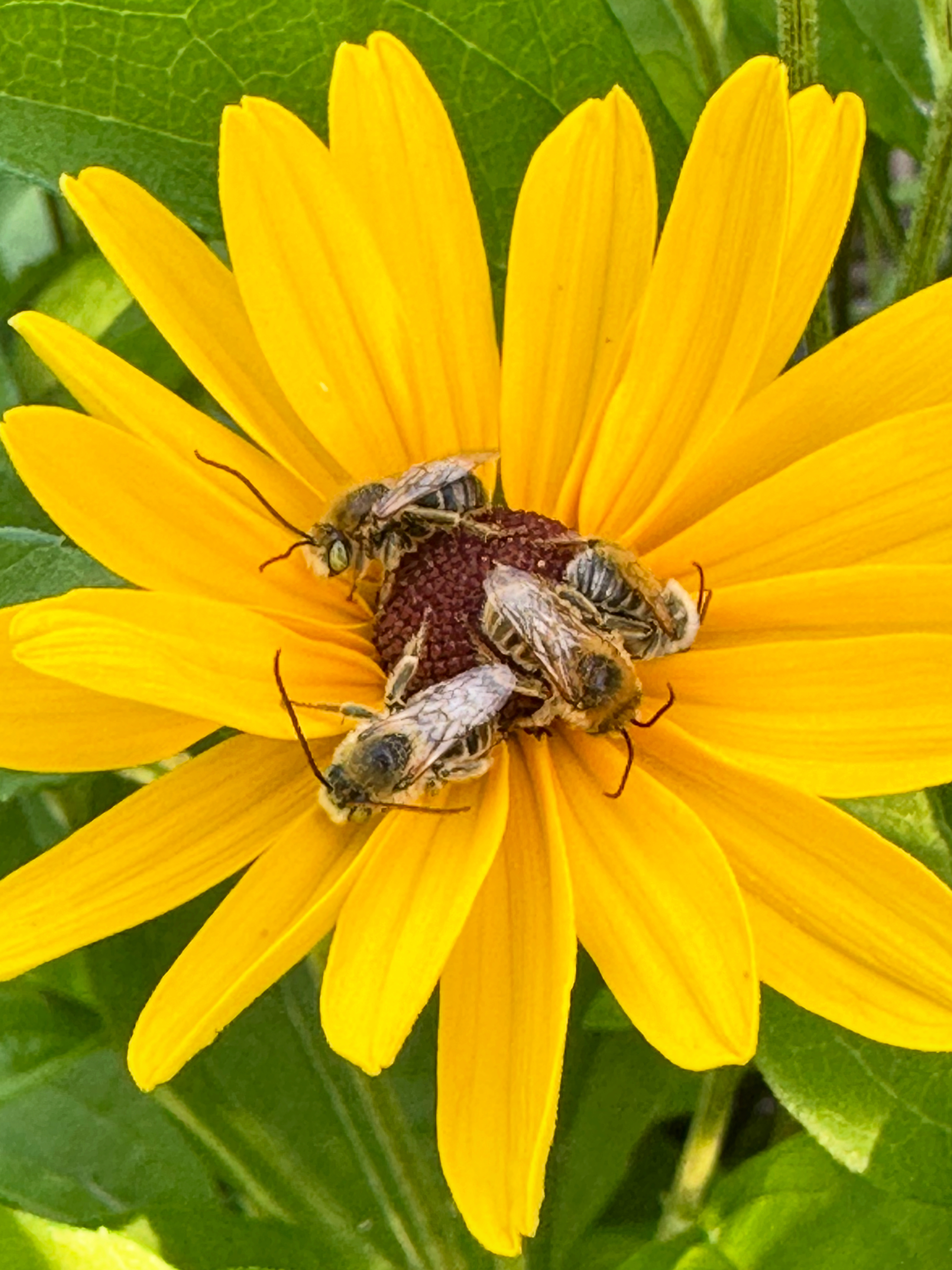
Longhorn bees resting in rudbeckia (variety unknown)
That was, of course, the goal in planting honeysuckle. First and foremost, I wanted to see hummingbirds in my yard. Secondly, I wanted to provide them with a reason to keep coming back. This was the goal in planting many other of the pollinator powerhouses throughout the yard, too. From the dusty lavender flowers on mountain mint to the shock of magenta on dense blazing star, bee and wasp species that I’ve never noticed before gather on the flowers. In particular, longhorn bees regularly nap on the petals of a volunteer rudbeckia. Swamp milkweed teems with visitors, the most exciting of which this year has been clearwing moths. Hummingbird clearwing (Hemaris thysbe) and Snowberry clearwing (Hemaris diffinis) are energetic feeders, dancing over the flowers as they eat. These little creatures could easy fool you into thinking they are large bees or small hummingbirds, but upon closer inspection, they are moths with unusually large bodies and transparent wings. Look closely and you might glimpse their proboscis curled into a spiral and the contrasting border etched on their see-through wings. The coral honeysuckle and smooth witherod in my yard are host plants for these whimsical moths. I’m hopeful that my decision to plant them is directly connected to the moths' increased presence.
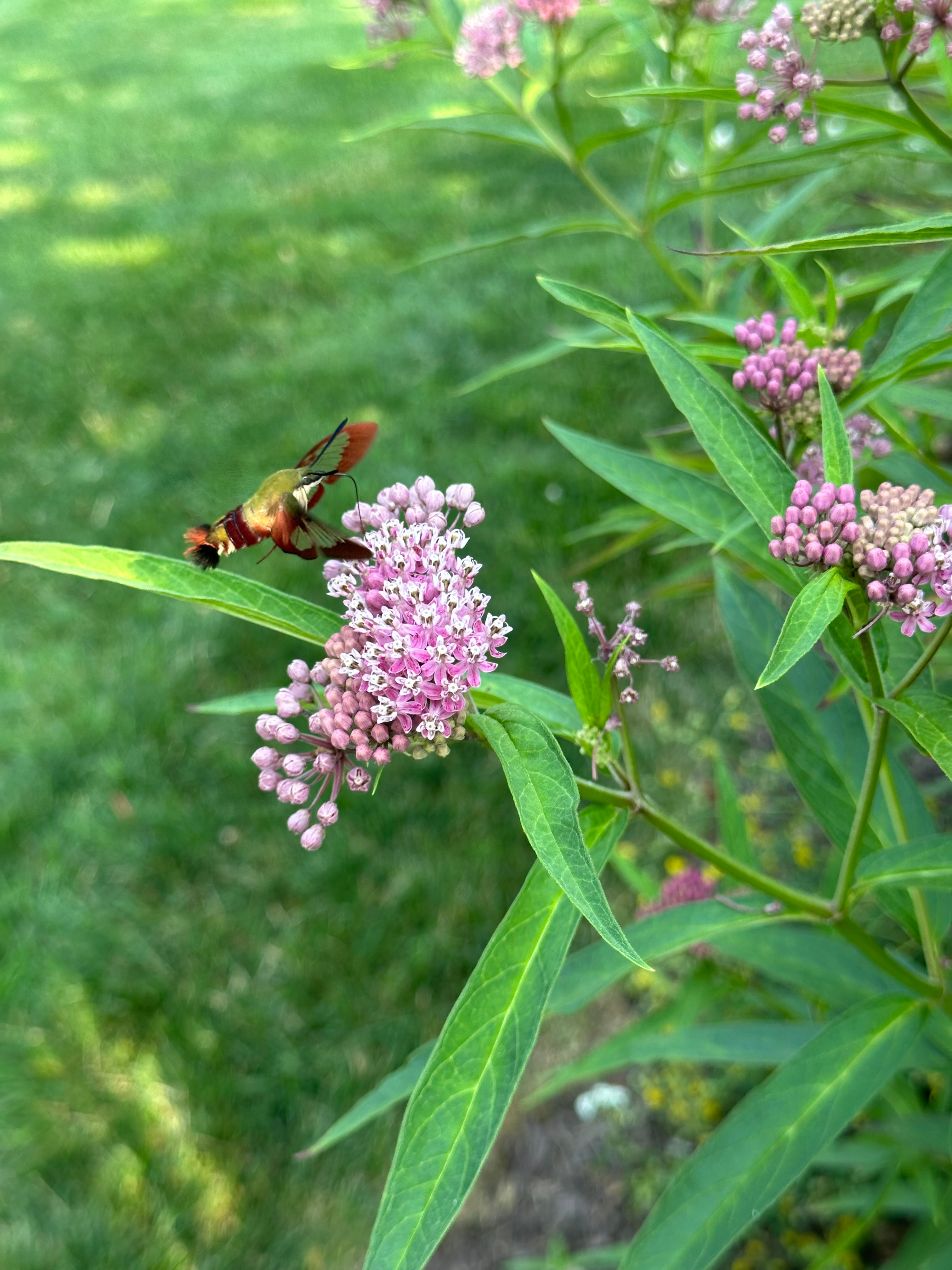
Hummingbird clearwing moth on swamp milkweed (Asclepias incarnata)
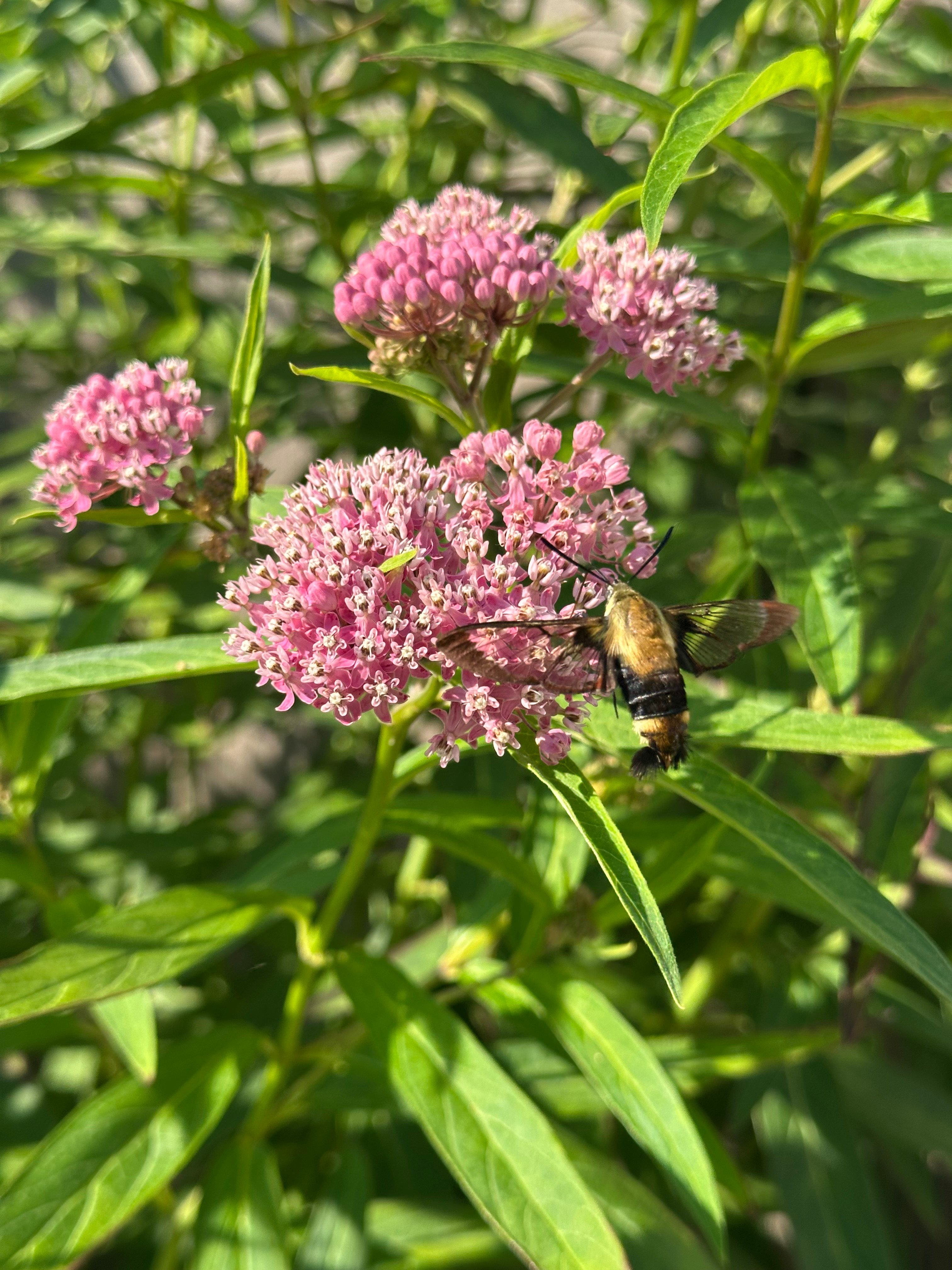
Snowberry clearwing moth on swamp milkweed (Asclepias incarnata)
If I shift my attention away from the enormous honeysuckle vine, what comes into view is a jungle of other native plants that have grown considerably since they were first planted. Every plant has expanded its original footprint. Each one has more flowers than it did the year before. This is what is supposed to happen: you plant perennials well-suited to the soil and growing zone, and they reward you with years of continuous progress. They grow. Somehow, it comes as a surprise: they grew! This ambitious idea to plant a native plant perennial garden went from let’s see what happens to look what happened! The pink pearls of Joe-pye weed, the fluffy lemon-yellow plumes on goldenrod, the lilac trumpets on wild bergamot persist week after week. Even the plants added just a few months ago—demure blue lobelia and brilliant red cardinal flower—are covered in blossoms. What looked like adequate spacing with the first plunge of the shovel now looks a bit crowded.
Most plants don’t seem to mind a little crowding. The lack of visible mulch tells me two things: I’ve accomplished my goal of requiring less of it, and it might be time to divide some perennials. I can dream now about creating space for them while savoring the reprieve from digging more holes. It’s a good excuse to turn to my library of garden design books and gather ideas for plant combinations and layouts. That’s something I’ve been wanting to do more of—planning the placement instead of winging it, which is usually the result of a spur of the moment plant purchase or spontaneous decision to move something. At this time of year, there’s no reason to feel rushed. There’s plenty of time to consider the how this year’s growth will inform next year’s garden.
Looking through garden photos and planting notes helps me get ideas for plants to add to my yard. I can redistribute what I’m already growing and perhaps introduce some new species. Golden alexander, an early spring bloomer, would supplement the work of already-established wild columbine and wild geranium. Garden phlox and boneset would round out mid-summer and fall-blooming plants. Their seeds require cold stratification, making them ideal choices for winter seed sowing. That has me thinking—perhaps it’s time to start collecting milk jugs? The seeds I sowed last winter have developed into healthy plants, and I’m eager to witness their second-year creep after they shake off the first-year sleep.
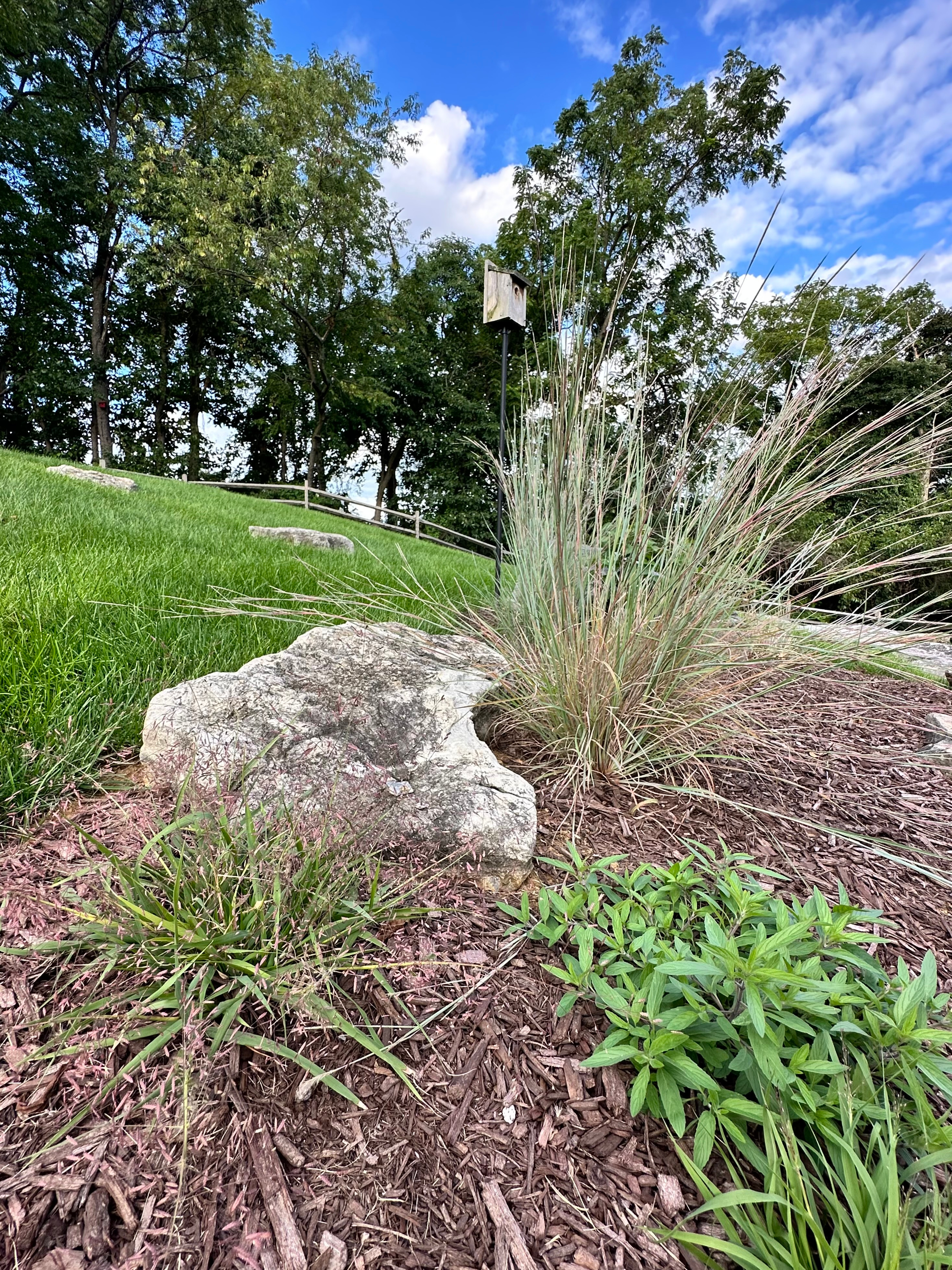
Purple lovegrass and little bluestem with seeds (Eragrostis spectabilis and Schizachyrium scoparium)
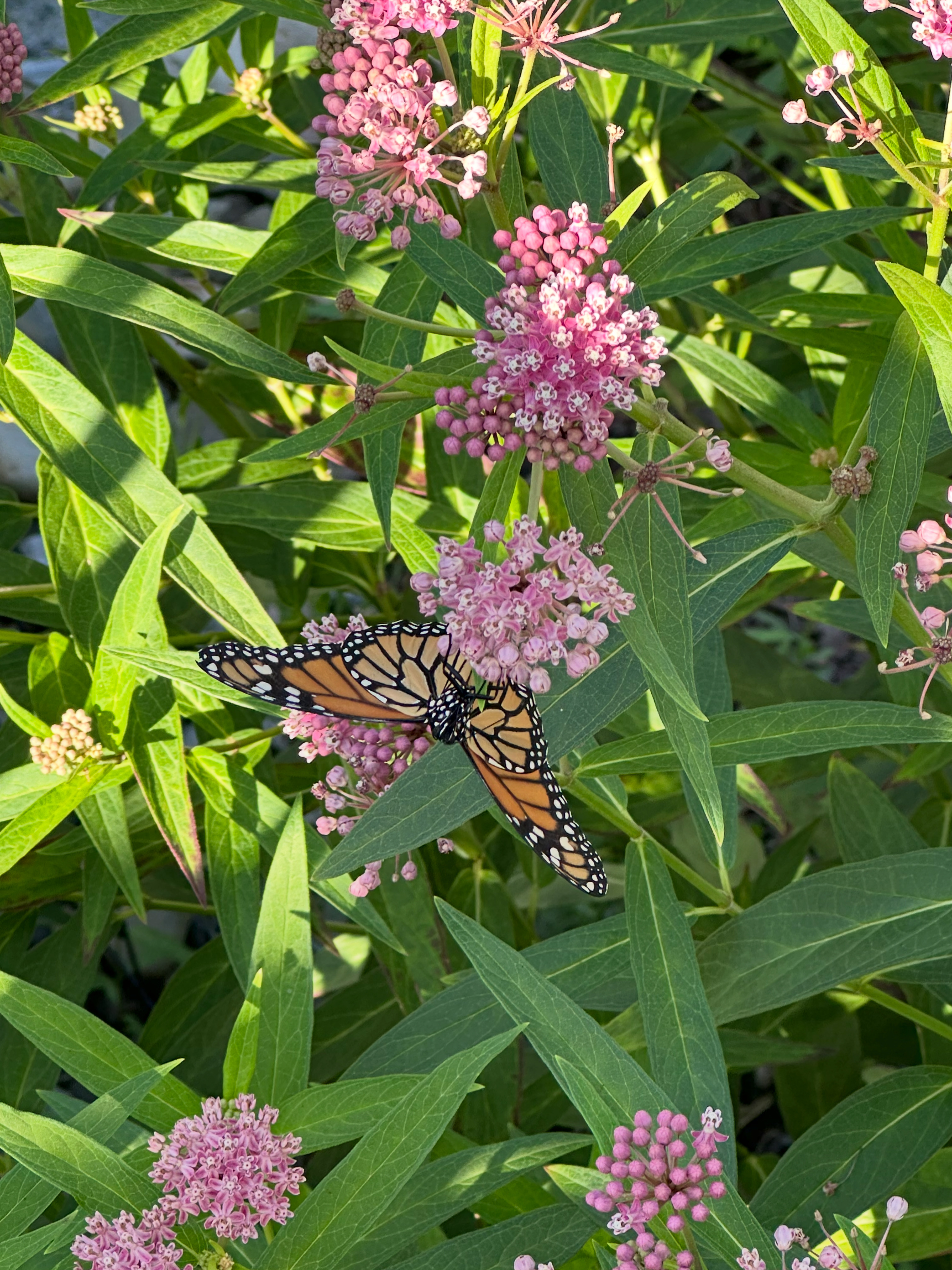
Monarch butterfly on swamp milkweed (Asclepias incarnata)
The garden in late summer is the garden I wait for all year. It’s the version that I love best, the one I commit to memory every winter and imagine again every spring. The flowers are at their fullest, the stems at their longest, the color at its most vibrant. Monarchs and swallowtails drift in and out, and birds begin to pluck seeds forming at the tips of little bluestem and purple lovegrass. The first white starlets of aster begin to sparkle soon to be followed by a constellation of ironweed and goldenrod. Every walk past blooming plants brings a reason to be grateful for the native garden—a cocooning caterpillar, berries where flowers have gone to fruit, a smattering of seeds that might sprout next year as new plants if they aren’t first eaten by birds. The cycles of growth are also cycles of giving. What I take away from it is a sense of peace that puts my mind at ease. There is comfort in knowing that the garden will continue to grow and support a multitude of life beyond what my eyes can observe. This is the season when it shows me the good it does all year long. All I have to do is look and listen to know it.