Field Notes from Prescribed Burns
In this edition, James Benavides brings us into the world of prescribed fire and the burn lines of Pennsylvania’s prairies and barrens. His piece traces the subtle transformation that follows a controlled burn, moving from blackened ground to the first signs of returning life, and shows how fire remains an essential part of the landscapes we work to restore.
Burns to Blooms
I conducted my first prairie burn this year and wasn't sure what to expect. Smoke sat low across the field. The grass caught quickly, moving with the wind just a few paces behind me. Within minutes, what had been a field of dried gold grasses became a blackened, ashy expanse. It looked like destruction. It smelled like destruction. But underneath the surface, plants were already preparing to push back up. Participating in prescribed burns has taught me a lot about the value of the practice for land conservation, as well as its benefit to native flora and fauna.
A prescribed burn, also known as a controlled burn or Rx fire, is the intentional use of fire as a land management tool. Before anything is lit, burn managers develop detailed plans accounting for weather conditions, safety protocols, and ecological goals. There are a few core reasons to burn: reducing invasive species, restoring native plant communities, and reducing the buildup of vegetation that can fuel dangerous wildfires.
Fire has always been a part of the landscape. Long before modern conservation agencies existed, Indigenous peoples across what is now the United States used fire deliberately and skillfully to cultivate the plants they depended on. In Pennsylvania, many of the plant communities we work so hard to restore today, including oak-pine barrens, open woodlands, and meadows, were actively shaped by this burning alongside wildfires. By the early 20th century, however, a widespread policy of fire suppression had taken hold. Large wildfires had devastated forests and communities, and the U.S. Forest Service adopted fire prevention as the default response. The result was nearly a century of fire exclusion. Leaf litter and thatch accumulated. Meadows filled in with woody shrubs. Shade increased. Fire-adapted natives declined while invasive plants, unbothered by the changing conditions, moved in.
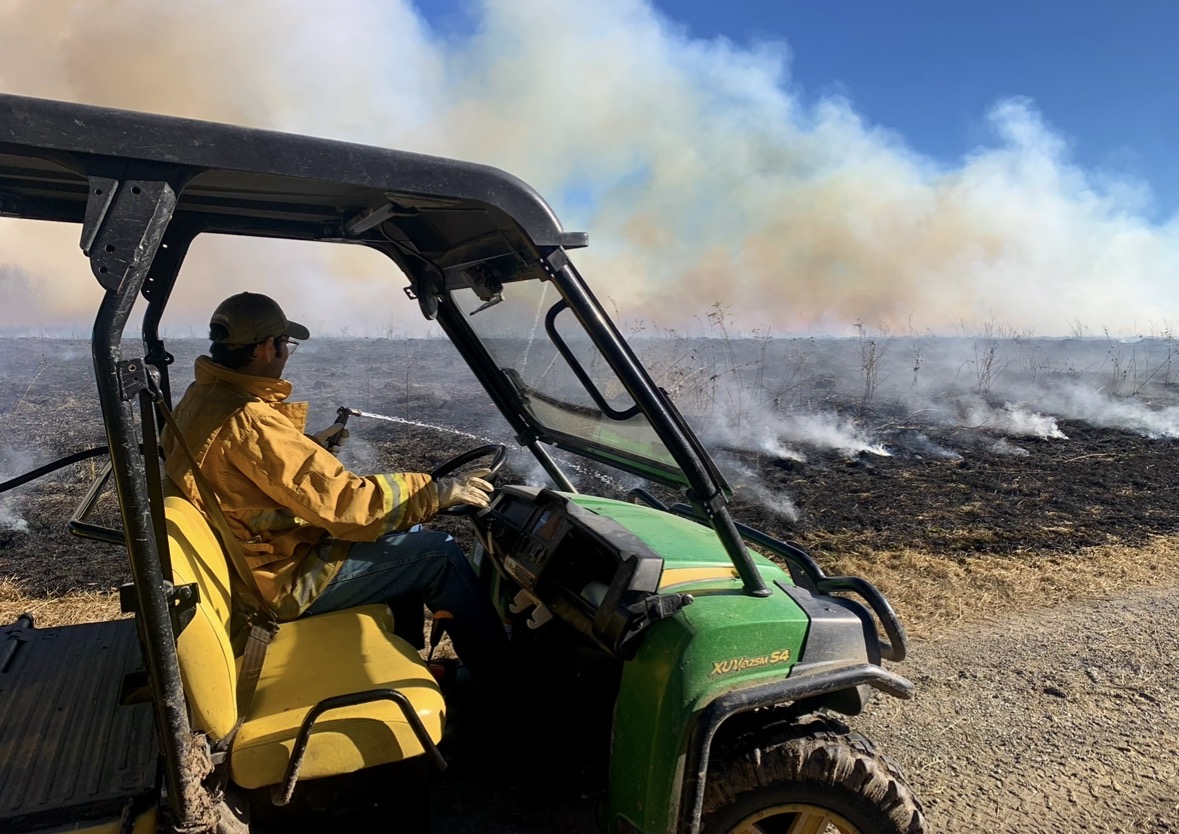
James (Me!) Using water to control the spread of the fire.
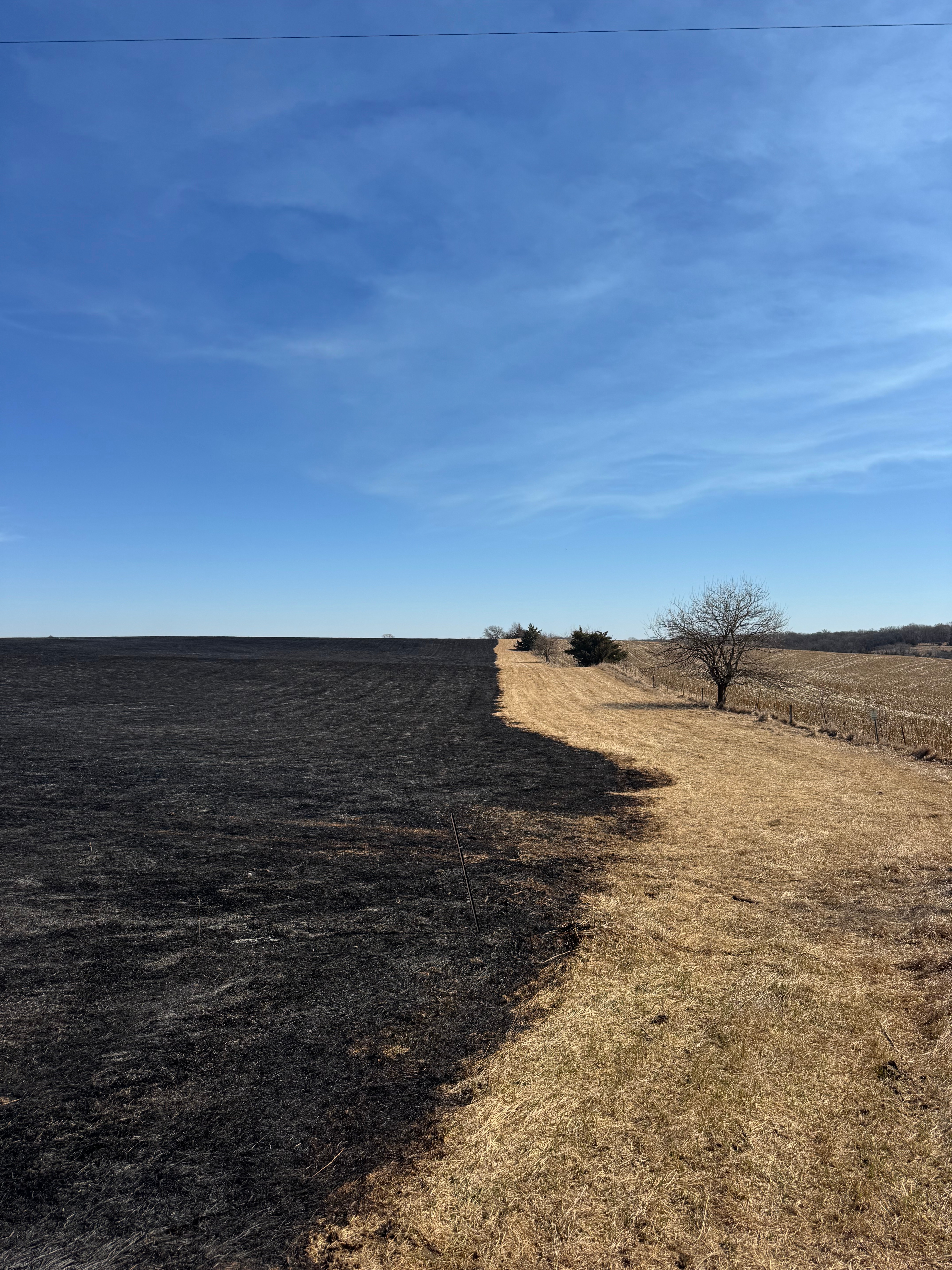
A stark contrast between burned land (left) and unburned land (right) shows how precisely fire can be managed within site boundaries.
Pitch pines (Pinus rigida) are one species that felt this shift. Their thick bark is adapted to protect them from fire, and they carry dormant buds that activate after being stimulated by heat. Without fire, hardwood trees like oaks and maples outgrew the pines, causing their slow decline. Scrub oak (Quercus ilicifolia) is another fire-adapted species, relying on its rhizomes to resprout after disturbance. A small, shrubby oak, it cannot compete for light with taller forest species and began to decline once fire was removed and woody shrubs shaded it out.
Across Pennsylvania, open barrens and prairies contracted and biodiversity declined with them. However, land stewards began to notice these changes and slowly reintroduced burns. In 2009, Pennsylvania formally recognized prescribed fire as a legitimate land management tool through the Prescribed Burning Practices Act, and since then the practice has steadily grown across game lands, state parks, nature preserves, and private properties.
In the many acres I've burned this year, I've been struck by how extraordinary fire-adapted species truly are. In the prairies, native grasses anchor themselves deep in the soil, well below the reach of surface heat. Big bluestem (Andropogon gerardi) has roots that extend up to 12 feet down; little bluestem (Schizachyrium scoparium) can extend 5 feet down. Fire can stimulate the rhizomes of indiangrass (Sorghastrum nutans), often leading to increased seed production and flowering in the seasons that follow.
What I didn’t expect was how much the timing of the burn matters. One important consideration my team works through is the early spring green-up of invasive grasses. Invasives tend to emerge first, pushing growth before native species break dormancy. Burning in that window, when invasives are actively growing and natives are still dormant, can knock the invasives back and open the ground for native species to establish in their place.
Depending on the season, recovery after a burn comes fast with plants pushing through the ash only days after. Some landowners choose to seed their sites with native species mixes to further discourage weed invasion and align with specific management goals. We've hand-seeded plots with diverse forbs and grass mixes following burns. With the thatch burned, sunlight and water can more easily reach the soil, supporting a flush of new growth.
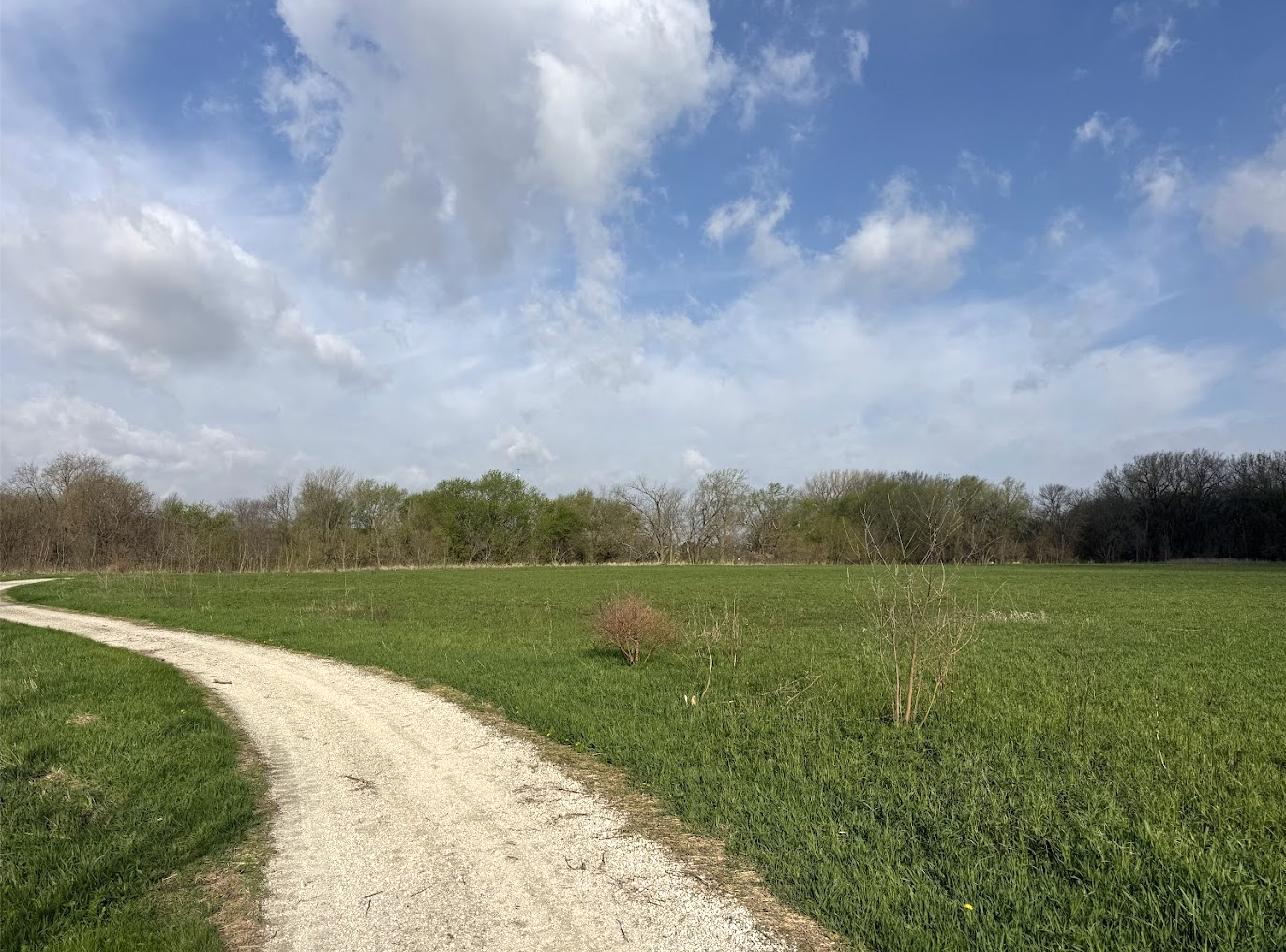
A grassland a few months after burning. With woody shrubs killed by fire, native grasses can spread with less competition.
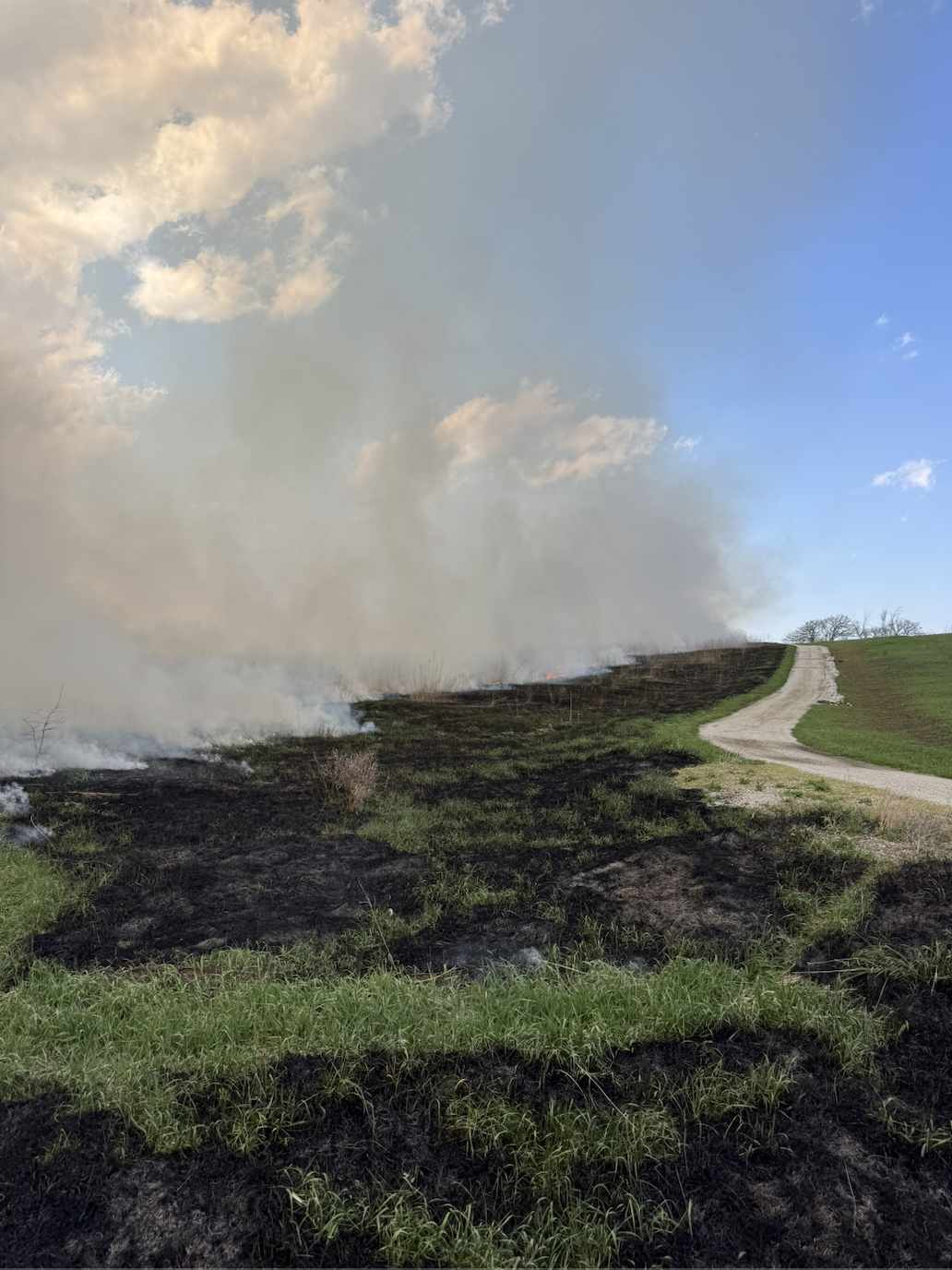
Targeting the early green-up of invasive grasses helps set natives up for more success.
I saw that plants were not the only ones responding to the burn. Animals like rabbits, chipmunks, and birds flee from the disturbance, and whatever remains gets charred. Most commonly I've come across antlers and skulls from already deceased deer. Once, even an entire skeleton - its bones marbled with the fluidity of smoke and flame.
And that return of life reaches beyond the immediate plant growth. The restoration of native plant communities has direct consequences for the animals that depend on them. Wild lupine (Lupinus perennis) is a great example. Native to Pennsylvania's sandy barrens and dry prairies, lupine thrives in the open, sunny conditions that periodic fire maintains. Fire has shown to directly influence lupine seed germination and seedling survival, yet without regular disturbance, lupine habitat follows a similar fate to the scrub oak and pitch pine; an estimated 90% of its population has been lost in the last century. Lupine is the exclusive host plant for the federally endangered Karner blue butterfly, and several other insect species depend on it as well. The conservation of these plant communities carries weight far beyond the plants themselves. That's why burns are important!
Over the last few months, I have learned a great deal about the influence of prescribed burns, though I still have much more to experience. I am by no means an expert, and so I continue to look not only to new research, but to the land itself - watching its response at every stage, from burns to blooms.
On a day with the right conditions, favorable wind direction, low humidity, measured wind speed, I can look out and see plumes of smoke rising in every direction. Each one a sign that another landowner is out spending their day tending their land, giving native species a better chance at the season ahead. A quiet, indirect signal of stewardship.