Actaea racemosa
Actaea racemosa black cohosh

 Synonyms:
Cimicifuga racemosa
Synonyms:
Cimicifuga racemosa
Add to MyPlants View Locations
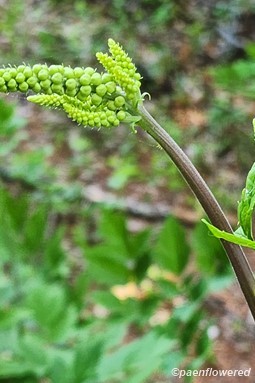
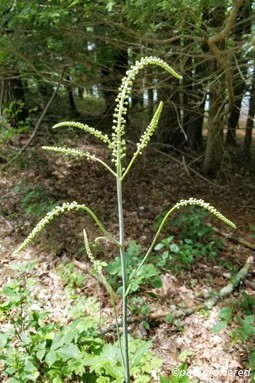
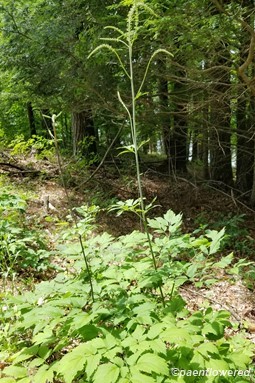
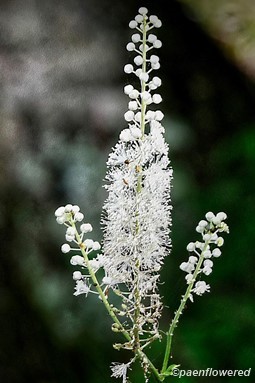
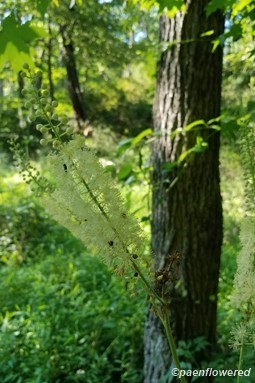
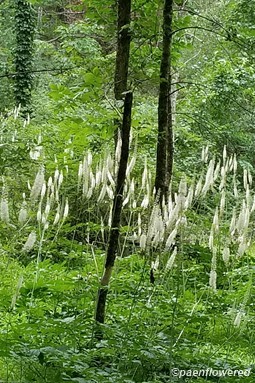
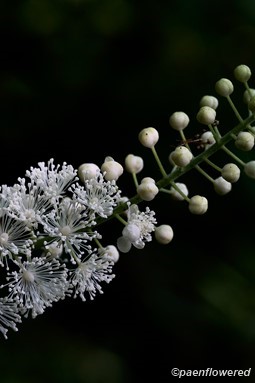
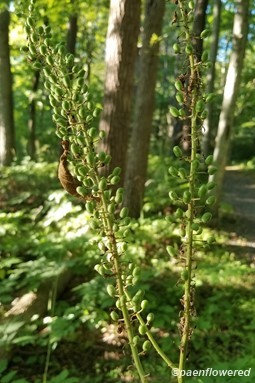
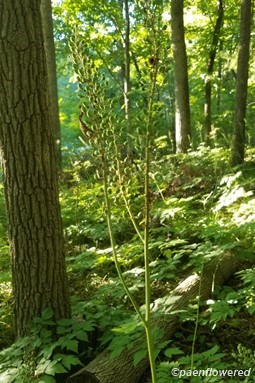
This stately herbaceous perennial is most notable for its long, drooping branches adorned with numerous tiny white flowers and a distinct pungent smell. Each plant produces one or more flower panicles, each containing 4 to 9 racemes that range from 4 to 24 inches in length. There is a central larger raceme surrounded by several secondary racemes. The racemes can be covered with buds, fruits, and flowers in various stages of development. The leaves are quite large and compound, twice pinnate or thrice pinnate with irregularly shaped leaflets.
Black cohosh is a relatively common woodland perennial that can reach up to 8 feet tall, especially in shady, pH‑neutral, organically rich soils. It thrives in partial sun to medium shade and is found in every Pennsylvania county except Wayne, Sullivan, and Susquehanna. In the wild, it grows primarily in rich mesic woods, along forest edges, and in sheltered ravines.
Black cohosh is primarily pollinated by bees, such as bumblebees and other native bee species. The plant's flowers produce abundant nectar and pollen to attract bees, beetles and flies.
Habitat & Range
Common in rich moist woods, wooded slopes, edged of dense wood and gallies. Prefers partial sun to medium shade.
Present throughout the state excluding Wayne, Sullivan and Susquehanna counties.
Range: Ontario south to Georgia and Tenessee; Massachusets west to Missouri
Wetland code: Not classified
Phenology
Flowers June to early August. Bloom duration is 3 to 4 weeks.
Characteristics
Inflorescence monoecious; panicle with 4 to 9 racemes 4 to 24″ long
Flowers radially symmetric, perfect, numberous; on short pedicel; 24 long, slender stamens, 1 pistil, 4 sepals; ⅔″ across
Leaves large, pinnately compound, petiolate; normally bipinnate or tripinnate with 10 or more leaflets
Leaflets glabrous, irregular, medium green; margins dentate to deeply serrate; up to 4″ long; terminal leaflets ovate to obovate
Stems solitary; hairy to smooth; light green
Fruit ovoid hairy follicle with short, curved beak; ⅓″ long; 8 to 10 seeds in two rows
Height 3-8 feet
Plant Codes
S-rank: S5 (Secure)
G-rank: G3 (Vulnerable)
Medicinal Qualities
Traditionally, black cohosh has been primarily used as a sedative, relaxant, and antispasmodic. Some Native American tribes utilized a brew made from its rhizome to alleviate menstrual and childbirth pain, and applied a rhizome poultice to treat snakebites.
Ecology
Bumbleebees and other native bees pollinate the flowers and other insects such as flies and beetles come for pollen and nectar. Black cohosh is the only host plant for Appalchian Azure butterfly.
Mammals very rarely feed on this plant because of its fetid odor and toxicity.
Actaea racemosa black cohosh
Add to MyPlants View Locations


Comments
Have you spotted this plant in your area? We'd love to hear about your experience! Share your comments or questions about the plant below. Comments are moderated before posting.