Field Notes from the Hidden Soil
In this edition, Colin turns our attention to the smallest inhabitants of the fern world — the adder’s‑tongue family, those tiny, ground‑level ferns that rise on fleshy stalks and live half their lives hidden beneath the soil. He traces their four genera through Pennsylvania’s fields and woods, from moonworts only inches tall to the broad, evergreen grape ferns, showing how each reveals its identity through subtle details of blades, stalks, and sporangia. What starts as uncertainty — tiny forms that look like nothing you’ve seen — gradually becomes recognition, as these ground‑level ferns reveal their delicate patterns to anyone who stays long enough to see them.
Adder’s‑Tongue Ferns — The Ferns of Hidden Soil
Some of the most interesting types of fern you will come across belong to the family Ophioglossaceae commonly referred to as the adder’s-tongue family. The most noticeable feature is their small size. The largest fronds of the adder’s-tongues will only grow to about 12 inches long and 12 inches across with the smallest species often growing to less than two inches tall. All of these species are rhizomatous and emerge straight from the ground (erect vernation), rather than the coiled fiddleheads we are accustomed to in most ferns. The emerging fern fronds are composed of a fleshy, scaleless stalk (common stalk) that divides into two parts; a single, leafy sterile blade (tropophore) and a fertile blade (sporophore) which bears clusters of sporangia. Identifications within this family can be aided by noting where sterile blade and fertile blade divide from the common stalk.
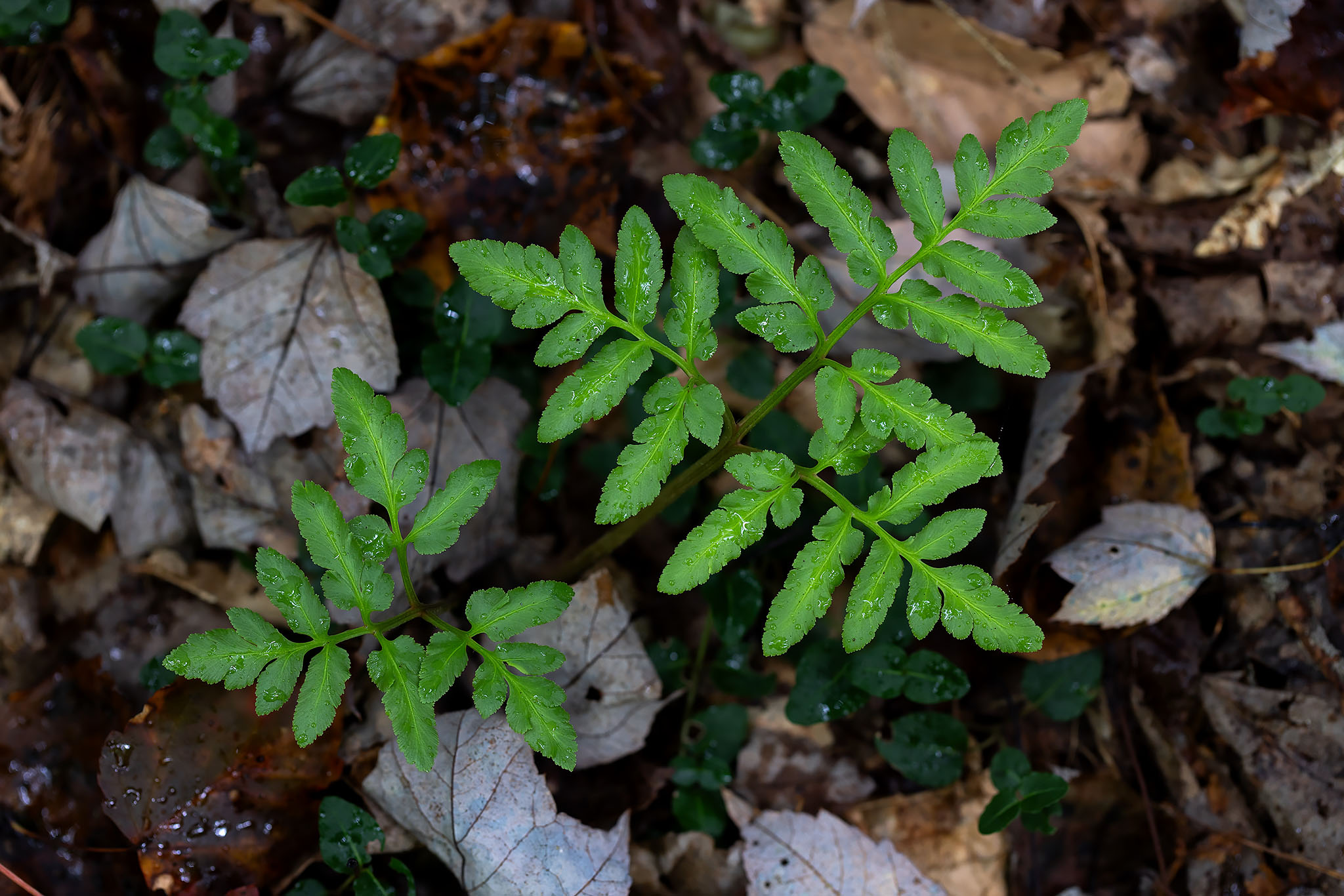
Cut-leaf grape fern - var. obliquum - sterile blades
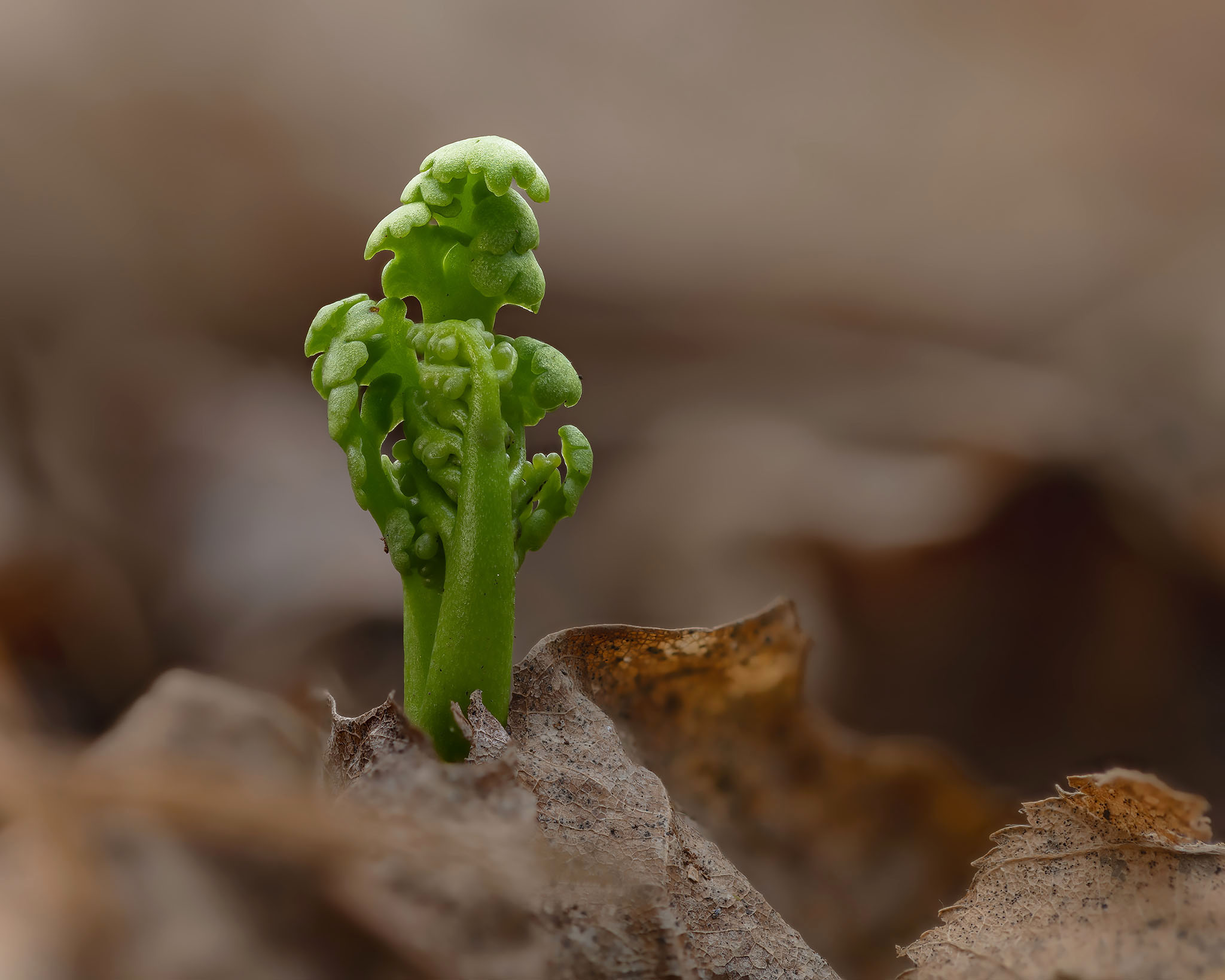
Emerging daisyleaf moonwort
Adder’s-tongues can be found in a wide array of habitats ranging from open to shaded, moist to dry and grassy to wooded. One consistent habitat feature is that they seem to prefer slightly disturbed soils that lack a deep litter layer. All of the adder’s-tongues also have a strong connection to underground, mycorrhizal fungi. While most ferns have above ground, photosynthetic, reproductive phases (gametophytes), the gametophytes of adder-tongues are below ground, non-photosynthetic and are dependent on the mycorrhizal fungi for water, minerals and carbohydrates (myco-heterotrophic). Adder’s-tongue ferns may remain in the gametophyte phase for several years before the above ground, photosynthetic, adult phase (sprorophyte) of the fern emerges. The sterile blade will be the first to appear and it could be several more years, if ever, before the spore producing, fertile blade follows. After emerging from the ground the adult fern will still maintain a symbiotic relationship with mycorrhizal fungi for some of its nutrient needs. The number of species and population size of adder’s-tongues is difficult to assess for several reasons. They are difficult to find due to their small size and lack of specialized habitats. Different species can look very similar and their appearance within each species can be highly variable making a positive identification to species very difficult at times. It is not uncommon to find adder's-tongue ferns growing in small colonies which can help in finding common distinguishing characteristics along with often displaying their variation. I will try to help give you an idea of what to look for to identify ferns in the adder's-tongue family at the very least.
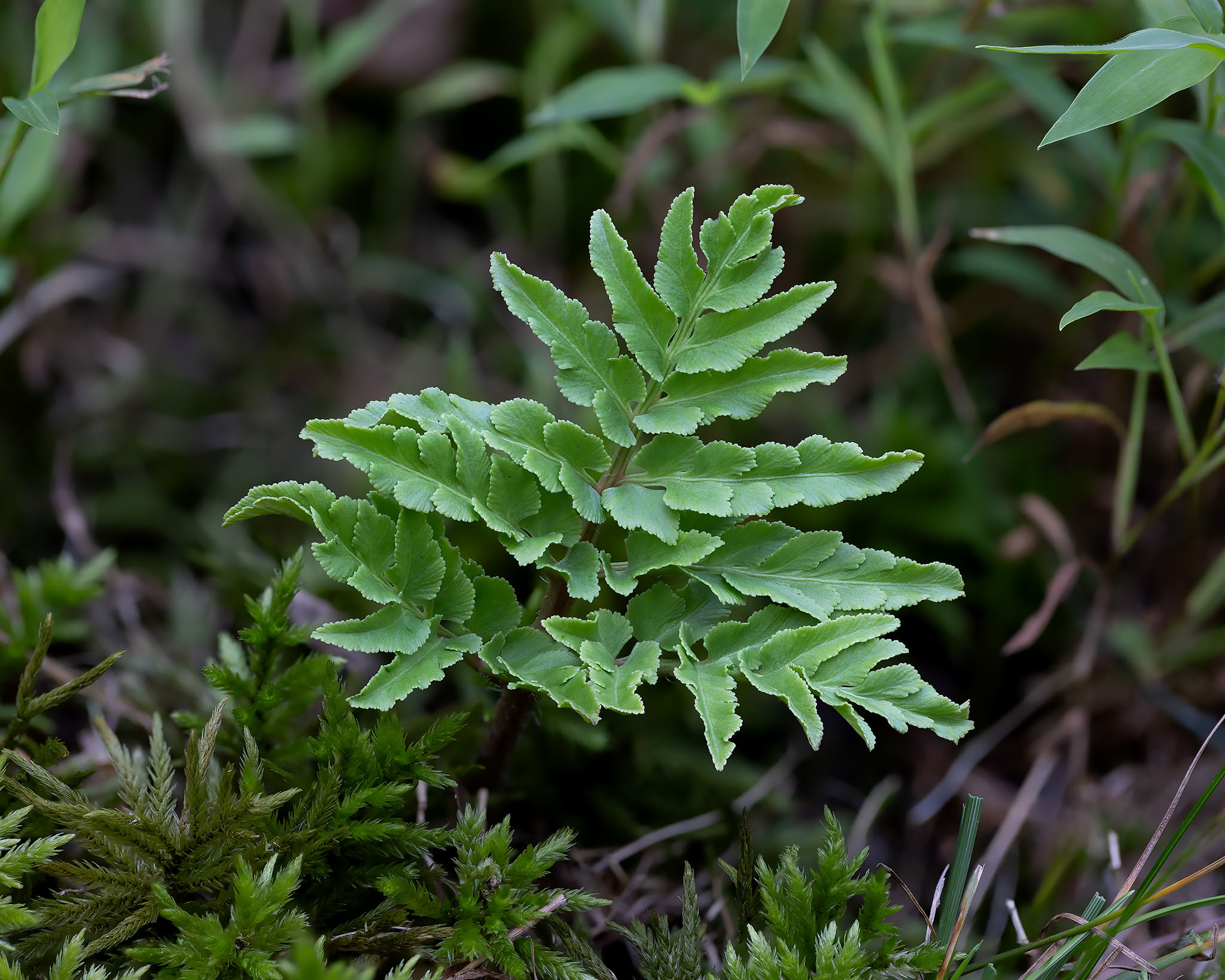
Cut-leaf grape fern - var. obliquum - sterile blade
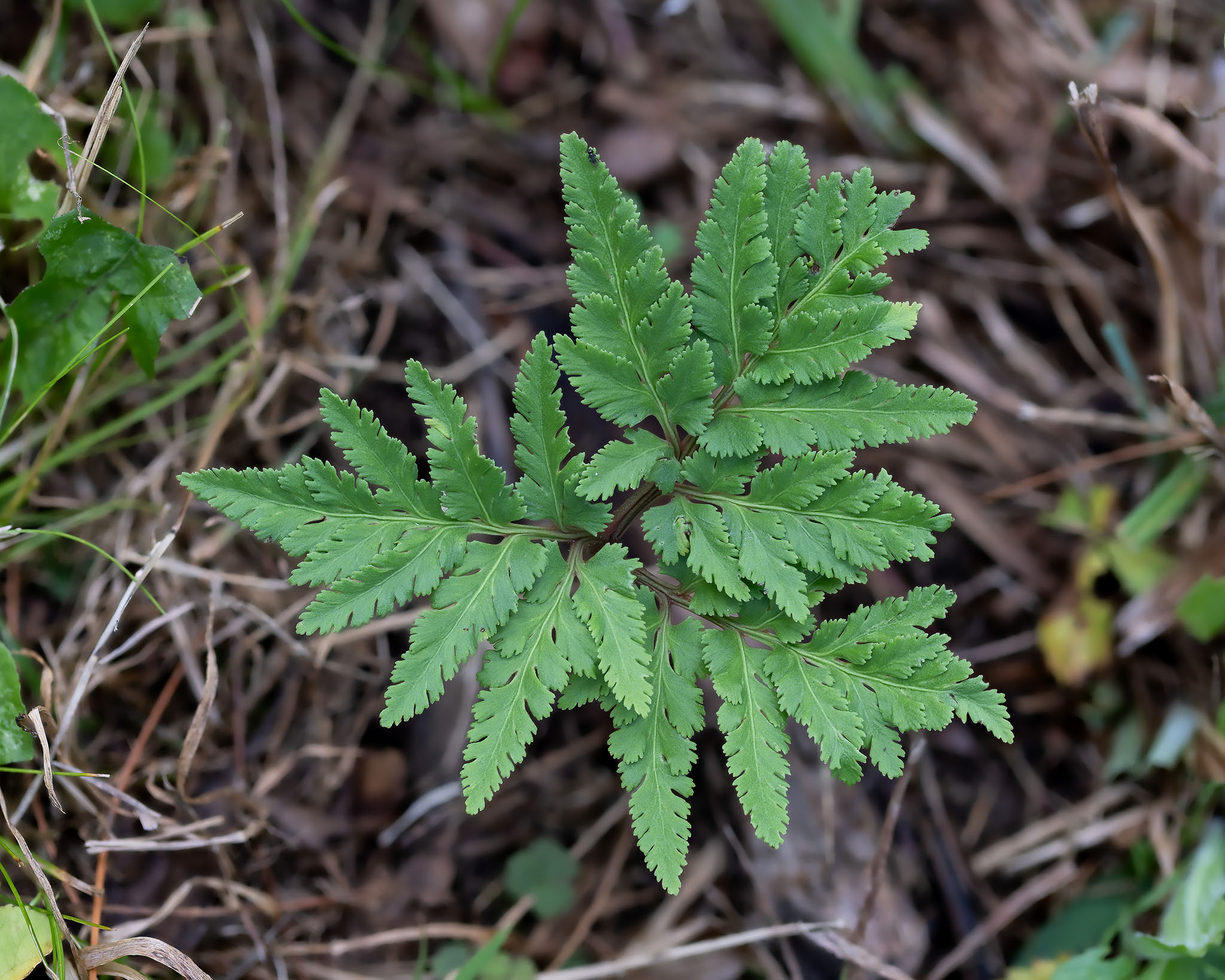
Cut-leaf grape fern - var. dissectum - sterile blade
Within the adder’s-tongue family we have four genera comprising ten species in Pennsylvania. The first genus is the moonworts (Botrychium) of which we have three species. They are the smallest of the adder’s-tongues, often growing less than two inches in height. Moonworts will emerge straight up from the ground (erect vernation) in the spring with one small, lobed sterile blade and a fertile blade which supports branched clusters of sporangia. The moonworts are deciduous and will have largely disappeared by late summer. To this point, I have only found two small areas with moonworts with both of them having two of the three species found in Pennsylvania: Lanceleaf moonwort (Botrychium anguistisegmentum) and daisyleaf moonwort (Botrychium matricariifolium). Both of these species are considered fairly common in Pennsylvania, although difficult to find, and our third species is the least moonwort (Botrychium simplex) which is less common or at least less not well known, it is very small.
Features to look at to help differentiate these species include the sterile blade shape and where the sterile blade and fertile blade stalks split from the common stalk. In the least moonwort, the split from the common stalk is near ground level at the base of the plant while in the lanceleaf and daisyleaf moonworts the split is well above the ground. The sterile blade of the lanceleaf moonwort is broadly triangular and deeply lobed with pointed tips while the sterile blade of the daisyleaf moonwort and least moonwort is longer than it is wide with shallow, blunt lobes. If you happen to come across what you think may be a moonwort, take a good look around because if there is one there is a good chance of finding more nearby and finding multiple specimens can help sort out variations which can help with making identifications. Their overall appearance of moonworts is very distinctive so if you find one it will be fairly easy to identify it as a moonwort even if you cannot determine the species.
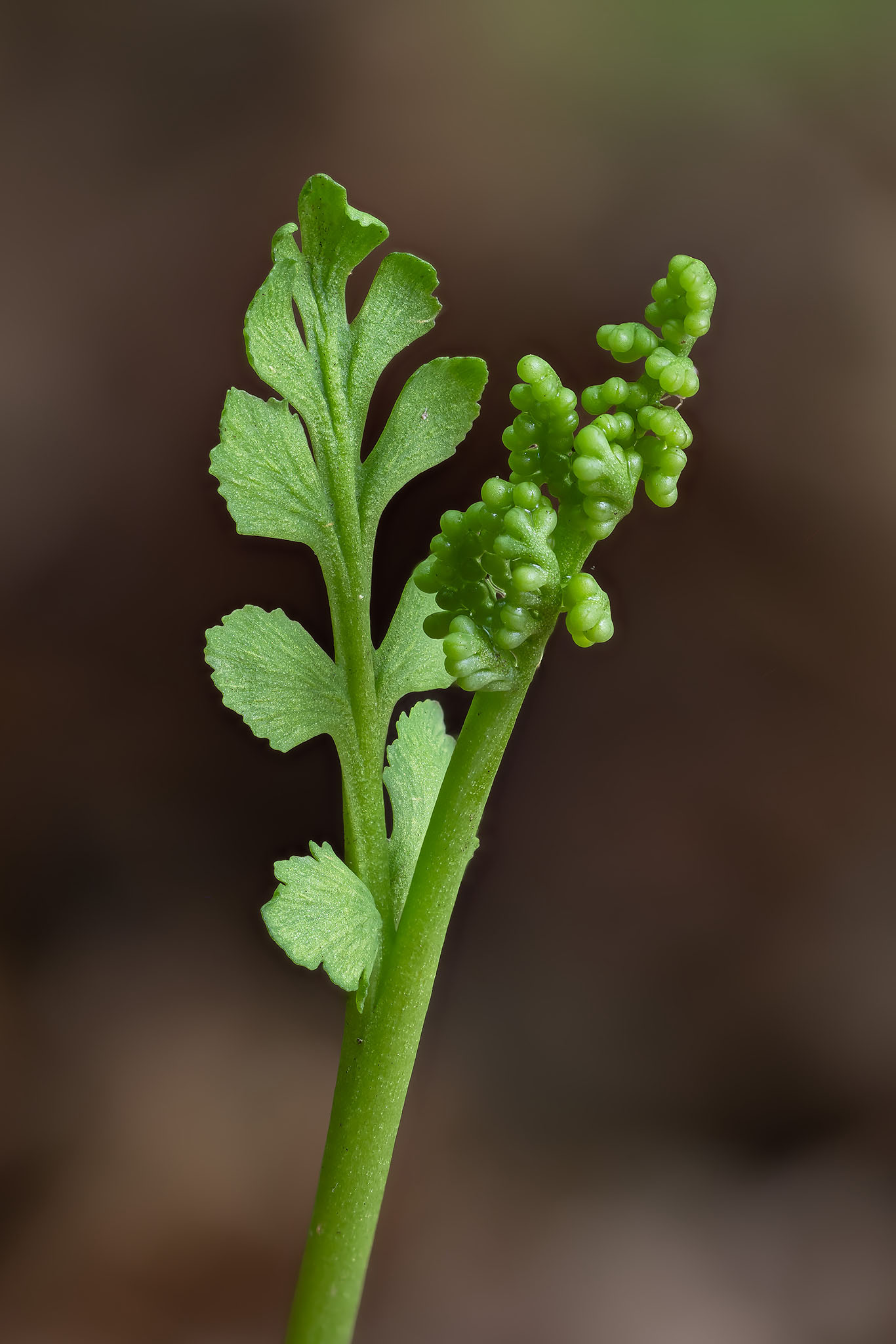
Developing daisyleaf moonwort - sterile and fertile blade
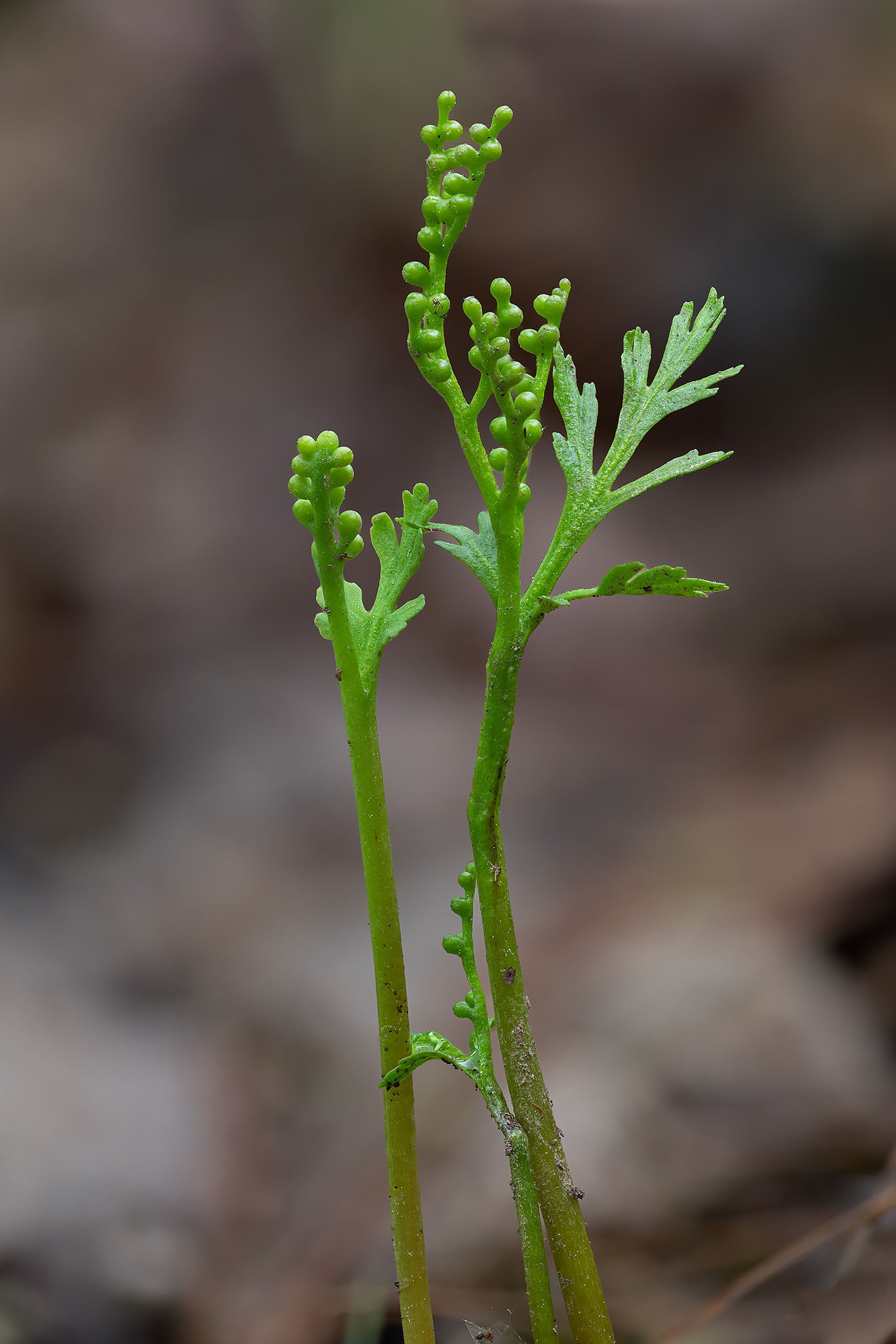
Lanceleaf moonwort - sterile and fertile blades
The second genus within the adder’s-tongue family is Botrypus with one species in Pennsylvania, the rattlesnake fern (Botrypus virginianus). The rattlesnake fern is the largest and most common member of the adder’s-tongue family and is the first to emerge in early spring. The rattlesnake fern will emerge from the soil slightly bent or coiled although not to the extent of true fiddleheads. The sterile blade and fertile stalk divide from the common stalk well above the ground with the fertile blade stalk attached just below the base of the sterile blade. The fertile stalk will support branched clusters of sporangia well above a large, broadly triangular sterile blade. The sterile blade is bright green, highly dissected and held nearly horizontal to the ground ranging in size from 4-12 inches long and 4-12 inches wide. Like the moonworts, the rattlesnake fern is a deciduous species with the fertile stalk withering in early summer although the sterile blade can persist into the fall.
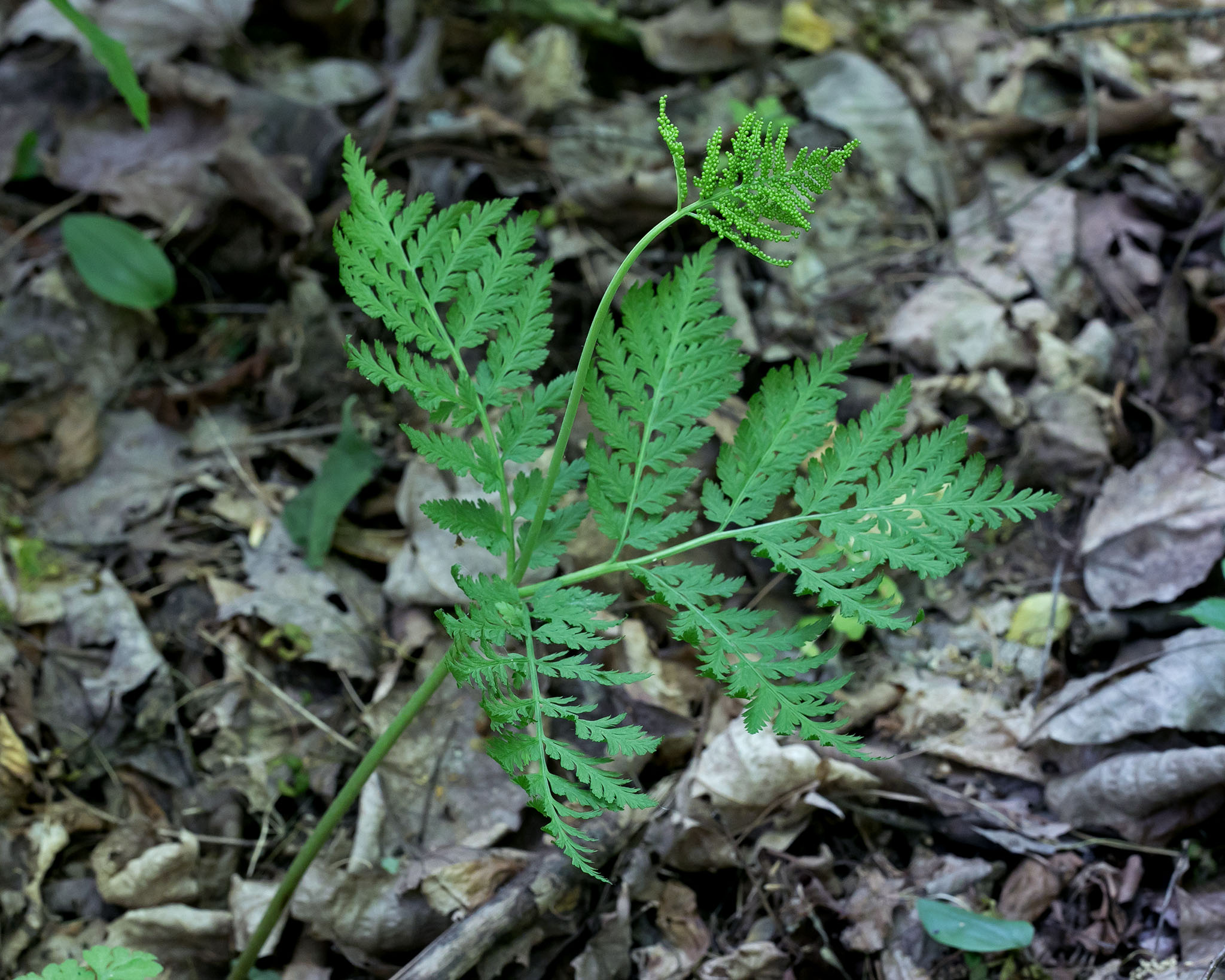
Rattlesnake fern - sterile and fertile blade
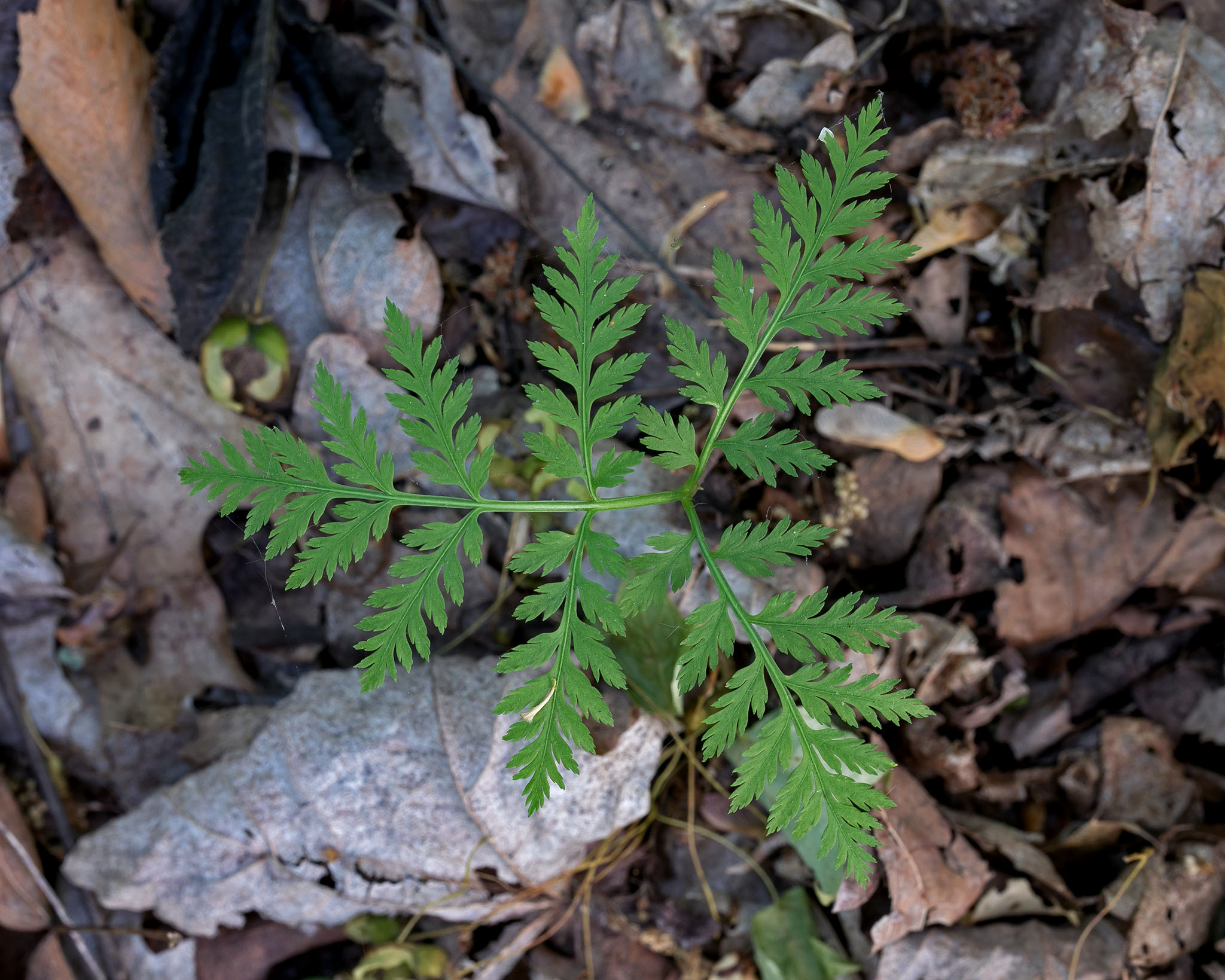
Rattlesnake fern - sterile blade
The third genus of adder’s‑tongue, commonly referred to as adder’s‑tongues (Ophioglossum), emerges straight from the ground and is deciduous, with three species in Pennsylvania. These include the limestone adder’s‑tongue (Ophioglossum engelmannii), which is endangered in the state, and the northern adder’s‑tongue (Ophioglossum pusillum) and southern adder’s‑tongue (Ophioglossum vulgatum), both more common but still elusive. Adder’s-tongues look nothing like the other ferns in this family and are probably the most difficult to find, even though they are larger than the tiny moonworts. They tend to grow well camouflaged in grassy areas. Their single, sterile blade looks very similar to the leaves of plantains (Plantago), lilies (Liliaceae) and orchids (Orchidaceae). The timing and location of their emergence is unreliable which adds to the difficulty. To distinguish them from other similar plants you need to look at the leaf venation. In adder’s-tongues you will find netlike venation (not parallel lines) and there is no midrib. The fertile blade of adder’s-tongues is not always present but they are very different in appearance compared the other ferns in the adder's-tongue family and seedheads of other plants. Rather than having branched clusters of sporangia at the end of a stalk, the adder’s-tongues have two rows of sporangia embedded into the end of the stalk. They look like two rows of beads embedded into a fleshy spike. I have never found one of these species but I have been told that springtime is a good time to look and old cemeteries can be worth exploring. I have spent a lot of time scanning plantain leaves while mowing or simply walking through the yard. Unfortunately, since I have never found any of these species, I have no photos but I have included more photos from the adder's tongue family to further display their range in appearance.
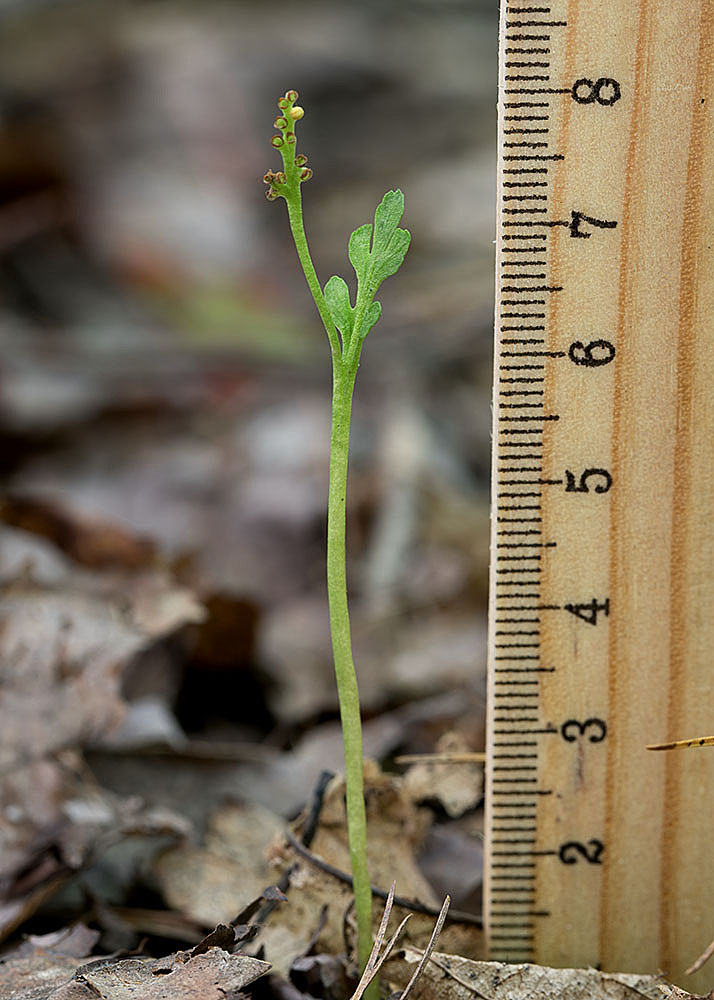
Mature daisyleaf moonwort measured in centimeters
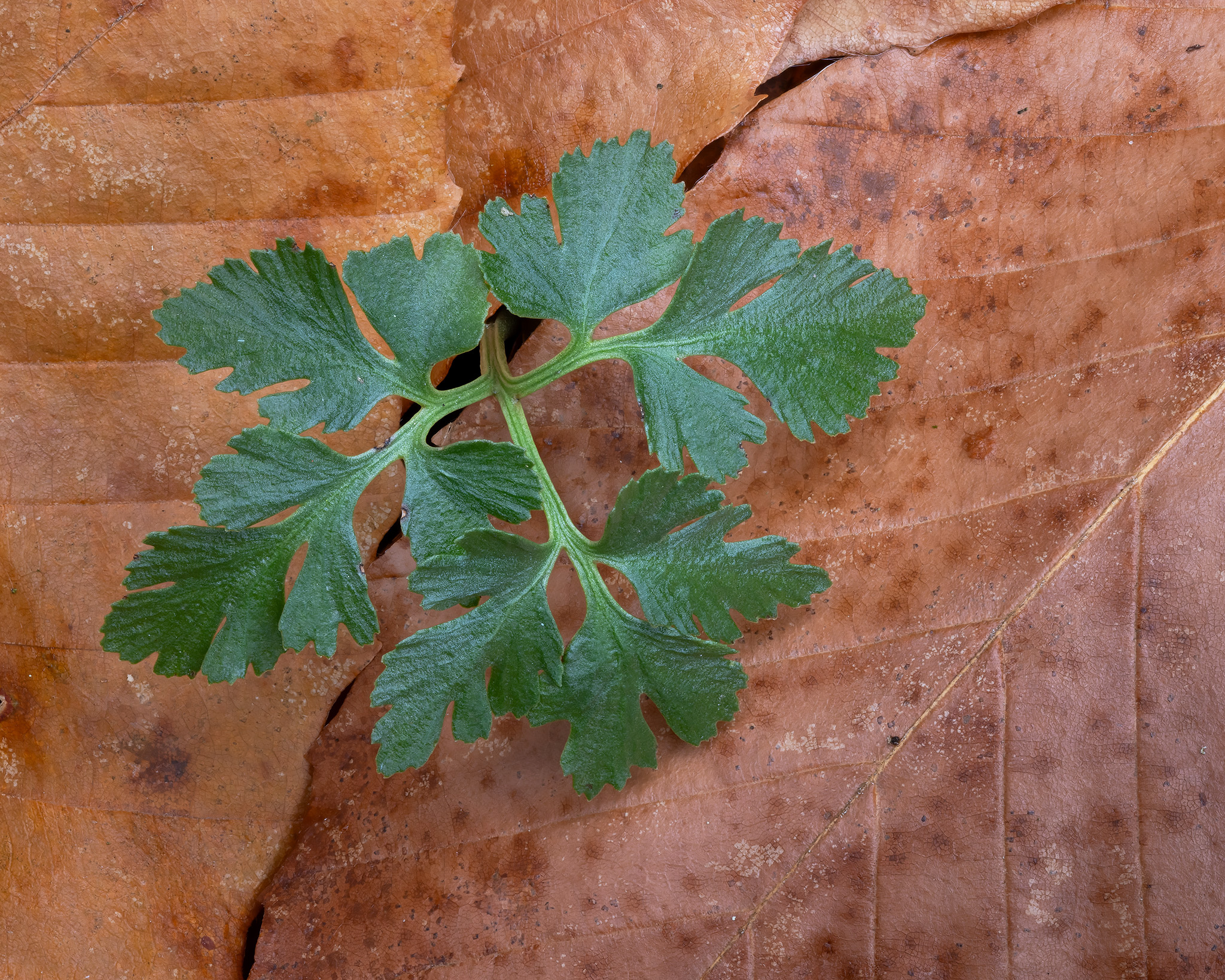
Young cut-leaf grape fern
The final genus of adder’s-tongue in our area is composed of the grapeferns (Sceptridium). The grape ferns are the latest of the adder's-tongue family to emerge, usually early to mid summer, and are evergreen species with the sterile blade persisting over winter while the fertile blade has withered away by late fall. In appearance, grapeferns most resemble the rattlesnake fern with a broadly triangular sterile blade held nearly horizontally to the ground and ranging in size from a few inches to twelve inches long and wide. Another similarity to the rattlesnake fern is that the grapeferns emerge from the ground slightly coiled or bent but again not to the degree of true fiddleheads. The sterile blades of the grapeferns differ from the rattlesnake fern by being thicker, more leathery and having more bluntly lobed, less lacy pinnules. Another key difference to note between the grapeferns and the other adder’s-tongue ferns is that in the grapeferns the sterile blade and fertile blade stalks diverge at or slightly below ground level rather than well above ground level as the rattlesnake fern and most of the moonworts. Grapeferns are also much larger than the moonworts.
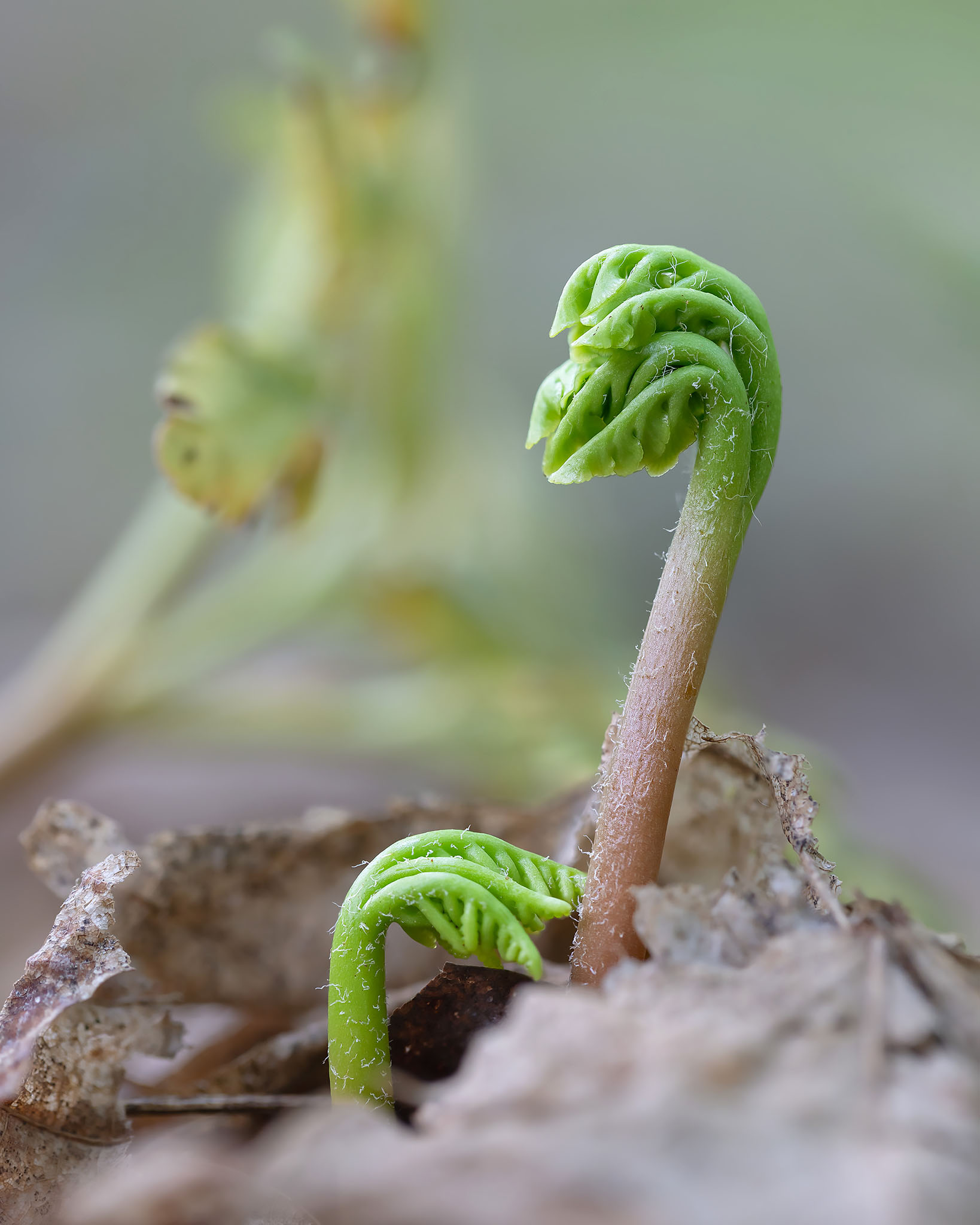
Emerging cut-leaf or blunt-lobe grapefern
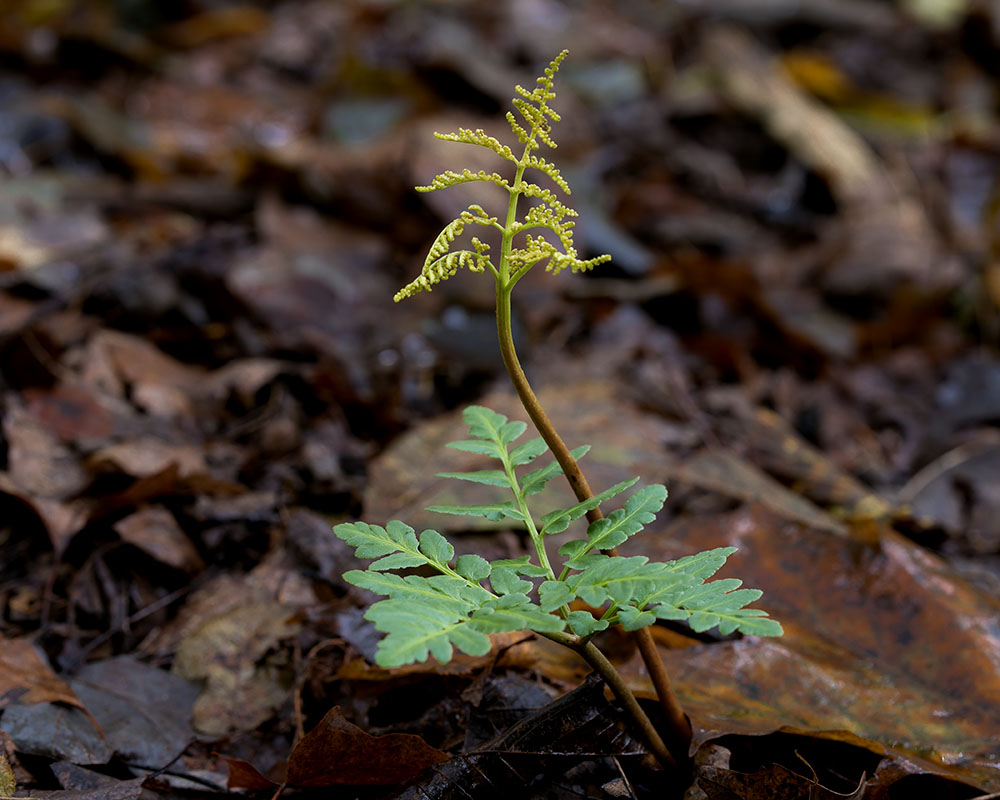
Cut-leaf grapefern - var. obliquum - sterile and fertile blade
There are three species of grapefern in Pennsylvania and the most common species is the cut-leaf grapefern (Sceptridium dissectum). The cut-leaf grapefern has two very distinct variations; var. dissectum and var. obliquum. In var. dissectum, the pinnules are deeply cut and the margins are deeply toothed (similar to the rattlesnake fern). In var. obliquum the pinnae are less deeply dissected and more trowel shaped. While var. dissectum is quite distinct, the appearance of var. obliquum can vary significantly and is easy to confuse with the other grapeferns. Some pinnae are more pointed, some pinnae are more rounded and some pinnae are more lobed than others. Besides having two distinct variations, the cut-leaf grapefern’s sterile blade differs from the other grape ferns in often turning a reddish bronze color in winter or when they are exposed to full sun while the sterile blades of the other grapeferns will remain green until new growth appears in spring. Of course the color change does not always occur so a green sterile frond found over the winter cannot rule out the cut-leaf grape fern for identification purposes.
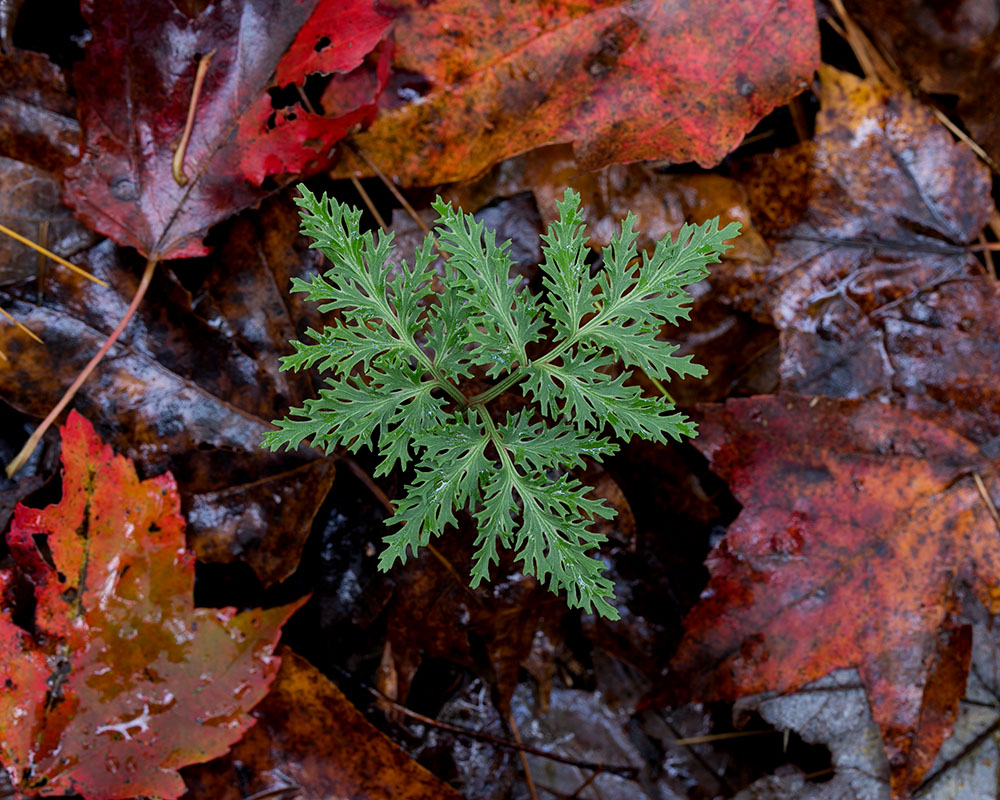
Cut-leaf grapefern - var. dissectum - sterile blade
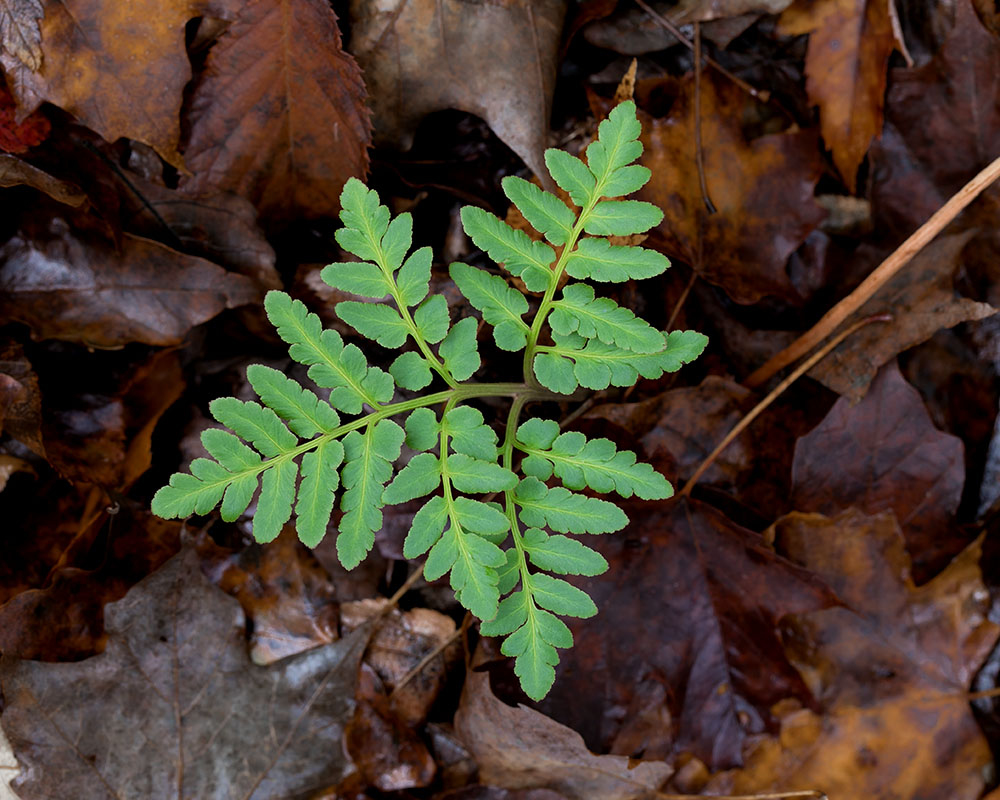
Cut-leaf grapefern - var. obliquum - sterile blade
The two other species of grapefern in Pennsylvania are the leathery grapefern (Sceptridium multifidum) and the blunt-lobe grapefern (Sceptridium oneidense) . Both of these species are relatively uncommon in Pennsylvania, at least uncommon to positively identify. The leathery grapefern is our largest grape fern species with very thick, robust stalks and a thick, wavy, leathery sterile blade which has evenly divided, often overlapping pinnae. The leathery grapefern is still on my wish list to find. The blunt-lobe grapefern has large, blunt, well spaced, rounded pinnae with fine teeth at the margins. Both of these species can look very similar to the cut-leaf grapefern ( var. obliquum) except that the pinnae of the cut-leaf grapefern are more pointed (typically). A lot of cut-leaf grapeferns var. obliquum, especially immature specimens, look very similar to blunt-lobe grapefern. The only blunt-lobe grapeferns I have been able to positively identify was confirmed by DNA analysis (not a typical option) and the rest are simply 'most likely' one species vs another.
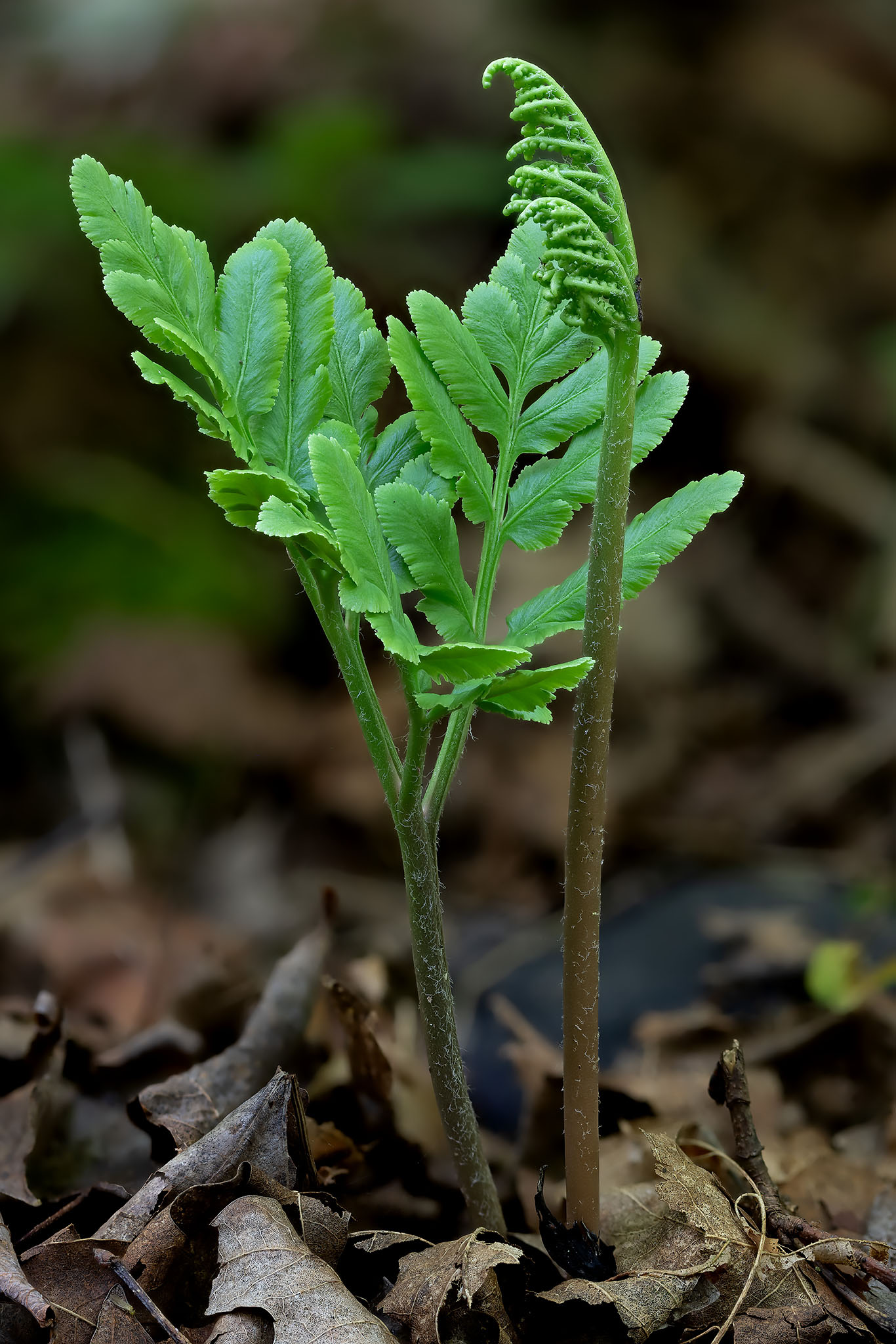
Developing blunt-lobe grape fern
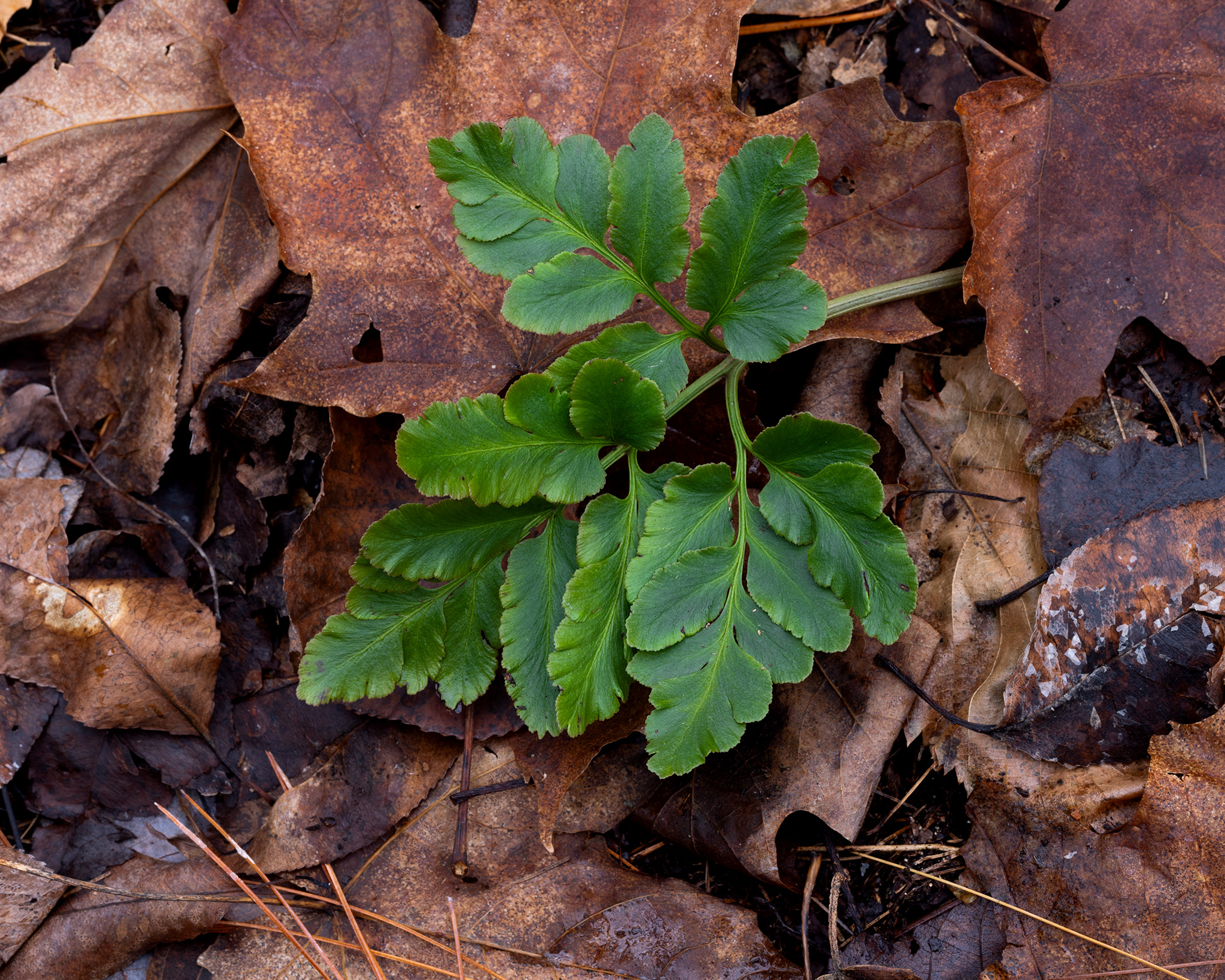
Blunt-lobe grape fern - sterile blade
Exploring the world of adder’s-tongue ferns can be a daunting task. Challenges in finding them due to their small size, lack of specialized habitats, similar appearance between species and variation within species can be difficult to deal with but try not to get discouraged. Just finding one or a few of these fascinating species is a thrill and definitely worth the effort regardless of whether or not the species id can be attained. The challenge of finding species and learning their, at times reclusive, identities is half the fun and always rewarding. The more of these small ferns we can find the more we can learn about their populations, ecology and the roles they may play in the ecosystem.
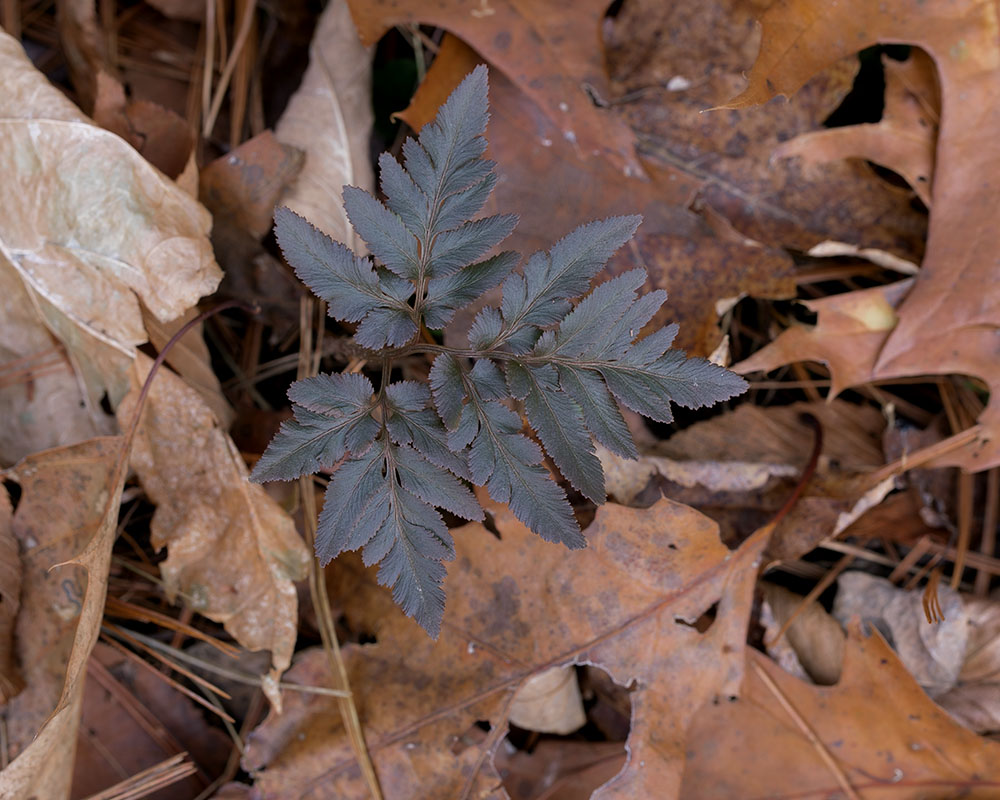
Cut-leaf grapefern - var. obliquum
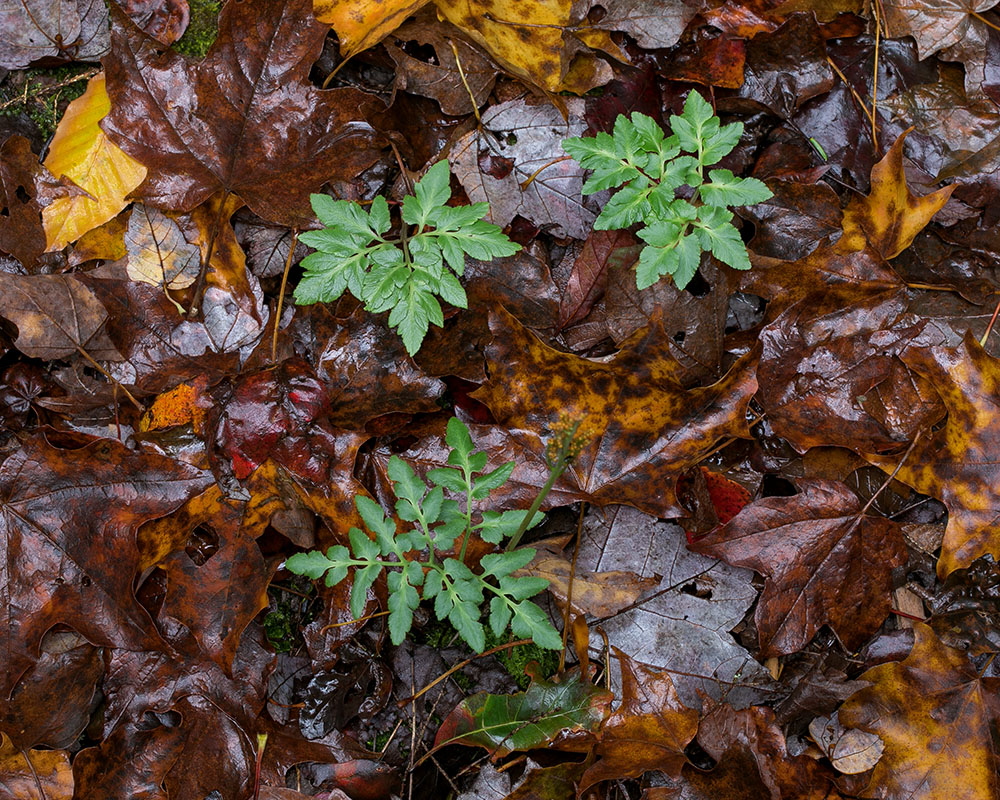
Sterile blade variation of the cut-leaf grapefern - var. obliquum