Field Notes from the Prairie
In this edition, James traces the transition from the prairie’s vivid flowering into the more subtle work of seed formation. He shares what he’s learned about timing, dispersal strategies, and the value of collecting local ecotype seed, offering a practical look at how thoughtful seed gathering supports healthier restoration projects.
Scooping Seed: Native Seed Collection
With its bright colors and cool weather, spring is a great time to be outdoors. The spring colors I’m most drawn to are the purples seen in wild bergamot’s lavender, firework-like blooms and the deep fuchsia pom-poms of ironweed (Monarda fistulosa and Vernonia noveboracensis respectively). This flowering has a purpose: plant reproduction. But flowering is only part of the reproductive cycle. After the showy blooms fade, a new stage takes over — seed production.
I’ve spent the last few months exploring the transition from flower to fruit to seed, with the goal of learning how each species makes this shift. With lots of patience, I’ve started collecting plant seeds to aid in future prairie restoration projects. The practice of seed collecting is new to me, and in this piece I hope to share the concepts and practices that have helped me understand the whats, whys, hows, and whens of seed collection.
To understand why seed collection matters, it helps to step back and look at the general stages of plant reproduction:
- Flowering — a plant blooms to attract pollinators.
- Pollination — pollen moves between flowers and triggers fertilization.
- Fruiting — once a flower is pollinated, a fruit forms. “Fruit” is a broad term describing any structure that protects the seed it contains. Alongside the berries and fleshy fruits we know and love, dry pods and spiky burs serve the same purpose of seed protection and are also considered fruit.
- Seed Maturity — the seed inside the fruit ripens and becomes ready for dispersal.
Every plant runs this sequence on its own time system. I started collecting seed from spiderwort back in June, when pale purple coneflower remained in full bloom. Jump forward to August, where my days were spent collecting the dried and darkened heads from those once blooming coneflowers.
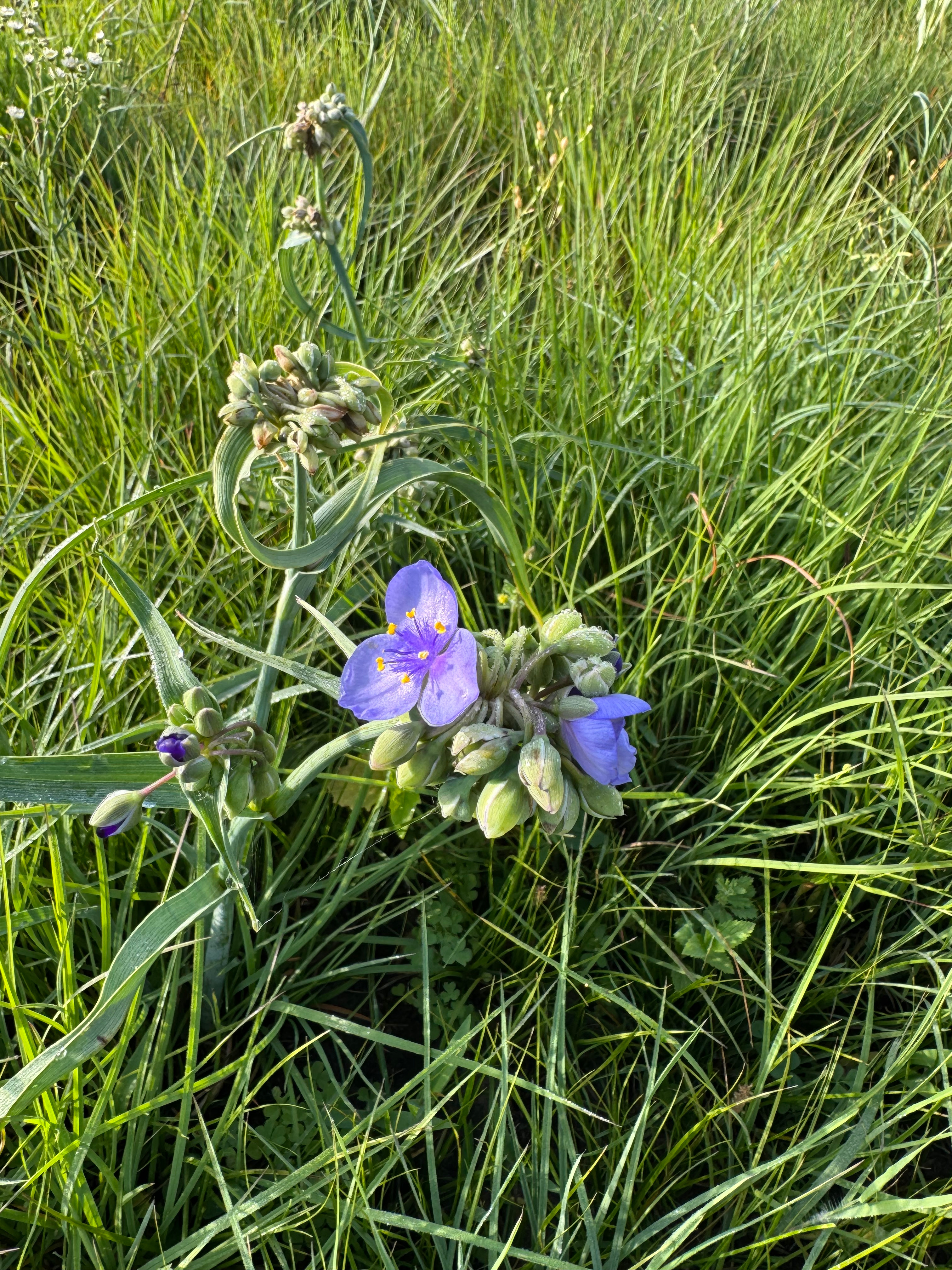
Ohio spiderwort (Tradescantia ohiensis) in bloom alongside its developing seed pods
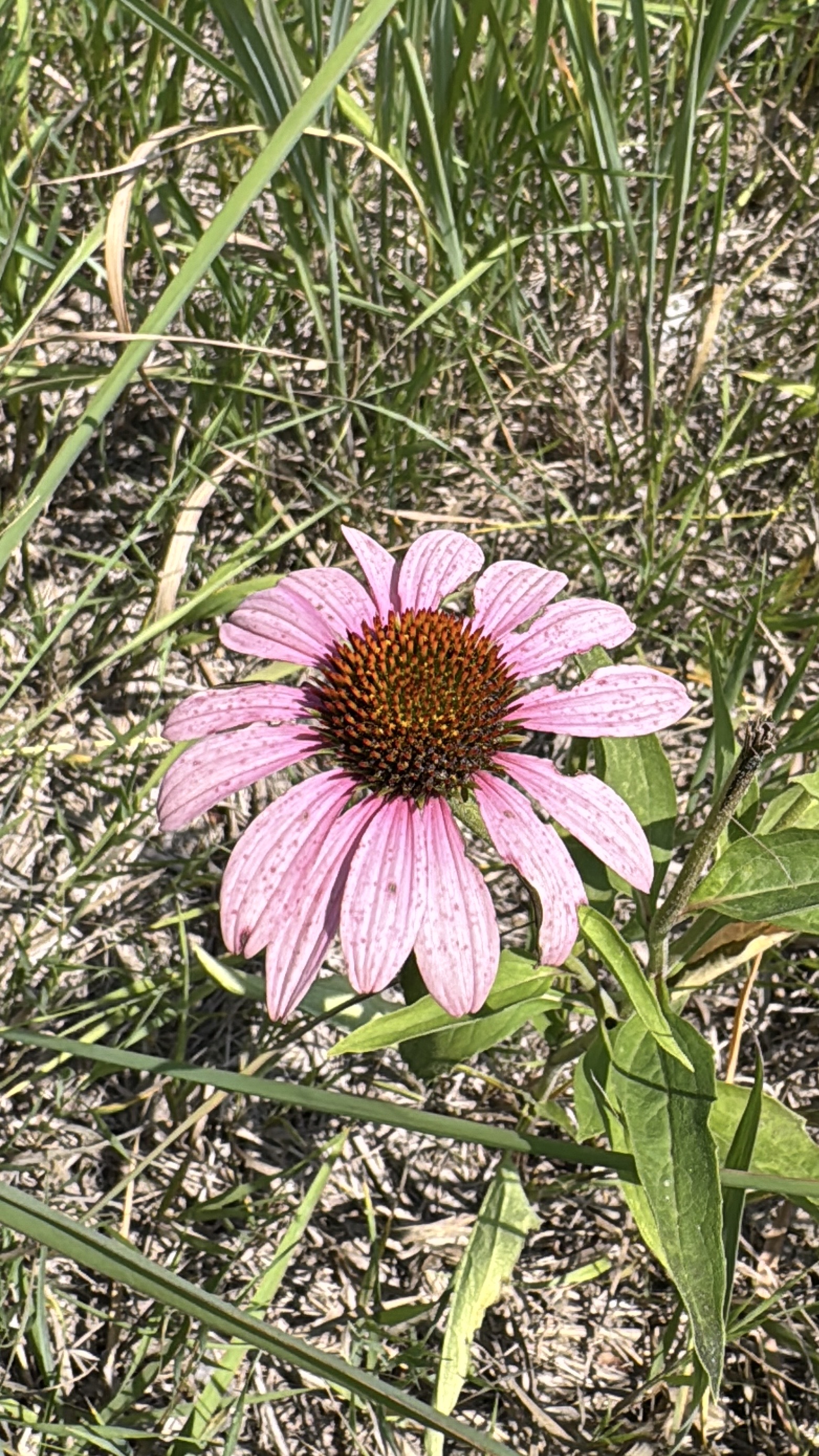
Purple coneflower (Echinacea purpurea) in bloom
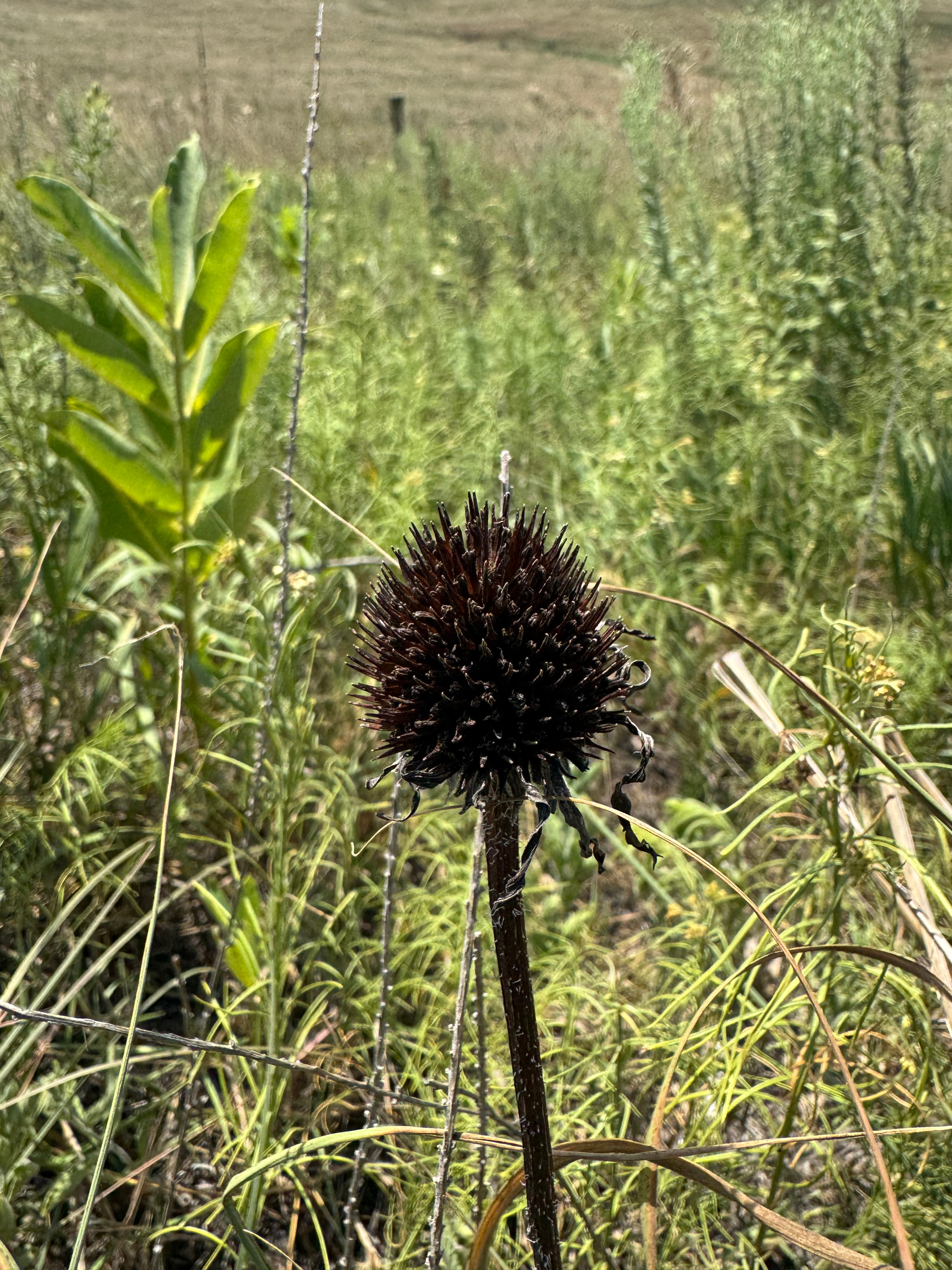
Purple coneflower seed head, dried and ready for collection
I mentioned that this collection is part of a land conservation project, where the goal is to improve the prairies around our area. A landscape can look green and thriving at a glance, but it's important to understand what is actually growing there. Invasive species — or sometimes even native species — can dominate a piece of land, and removing them, though a popular conservation practice, often isn’t enough to restore the diversity on its own. The seed bank, the reserve of dormant seed already in the soil, is often thin or uneven after years of crowding out by dominating species. Adding a diverse mix of collected seed gives other plants the opportunity to establish themselves.
Plant variety has benefits. A wider mix of species supports healthier soil biology and offers a broader range of food sources for wildlife. Since plants bloom at different times across the seasons, a diverse planting also helps keep pollinators fed throughout the year.
Where your seed comes from matters too, and collecting it yourself has advantages. Locally collected seed guarantees something that purchased seed might not: ecotype consistency. When you buy seed commercially, there’s a chance it originated from a different latitude or climate. Ecologists refer to this as a different provenance. Even within the same species, populations from different regions can be genetically tuned to different conditions, which then influences things like flowering time and ability to survive.
Seed of a differing provenance can have larger consequences for your land than most people realize. Trophic mismatch occurs when the timing of a resource (like flowering or leaf-out) falls out of sync with the timing of the animal that depends on it. Monarch butterflies are a well-known example: females lay eggs exclusively on milkweed (Asclepias spp.), the sole food source for their larvae, while adults need nectar from a broad range of flowering plants to fuel both daily activity and their long-distance migration. Plants grown from seed adapted to a different climate carry that origin's phenological cues with them. If a planting in, say, Pennsylvania is actually grown from Florida-sourced stock, it may leaf out and bloom on a schedule keyed to Florida's photo-period and temperature patterns rather than Pennsylvania's. A migrating monarch passing through could arrive to find the milkweed not yet up or the nectar plants already past bloom, missing the resource window entirely.
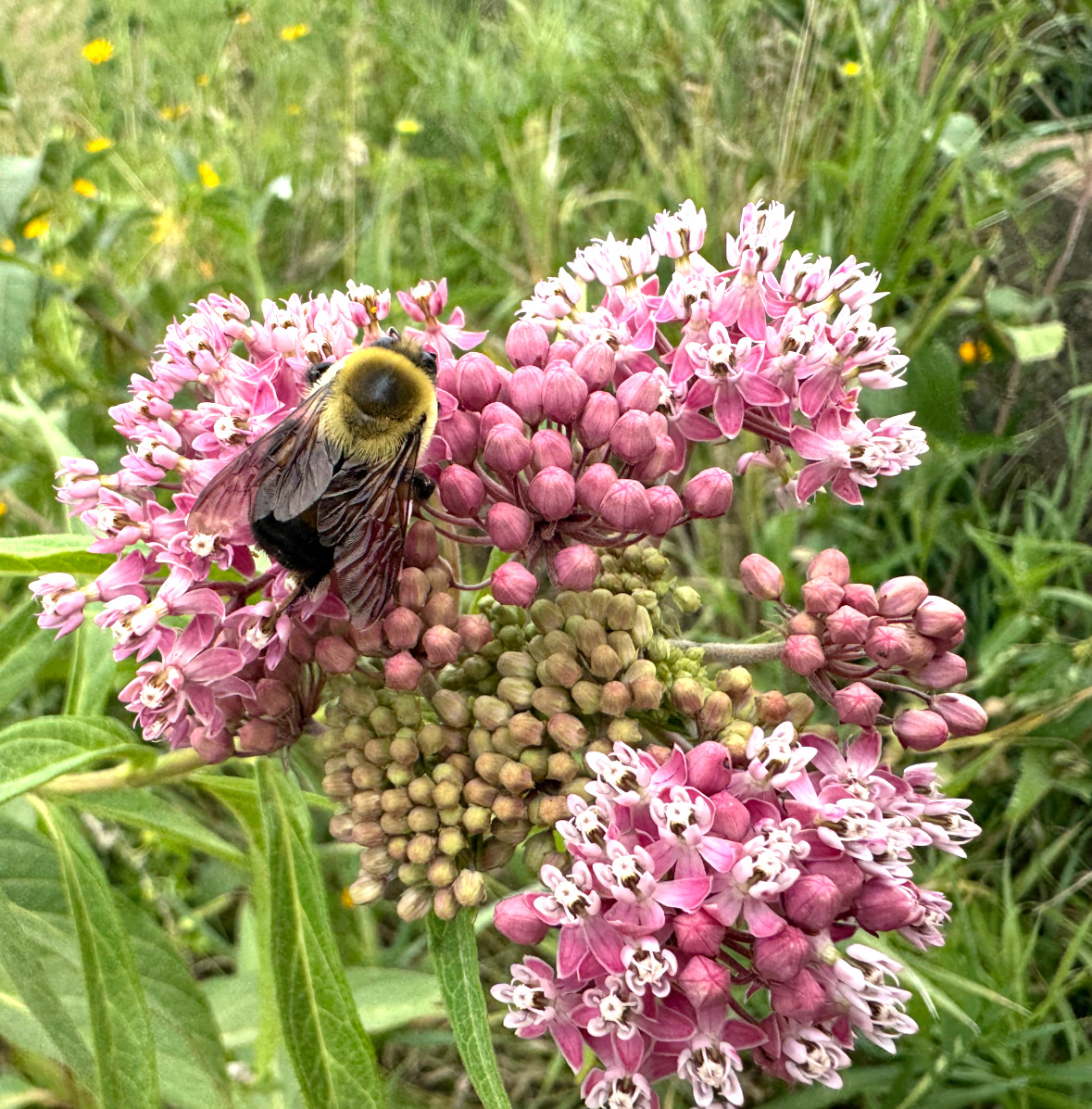
Common milkweed (Asclepias syriaca) flowering with a bumblebee visiting
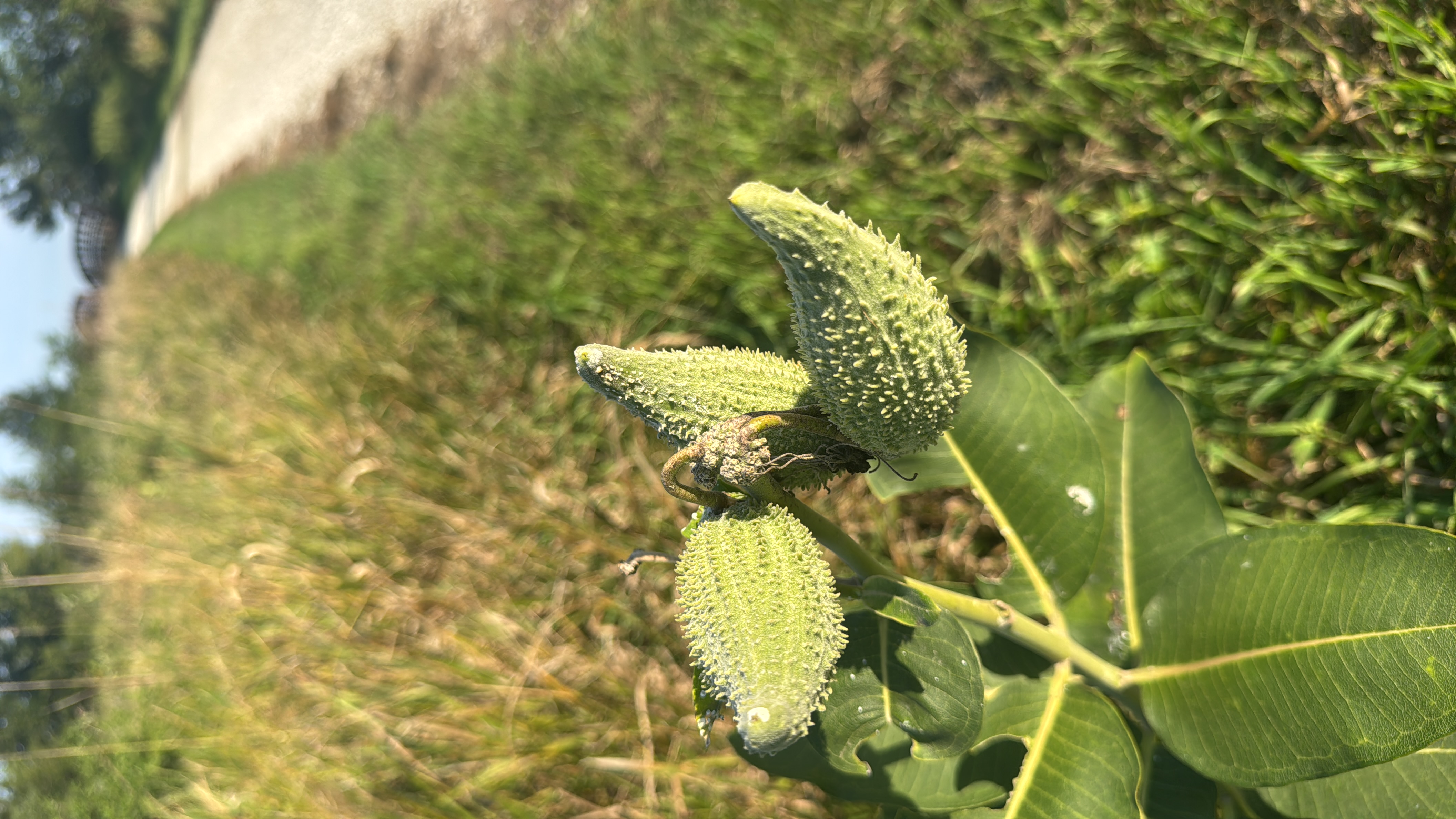
Common milkweed seed pod
With enough research, buying seed is a valid option. Still, sourcing locally is a simpler way to avoid the headache — and it can save you money too.
Now that you’re inspired and ready to collect seed, it helps to understand what type of seed you’re working with. Plants have evolved some pretty remarkable strategies for getting their seed out into the world, and knowing a few can help you prepare for proper collection:
- Wind dispersal (anemochory) — light, fluffy seeds that can catch a breeze and float long distances.
- Examples: Common milkweed, Canada goldenrod, New England aster, eastern cottonwood, and yellow salsify.
- Animal ingestion (endozoochory) — seeds or fruit are eaten by the animals, digested, then excreted in a new location.
- Examples: Spicebush, flowering dogwood, American black elderberry, winterberry, and Virginia creeper.
- Animal adherence (epizoochory) — fruits with tiny hook-like structures that latch onto fur or feet.
- Examples: Devil's beggarticks, Virginia stickseed, sticky ticktrefoil, scratch bedstraw, and white avens.
- Examples: Devil's beggarticks, Virginia stickseed, sticky ticktrefoil, scratch bedstraw, and white avens.
- Explosive dispersal (autochory) — pods that dry out, build tension, and eventually pop/split open to fling a seed outward.
- Examples: Spotted jewelweed, wood geranium, American witch-hazel, marsh blue violet, and partridge sensitive-pea.
- Water dispersal (hydrochory) — floating fruits that travel via rivers, streams, and other moving water.
- Examples: American sycamore, buttonbush, river birch, silver maple, and American lotus.
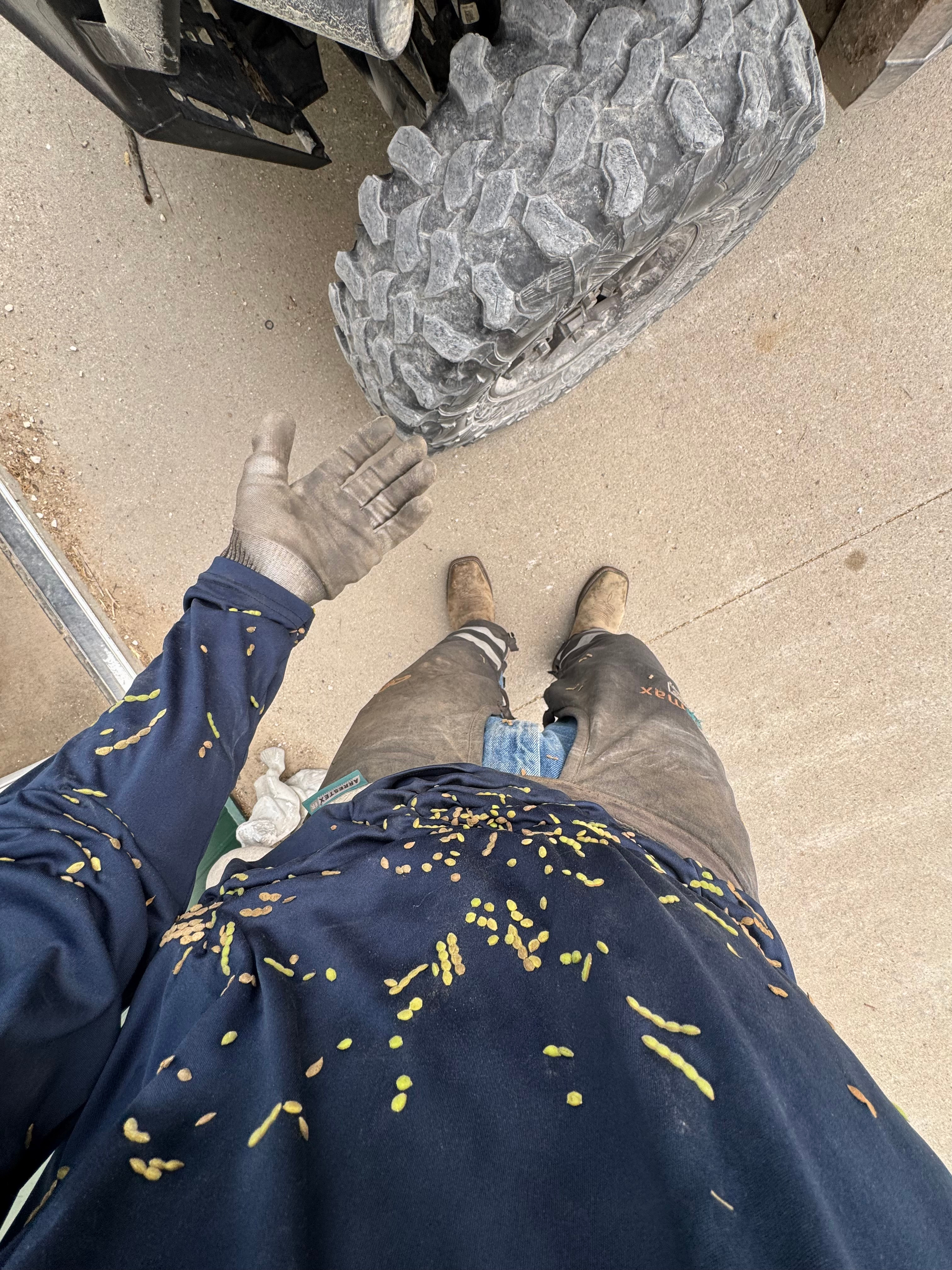
Showy tick trefoil (Desmodium canadense) pods, which stick to my clothing!
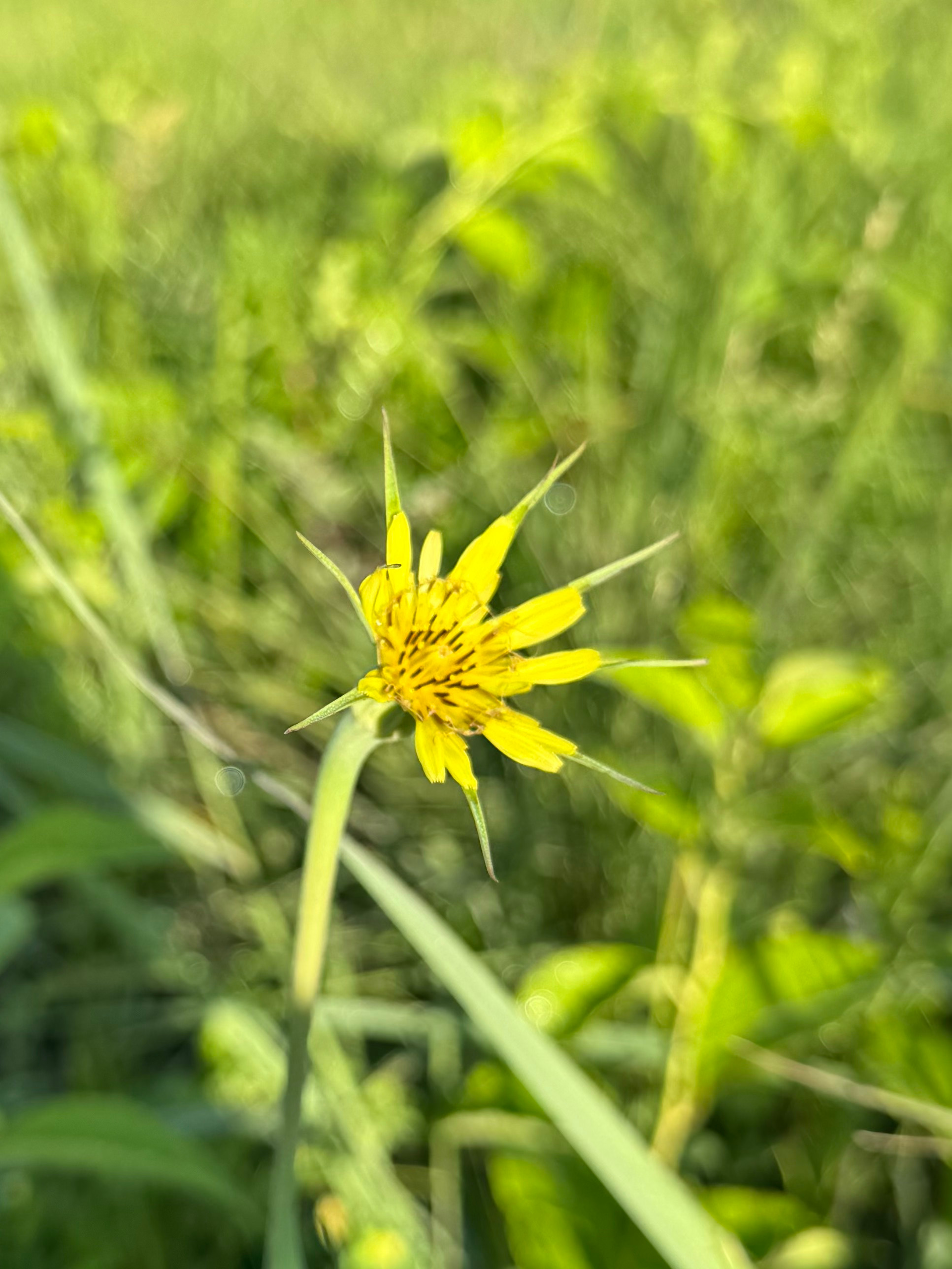
Yellow salsify (Tragopogon dubius) flower
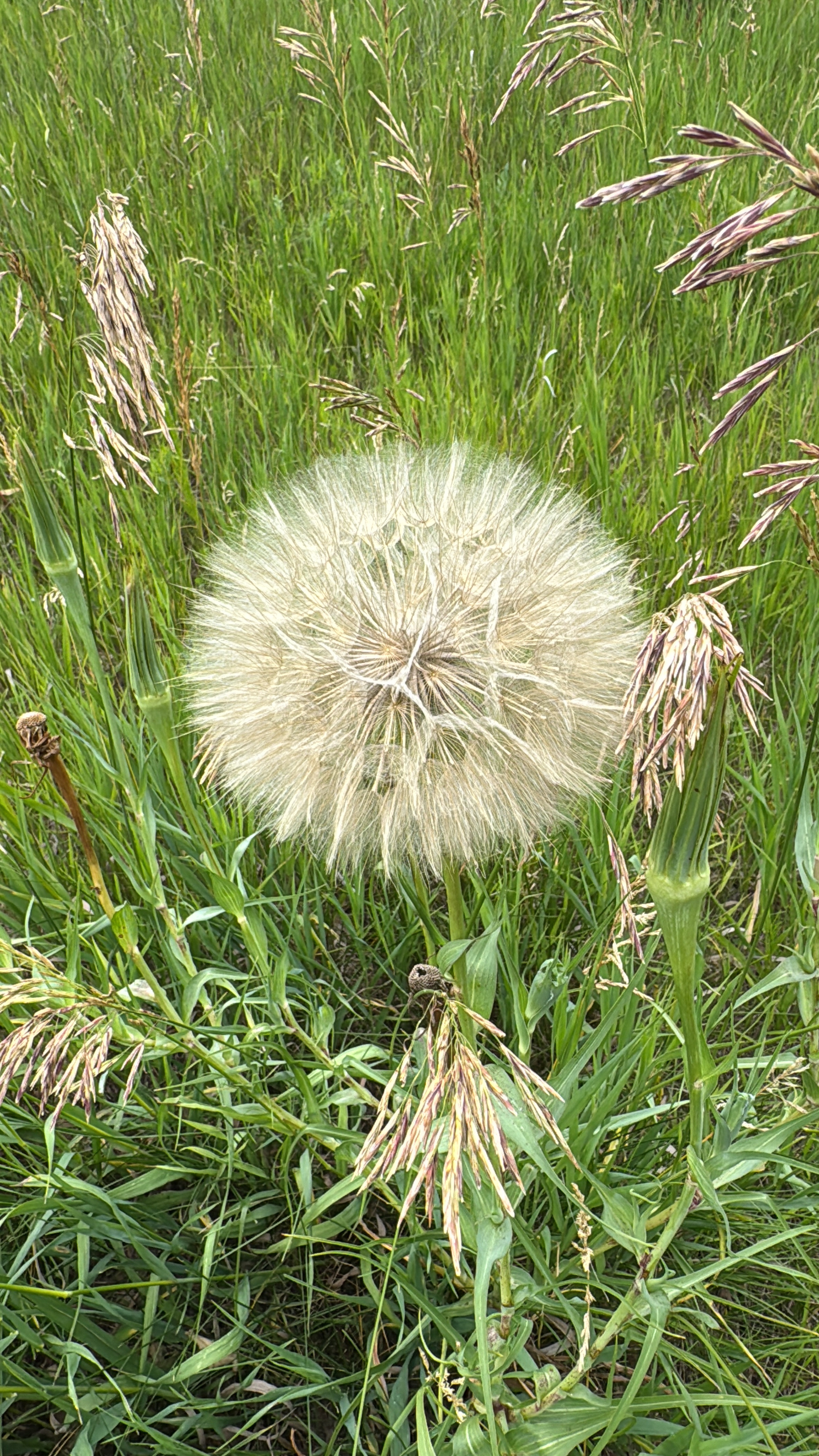
Yellow salsify seeds that are fluffy and wind-ready
As you can imagine, collecting one species requires a different approach from the next. It helps to closely watch your land for fruit development so you can catch the seed before animals get to it or before it disperses on its own. For plants with explosive, wind, or water dispersal, I've harvested pods just before they release, then dried them out in the shop until they opened on their own. Prairie Indian plantain (Arnoglossum plantagineum) has pods that open to reveal fluffy seed, which we could collect by hand on days with little to no wind, but on windier days, collecting the closed pods and letting them open indoors was a helpful alternative.
Seed collection from fleshy fruits is a different, more hands-on process: you take the ripened fruit and mash it in a bucket of water to separate the pulp from the seed, then pour off the pulp and rinse until the seed is all that remains. Jack-in-the-pulpit (Arisaema triphyllum) is a good example of fleshy fruit as it holds its seed in beautiful berries that turn red when ripe.
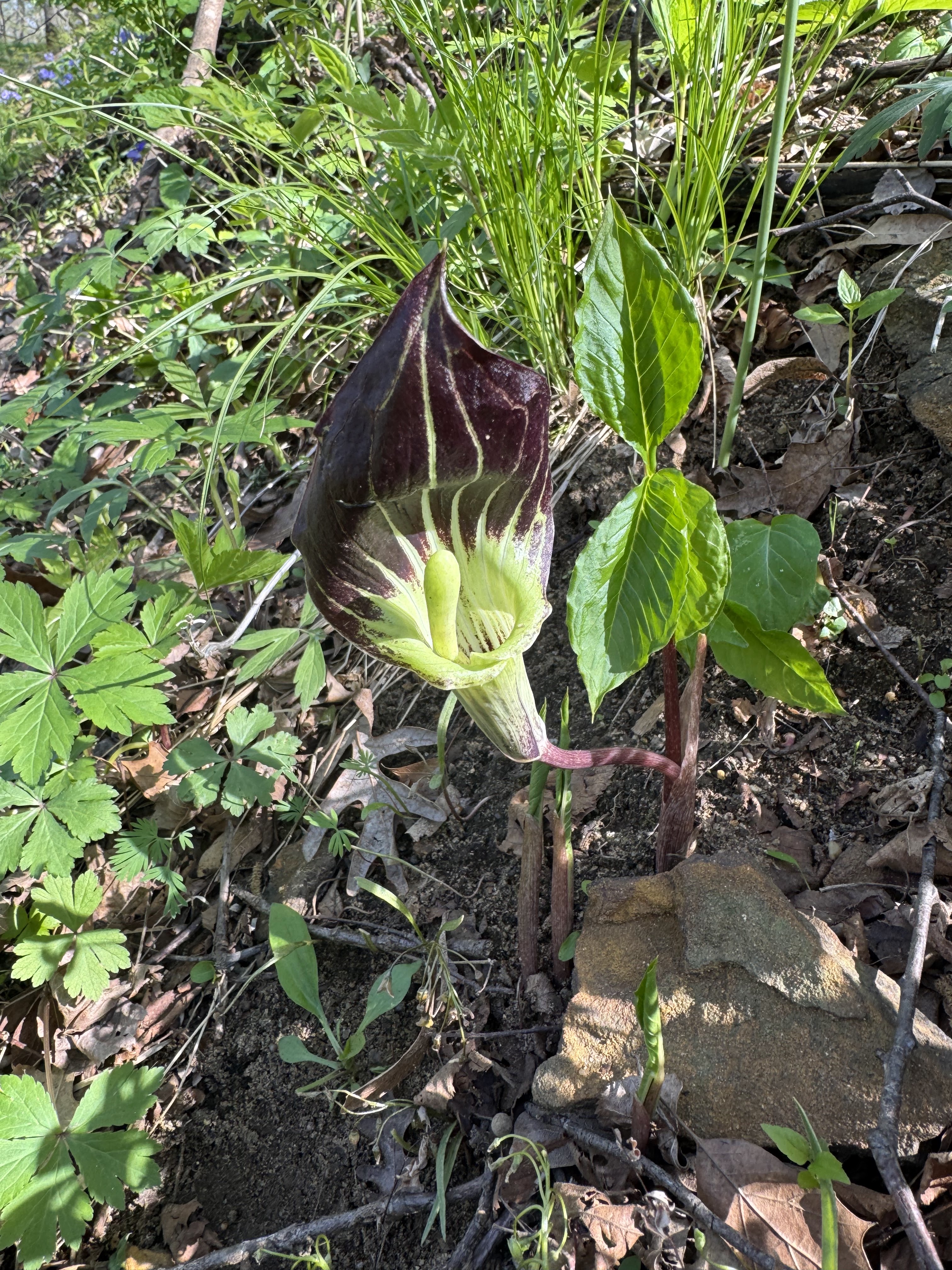
Jack-in-the-pulpit (Arisaema triphyllum) flower
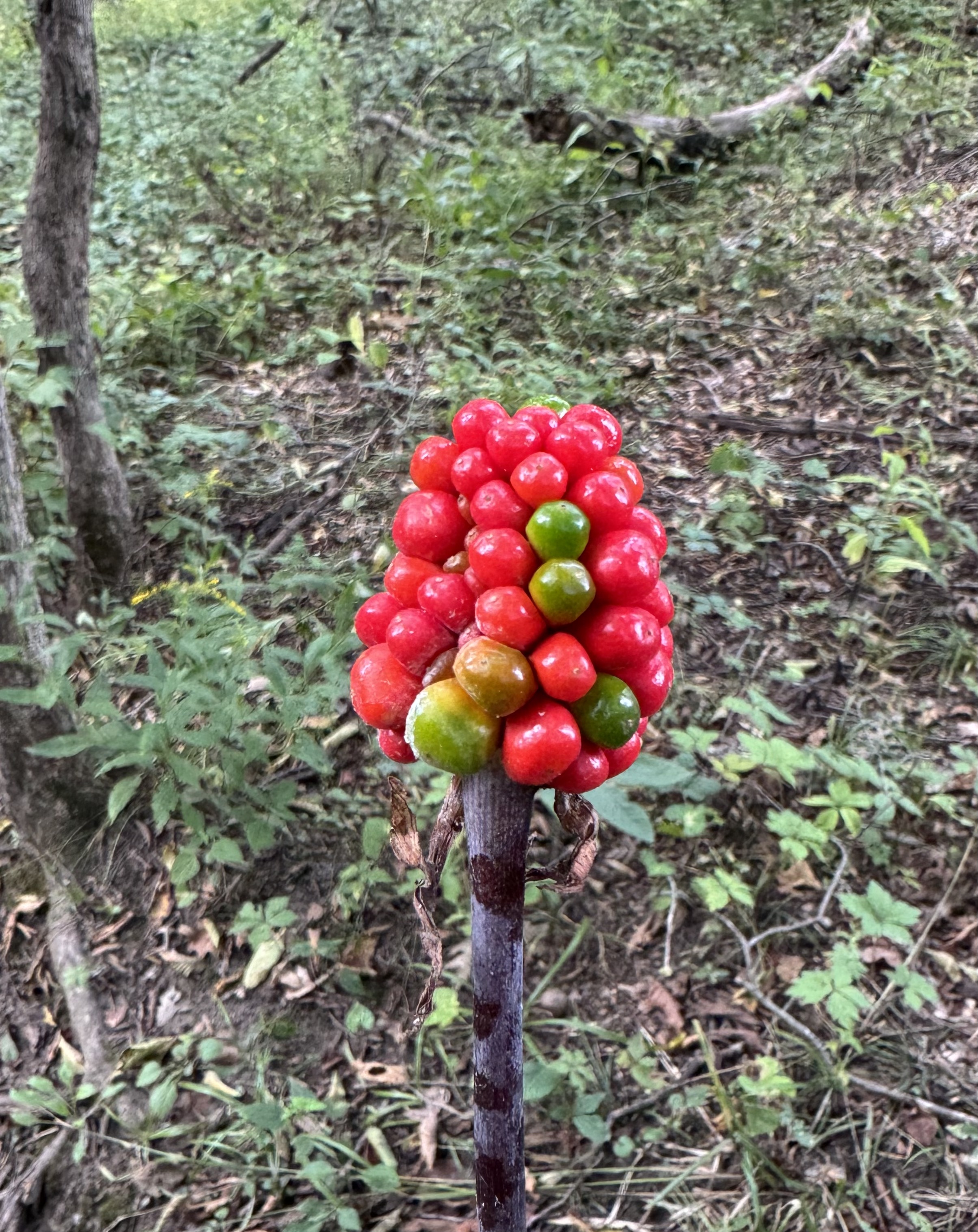
Jack-in-the-pulpit fruit
Dried seed heads call for yet another approach. For purple coneflower (Echinacea purpurea), we collected the dried heads, brought them back to the shop, and pulled the seed out with pliers. Matching the technique, tools, and timing to each plant makes the job go far more smoothly.
Once collected, the seed is brought back to the workshop and spread out to dry for a few days, which helps prevent mold. This is also when we clean it — removing stems, leaves, and other debris that made its way into the buckets during collection. Larger material can often be picked out by hand, while screens help separate smaller seed from the rest. It's tedious work, but clean seed makes all the difference later, when it's time to measure, mix, and plant.
After drying and cleaning, the seed moves into cool, dry storage until it's needed. In the meantime, plans take shape for what mixes to create and where they'll eventually go. Knowing when each species blooms makes it possible to design mixes that are both beautiful and functional. Starting from seed is an exciting position to be in when designing an ecosystem!
Collecting seed has added a new layer of complexity to the prairies I wander. I still go out to chase the colorful flowers…who doesn't? But now I also have a new way of seeing them, watching for the fruits that form and the seeds that eventually fall. It's given me a reason to return to the same spots more often, tracking how each plant develops at its own pace, one flower at a time.