Field Notes from the Green Season
In this edition, Colin leads us into the cool understory where woodferns gather in quiet, overlapping clusters, their fronds rising vase-like from the forest floor. His piece traces the Dryopteris clan through Pennsylvania’s woods — the common species we meet along forest trails, the rarer ones tucked into bog edges and ravines, and the surprising hybrids that reveal how fluid and ancient fern lineages can be. He also pauses with Christmas fern, a close relative in the same broader woodfern family, to show how diverse these shaded communities can be. Slowly, the forest’s ferns separate into their own identities, each with its own story rooted in the dark soil.
Wood Ferns in the Summer Forest
When someone mentions ferns, particularly ferns of the forest, what comes to mind is ferns with large, green, lacey fronds arching out from the center forming a graceful bouquet. The most representative examples of this image are the woodferns in the family Dryopteridaceae and primarily the genus Dryopteris. As their common name implies, woodferns in our area will typically be found in deciduous, coniferous to mixed wooded areas. We have nine species of woodfern in our Pennsylvania forests with five of them being quite common and widespread and the other four are rare to endangered and possibly no longer present in the state. The actual number of woodfern species can get complicated since they have a tendency to hybridize with each other. There are at least nine recognised woodfern hybrids in our area and more are certain to come since woodferns share or overlap their woodland habitats and it is not uncommon to find multiple species mixed in one mass of intertwined fronds. The hybrids are sterile yet it is possible that these sterile hybrids could become an independently breeding species one day from formation of polyploids (another fascinating topic in ferns) and some of our woodfern species are fertile hybrids stemming from sterile hybrids many generations ago.
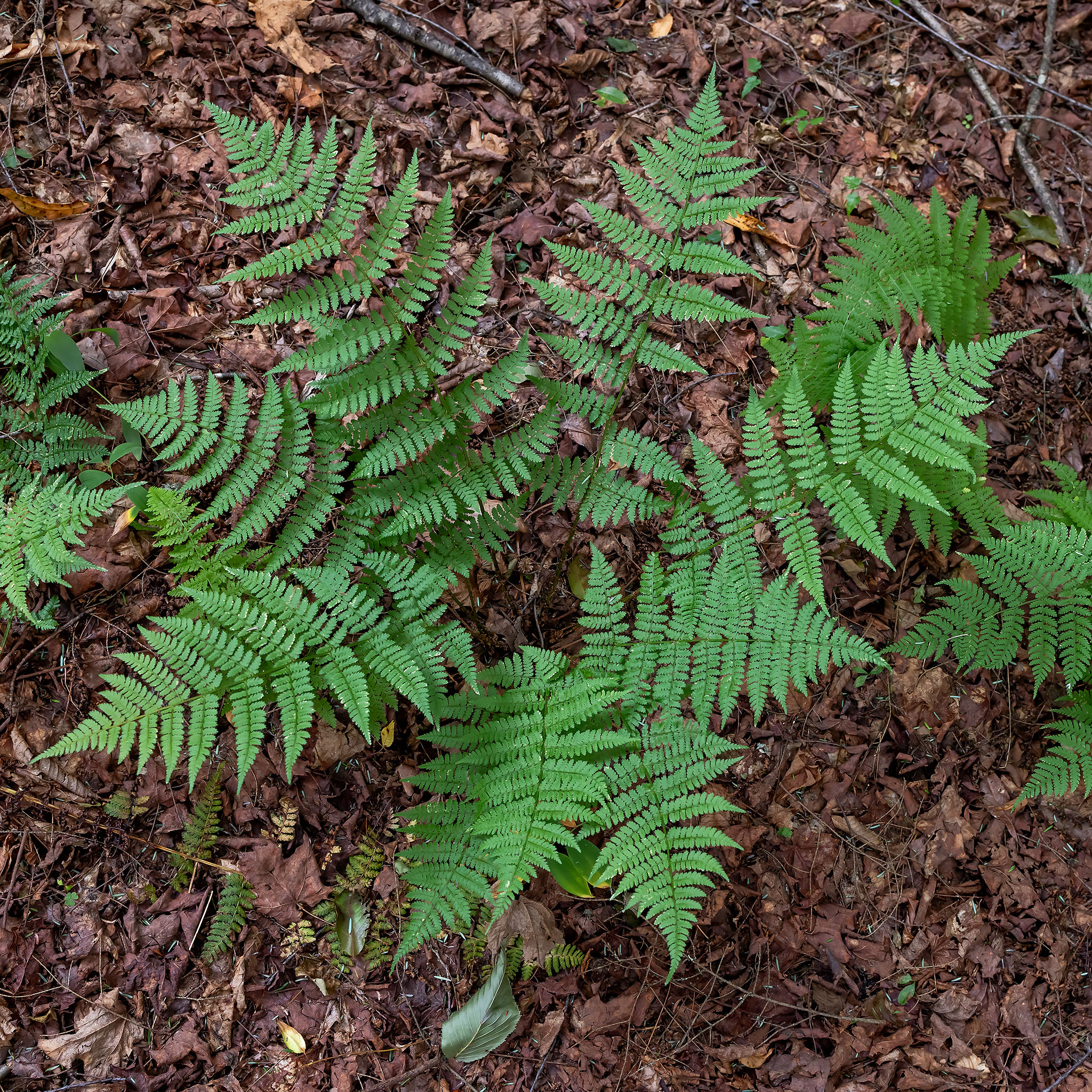
Intermediate/evergreen woodfern showing typical woodfern form
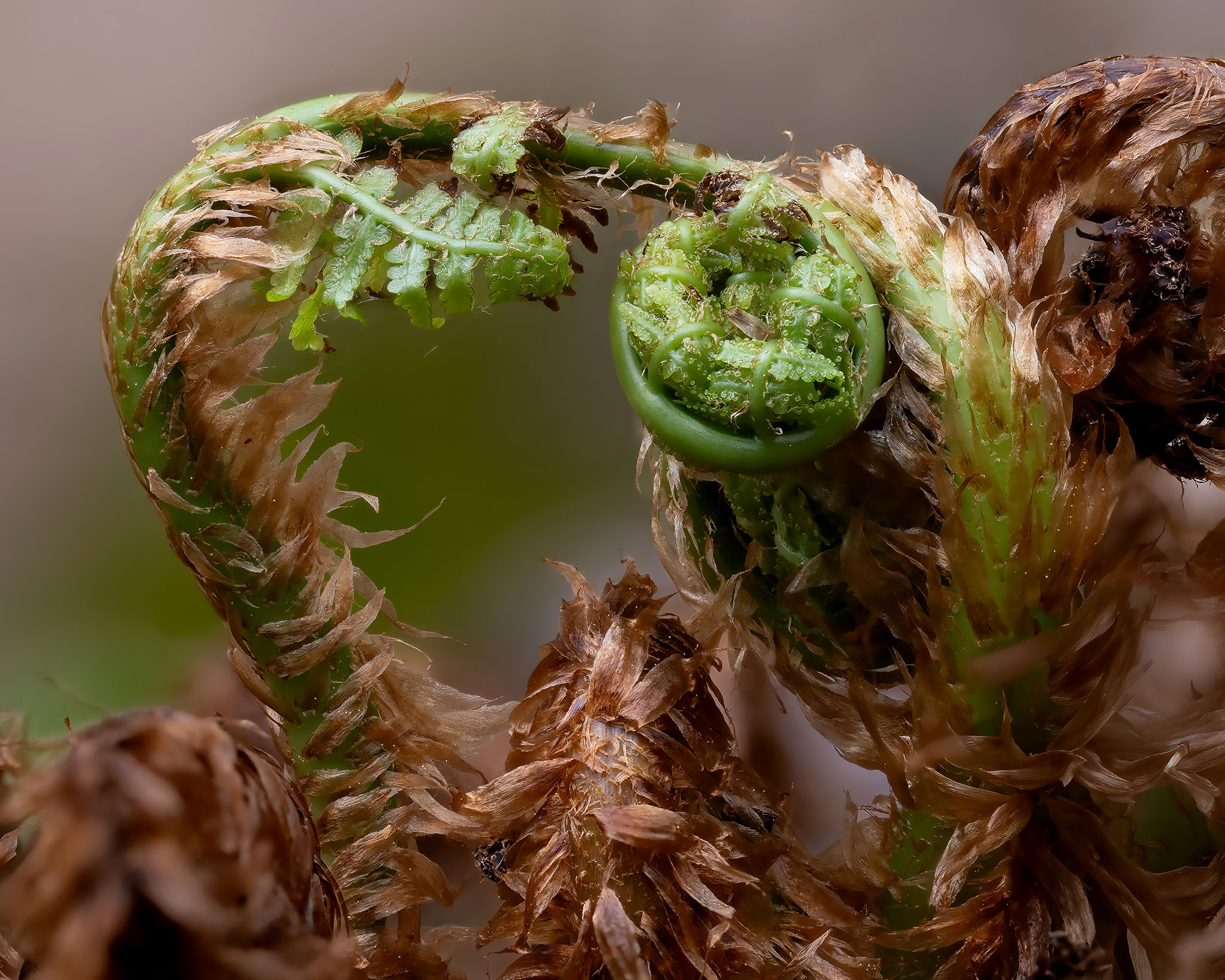
Very scaly unfurling marginal fern fronds
While other types of ferns can be very similar to the woodferns in general appearance, there are a few distinguishing characteristics of the woodferns which, when combined, separate the woodferns from other species. Starting from the ground, the stipes (stems) of woodferns are clustered, stout, scaly and grooved emerging from a rhizome. The groove of the stipe extends from the base of the frond and continues as the stipe becomes the rachis (portion of stem with pinnae-blade) all the way to the tip of the frond. The costa (midveins of the pinnae) are also grooved. Another key feature is the sori (clusters of spore cases) found on the underside of fertile fronds. The sori will be round and covered by a thin, kidney-shaped enclosing called the indusium. So, if you find a fern with all three of these characteristics; clustered fronds with scaly stipes, grooved stipes, rachis and costa, plus round sori on the underside of fertile fronds, you have found a species of woodfern. Determining the species can be more challenging and identification is easier with fairly mature ferns. Very young ferns can look very similar to each other and often very little like the parent ferns. It is also possible to find young woodferns growing as a single frond rather than in a cluster.
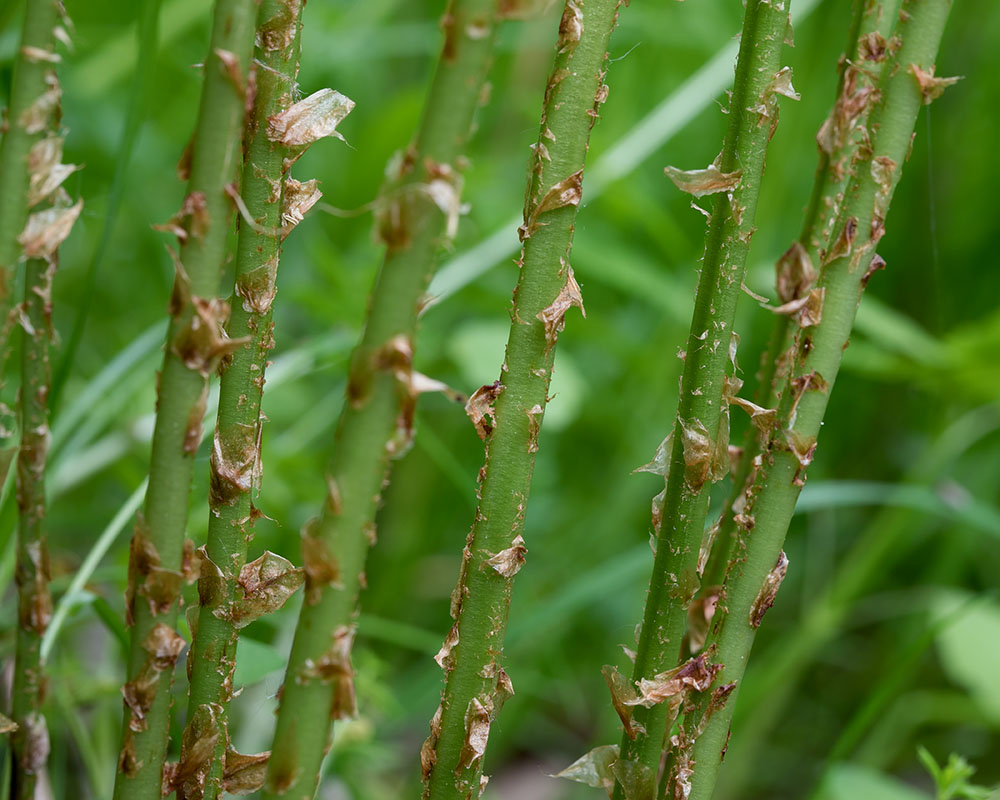
Scaly stipes of a crested woodfern
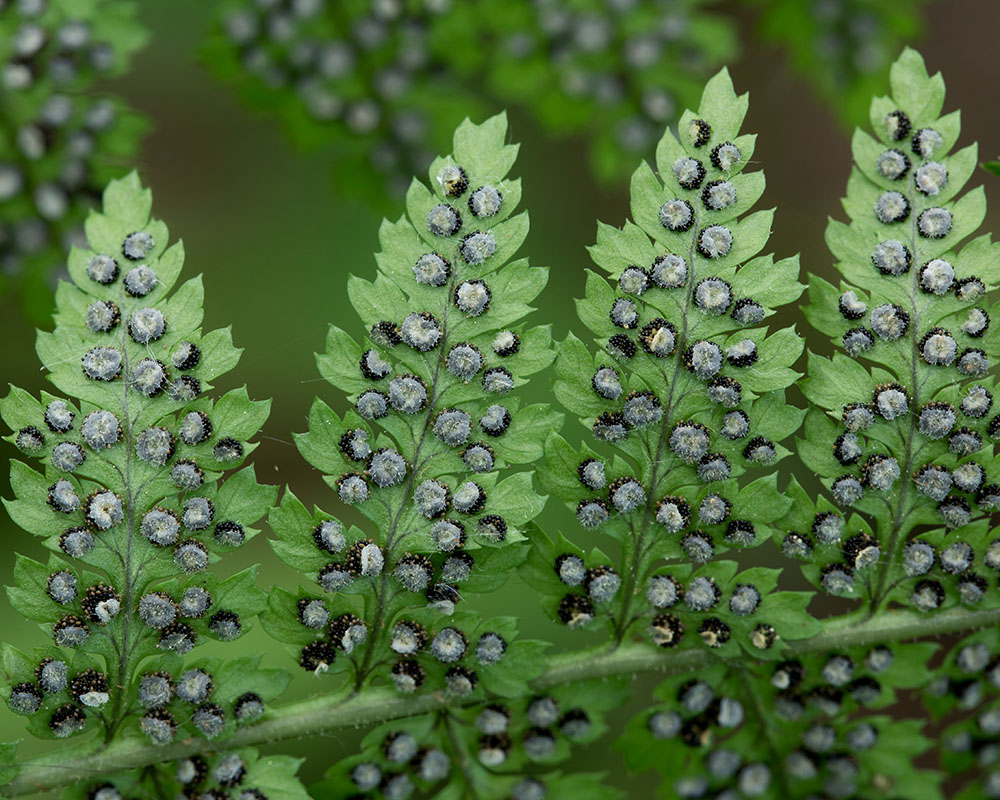
Round sori of an intermediate/evergreen woodfern
A common woodfern you may find along any forest trail, especially rocky areas, is the marginal woodfern (Dryopteris marginalis). The marginal woodfern is an evergreen species with an ovate- to lance-shaped blade with fairly thick, leathery pinnae with rounded, slightly lobed margins. The easiest way to confirm its identification is to find a fertile frond and note the location of the sori. The sori will be along the edge (margin) of the pinnules rather than towards the middle like other wood fern species.
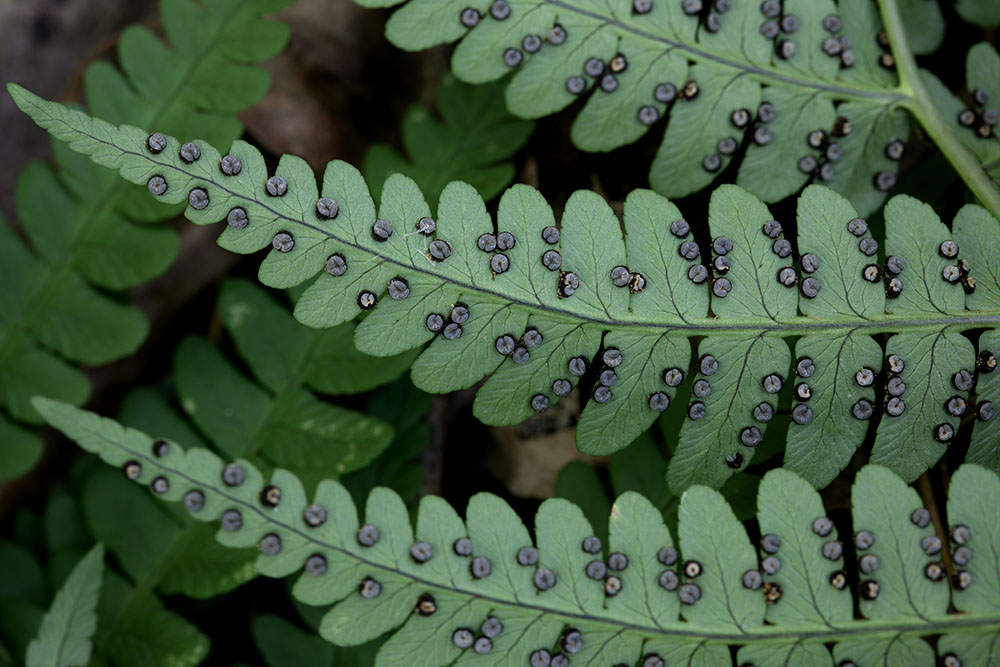
Sori of marginal woodfern along margins of pinnae
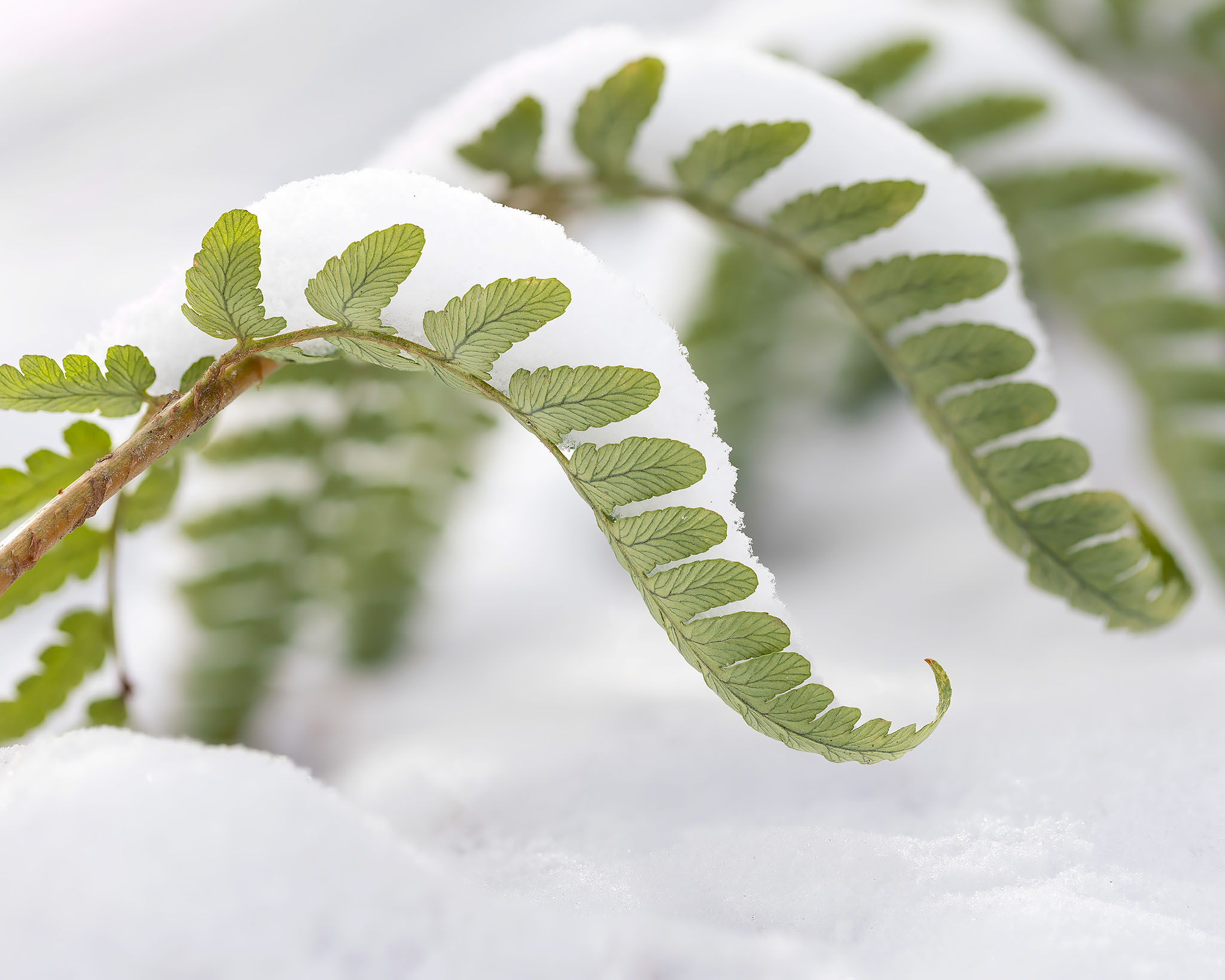
Evergreen marginal woodfern under a coating of snow
Another common species is the intermediate/evergreen woodfern (Dryopteris intermedia) which shares the wooded, rocky habitat of the marginal woodfern and they can often be found together. The intermediate/evergreen woodfern is also an evergreen species with large lance-shaped blades but differs from the marginal woodfern in having toothed, bristly pinnules with the sori in the middle rather than along the margins of the pinnae.
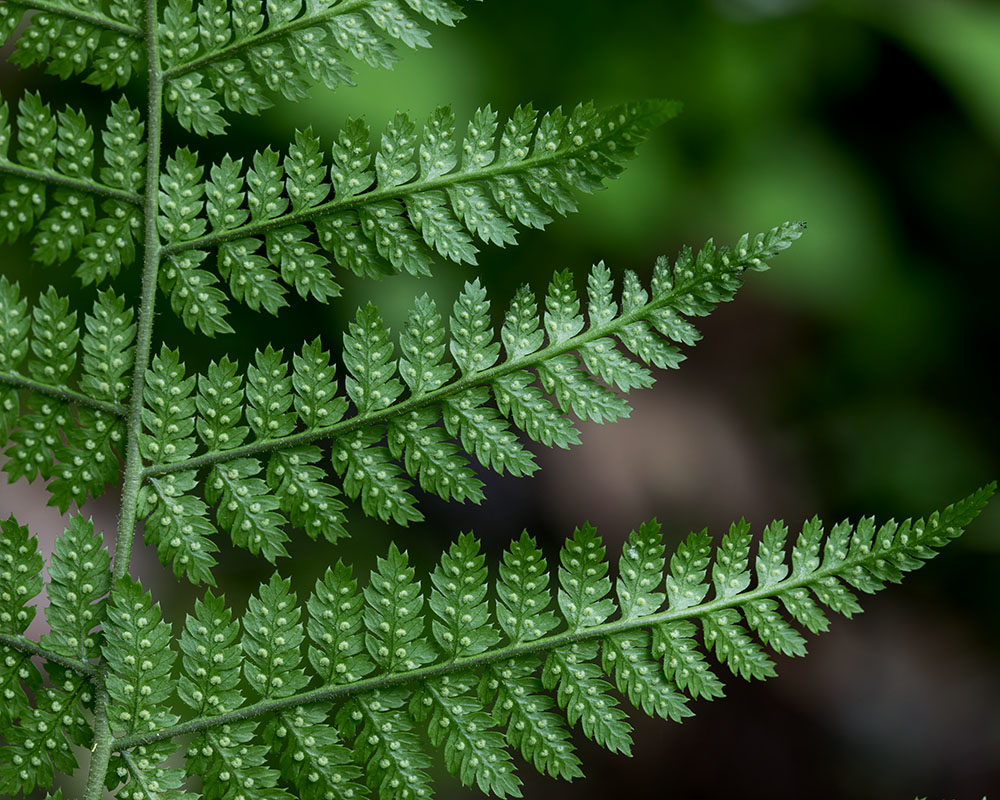
Sori of intermediate/evergreen woodfern
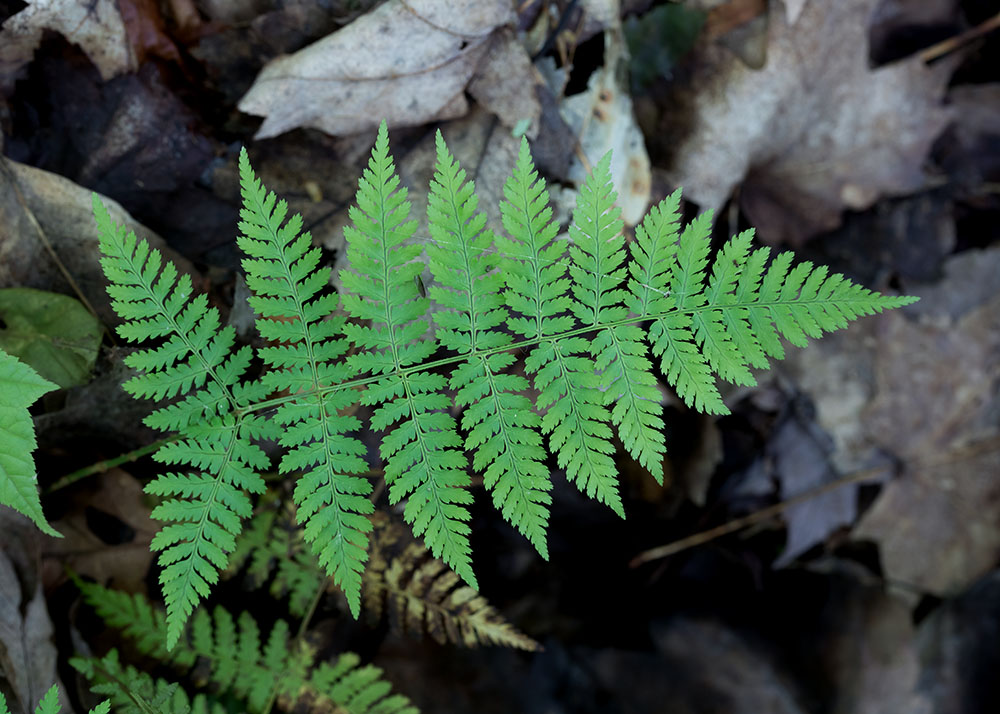
Frond of intermediate/evergreen woodfern
The spinulose woodfern (Dryopteris carthusiana) is a look alike to the intermediate/evergreen woodfern with the same lance-shaped blades with toothy, bristle-tipped pinnules. However the spinulose woodfern is deciduous rather than evergreen, helpful with late autumn and winter identifications. The spinulose woodfern tends to be found in wetter areas of the forest than the intermediate/evergreen woodfern although their habitats do overlap and they are often found together. A simple way to confirm identification is to look at the innermost pinnule on the lowest pinna of the blade. In the spinulose woodfern the innermost pinnule will be noticeably longer than its neighboring pinnule while in the intermediate/evergreen woodfern the innermost pinnule is shorter or nearly the same length as the neighboring pinnule.
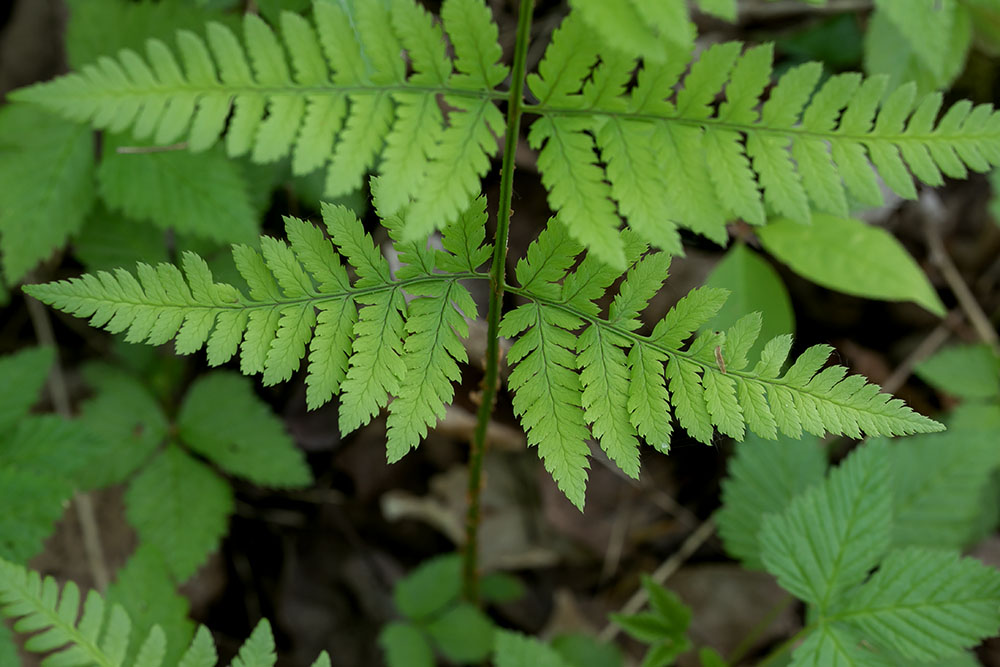
Lowest pinnae of spinulose woodfern with innermost pinnules longer than neighboring pinnule
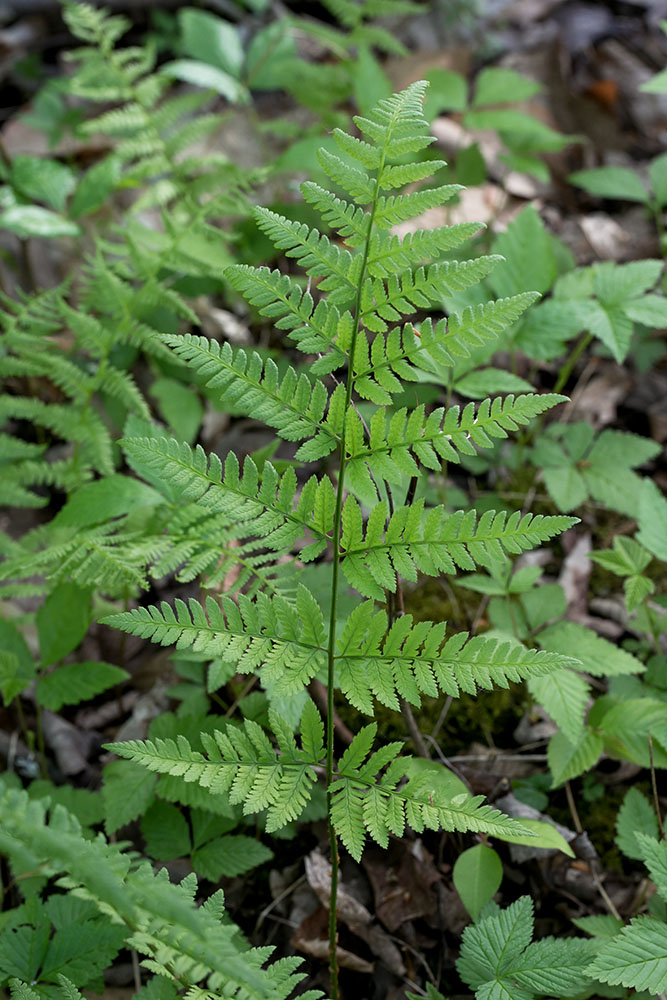
Frond of spinulose woodfern
The crested woodfern (Dryopteris cristata) grows in wetter habitats than the previous woodferns although the fringes of its habitat can be a good place to find the spinulose woodfern. Crested woodferns can be found on hummocks in bogs and in sedge meadows, wet woods and fairly open, shrubby wetlands. The crested woodfern has a distinct appearance compared to the three previous woodferns in having a much narrower blade with short, leathery pinnae which are nearly the same length from the base of the blade to the middle before tapering to a blunt tip. The crested woodfern also differs in having more distinct fertile and sterile fronds. The fertile fronds stand more upright, are more rigid and deciduous while the sterile fronds lay flatter, are slightly broader and evergreen. The crested woodfern is one of the fertile hybrids I mentioned previously with one parent species being the southern woodfern (Dryopteris ludoviciana) and the other parent species being unknown.
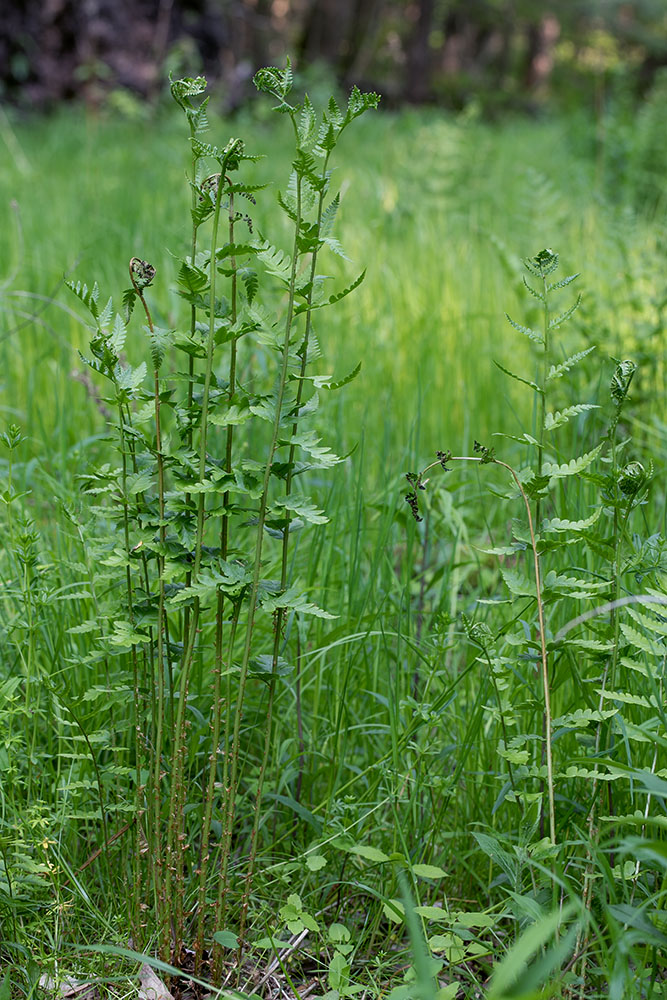
Crested woodfern form
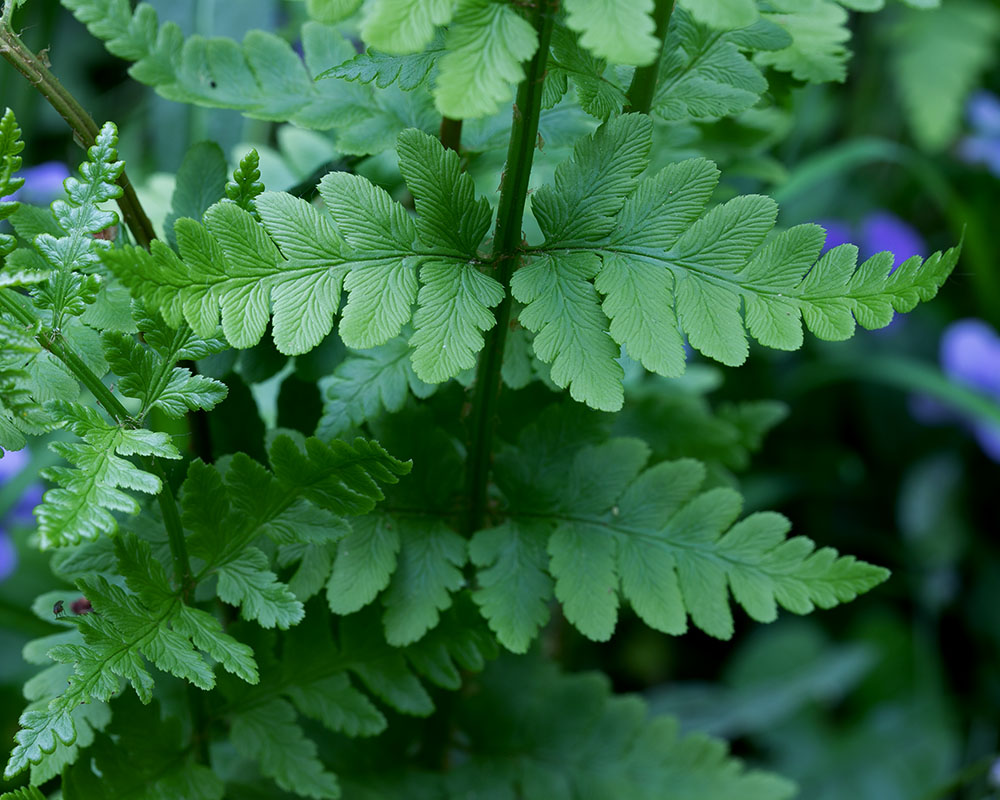
Pinnae of crested woodfern
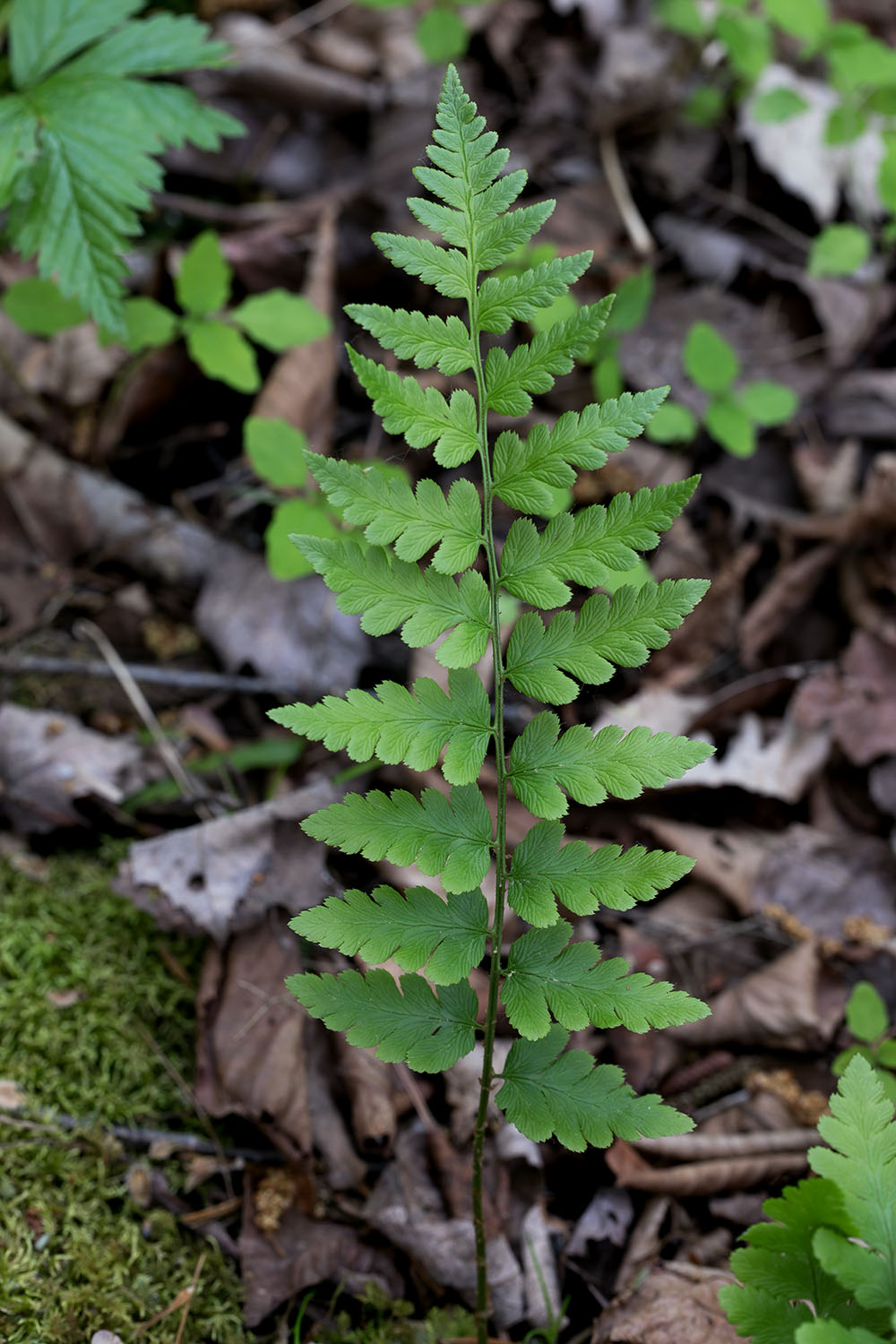
Frond of crested woodfern
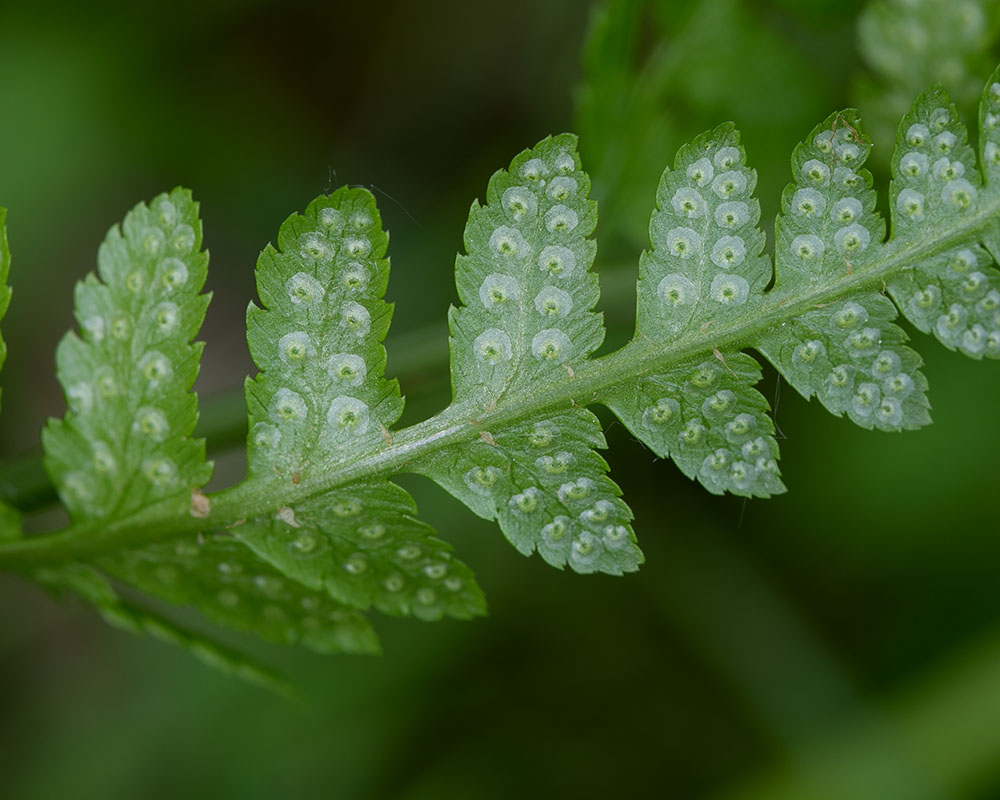
Developing sori of a crested woodfern
One woodfern species that is considered secure in Pennsylvania but which is seldom seen in the Goldie's woodfern (Dryopteris goldieana). The Goldie's woodfern is another deciduous species and, although difficult to find, it is the largest woodfern species in Pennsylvania. It can be found (potentially) in rich soils of cool, moist woods. Also, ravines, rocky slopes, seeps and springs are good places to seek out this reclusive woodfern. In general appearance it is similar to the marginal woodfern with bluntly toothed pinnules but the blade of the Goldie's woodfern is abruptly tapered at the tip, the sori are aligned in the middle rather than the margins of the pinnules and the Goldie's woodfern has two-toned scales, dark in the middle with a pale border. The Goldie's woodfern is most similar to the log fern (Dryopteris celsa) with the main difference being the blade tip of the log fern's blade being less abruptly tapered.
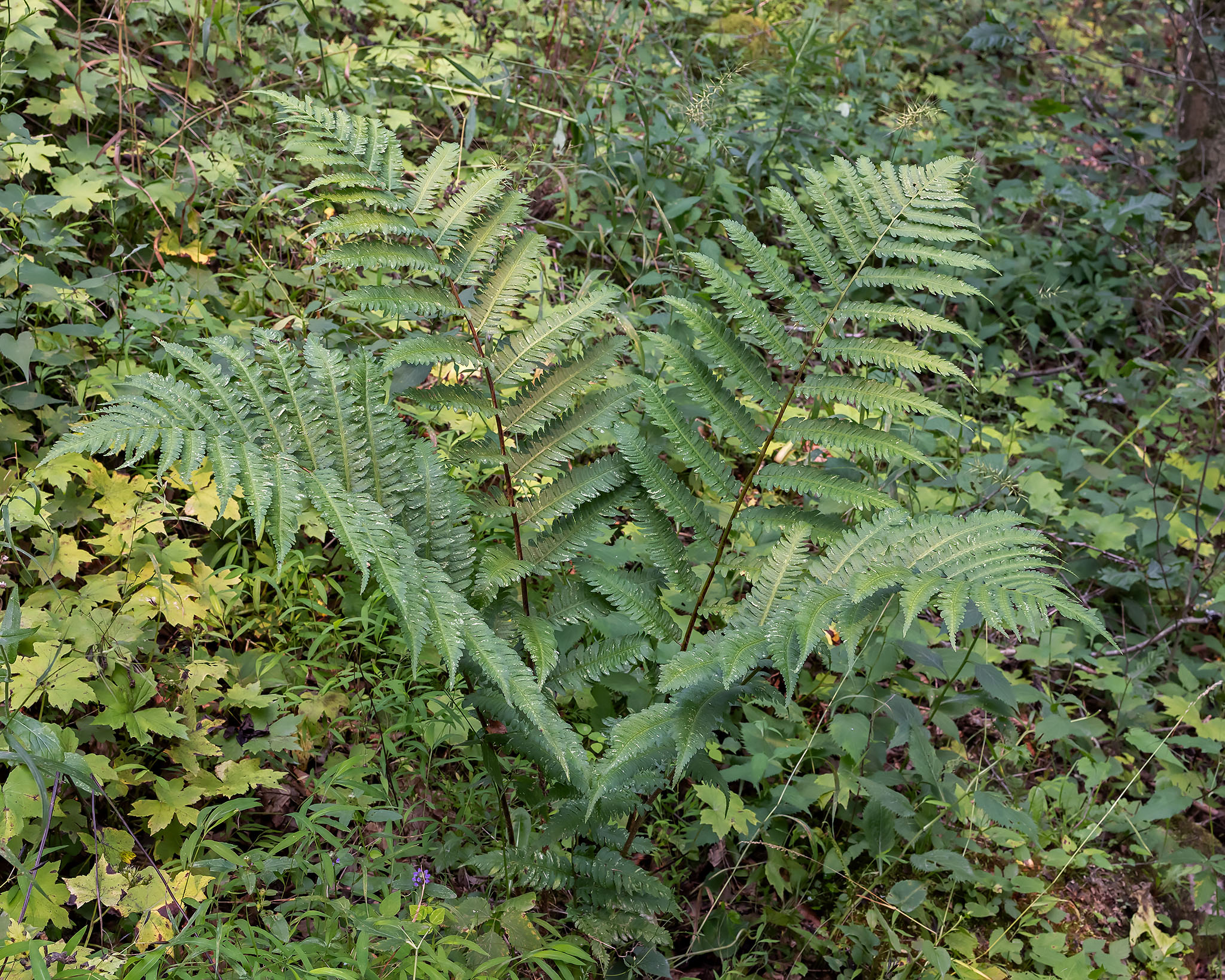
Goldie's woodfern
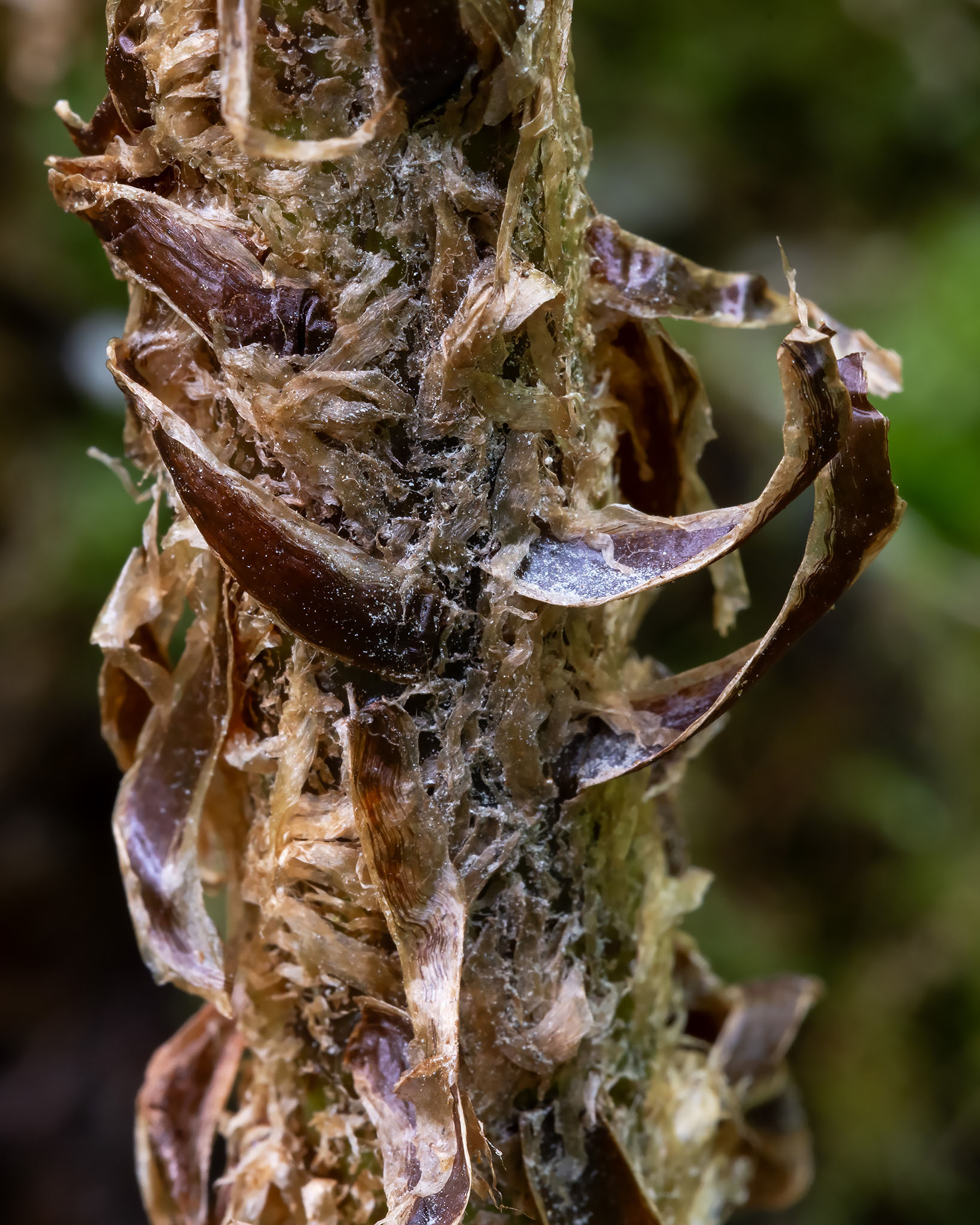
Two-toned scales of the Goldie's woodfern
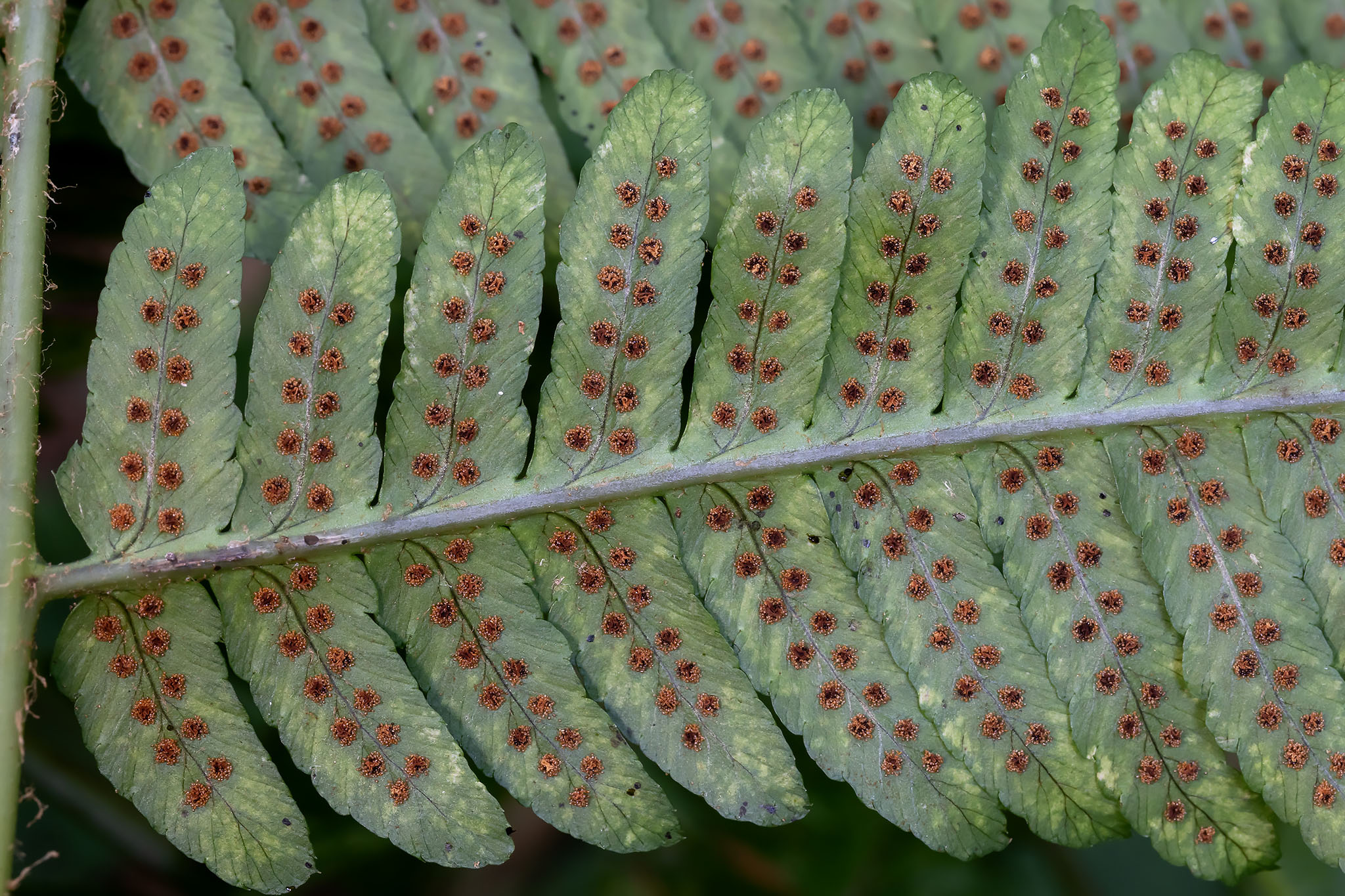
Sori of Goldie's woodfern
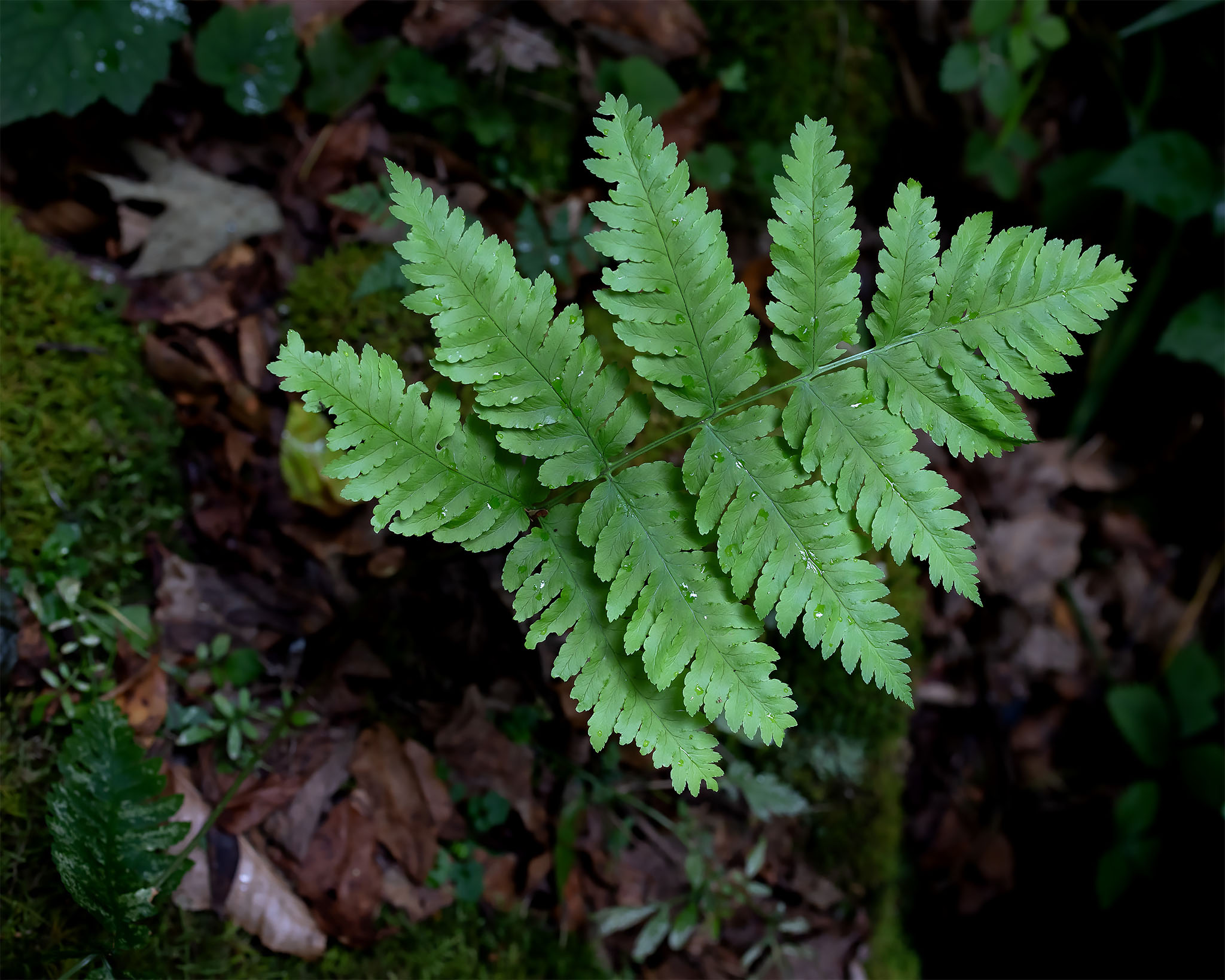
Young frond of Goldie's woodfern
The history of the just mentioned log fern is worth a small side note. The log fern is a fertile hybrid of the Goldie's woodfern and the southern woodfern. Interestingly, the present day ranges of these parent species do not overlap, the southern woodfern being a southern species and the Goldie's woodfern northern species. It is believed that towards the end of the last ice age (about 18,000 years ago) the range of the Goldie's woodfern had been pushed far enough south due to the glaciers to overlap with the southern woodfern and a hybrid was created, initially a sterile hybrid and then a fertile hybrid, again thanks to polyploidy. Unfortunately, you are unlikely to come across a log fern since it is endangered in Pennsylvania. There is even a second rare hybrid of the Goldie's woodfern in Pennsylvania, the Clinton's woodfern (Dryopteris clintonia), which is a fertile hybrid of the Goldie's woodfern and the crested woodfern. The Clinton's woodfern can possibly be found in wet woodlands and swamps, similar habitat to the crested woodfern.
A woodfern most people are familiar with is the Christmas fern (Polystichum acrostichoides), another evergreen species which is widespread throughout Pennsylvania forests. While being in the woodfern family, the Christmas fern grows in clusters from rhizomes, has scaly, grooved stipes and rachis, yet it has some different characteristics which places it in a separate genus from the other woodferns. Unlike other woodferns, the Christmas fern has oblong sori with a round indusium which reside only on the upper pinne of more upright fertile fronds. The sori are packed very tightly on the underside of the pinnae which are smaller than the non-spore bearing pinnae. Christmas ferns are also easy to distinguish from other woodferns since their pinnae are not deeply lobed but have blunt, bristle-tipped teeth and an extended lobe nearest the rachis which is pointing up (resembles a Christmas stocking toe).
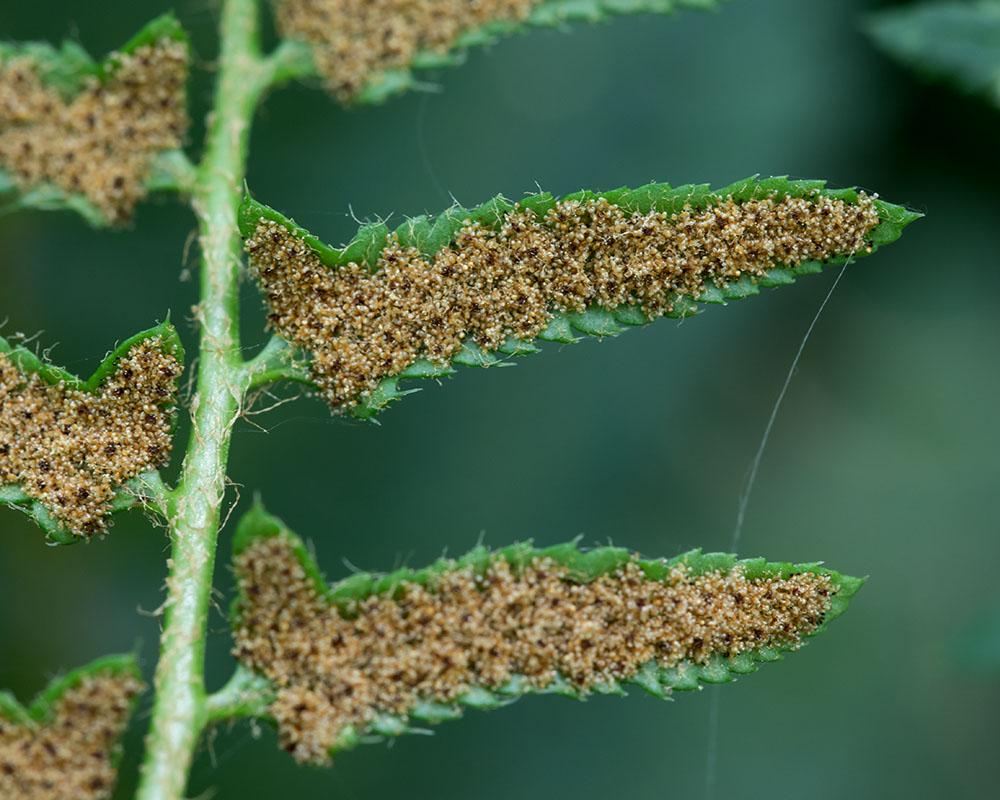
Tightly packed sori of a Christmas fern
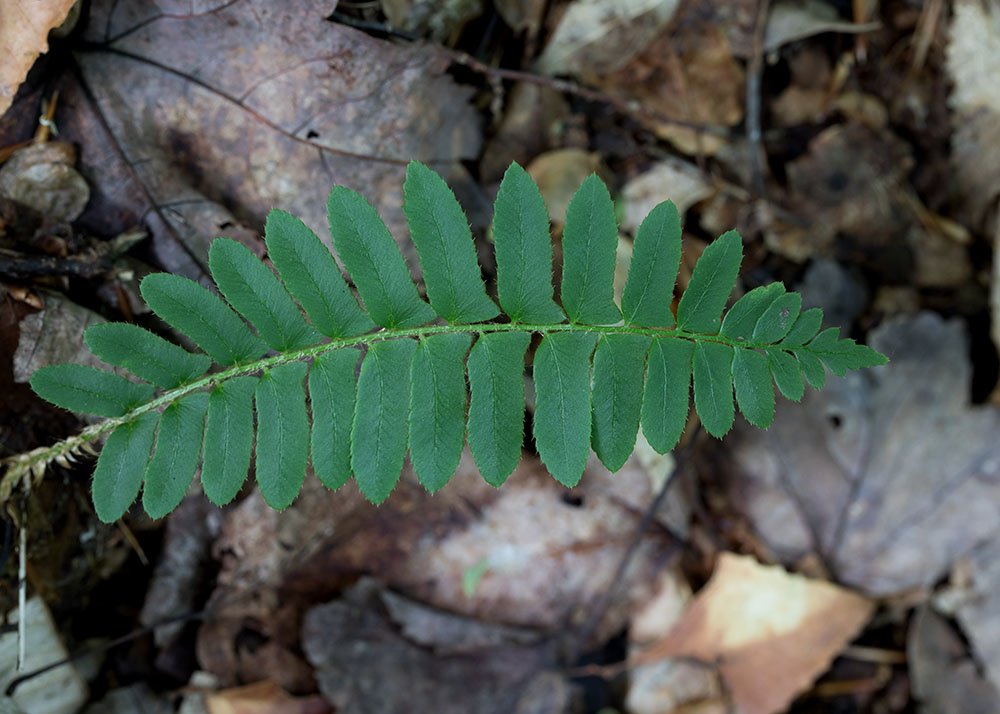
Christmas fern frond
While I have primarily focused on the more comon woodfern species in Pennsylvania there are more out there that can be found. Some have only been found outside of Pennsylvania in other parts of the northeast and other are endangered species that I did not mention. I would encourage anyone with an interest in the plant forest to take a close look at the ferns growing along forest trails. I know 'they all look the same' because I used to feel that way too but once you learn what features to focus on they will start to separate themselves and hunting for new species is a lot of fun. Woodferns can be even more interesting when considering their tendency to hybridize and form new species via polypoloidy which I did not get into deeply since I do not understand the genetics and physiology well enough but if one has the right mind for it and is interested it is worth looking into further. Another family of ferns, the spleenworts (Aspleniaceae) is also know for hybrids but that is separate story.