Field Notes from the Wetlands
In this edition, James Benavides brings us into the soaked world of Pennsylvania’s wetlands, where saturated soil and standing water reshape the rules of plant life. His piece follows the quiet ingenuity of species that not only endure flooded ground but flourish in it, revealing the structural adaptations that let roots breathe, leaves float, and entire communities persist in places most plants cannot. It’s an invitation to see wetlands as landscapes defined by resilience and remarkable design.
Wet Feet, Smart Plants: Adaptations of Wetland Plants
After a month of what feels like near-constant rain, I have forgotten what clean boots look like. Working outside means working in any and all conditions, which lately means trudging through soil soup. Last week, I finally looked up from the ground and scanned the surrounding landscape and wondered: this might be inconvenient for me, but what do the plants think? As it turns out, there are entire spaces where we can see plants not just tolerate wet ground — but thrive in it.
Welcome to wetlands.
Wetlands, simply put, are areas where water saturates the soil — either seasonally or permanently — altering its chemistry and creating conditions most plants can't handle. Pennsylvania is home to many types: freshwater marshes, scrub-shrub wetlands, forested floodplains, bogs, fens, and more. Each is unique in its hydrology, soil conditions, and plant community, but they all share one thing – water, and what it does to the ground beneath it.
When water sinks into the soil, it fills the pore spaces, displacing air. What little oxygen remains gets consumed by plant roots and soil bacteria, creating hypoxic (oxygen-reduced) or anaerobic (oxygen-absent) conditions. In this depleted state, soil chemistry shifts: some nutrients disappear, some concentrate, and others get locked into forms plants simply can't access. So without oxygen to respire or nutrients to grow, how do plants survive here at all?
The answer is adaptation, and some pretty clever versions of it. I decided to highlight a few of Pennsylvania's wetland warriors, each with an insight into the strategy that help them tackle these conditions.
Common Cattail (Typha latifolia)
Adaptation: Aerenchyma
The cattail is probably the most recognizable wetland plant, standing four to ten feet tall with either a brown, cylindrical flowering spike or a fluffy white seed mass depending on the season. Those tall supporting stalks aren't solid, but are built from a porous tissue — leading us to our first adaptation: aerenchyma.
Note: A breakdown in Ancient Greek — Aer (āḗr) meaning "air" and -enchyma (énkhuma) meaning "infusion" with modern uses to describe cellular tissue.
This spongy, specialized tissue runs from the leaves to the rhizomes buried in anaerobic sediment, acting as a built-in snorkel — channeling oxygen down to the roots and venting gases like carbon dioxide upward. But the benefits don't stop at the plant itself. Excess oxygen leaks into the surrounding sediment through a process called radial oxygen loss (ROL), creating oxidized zones around the roots that support aerobic microbial communities and detoxify compounds produced by anaerobic bacteria. The air cavities also reduce the plant's overall density, helping aquatic plants stay buoyant to access sunlight.
Aerenchyma isn't unique to cattails — it is also seen in other species such as northern blueflag (Iris versicolor), pickerelweed (Pontederia cordata), soft rush (Juncus effusus), and arrowhead (Sagittaria latifolia) just to name a few.
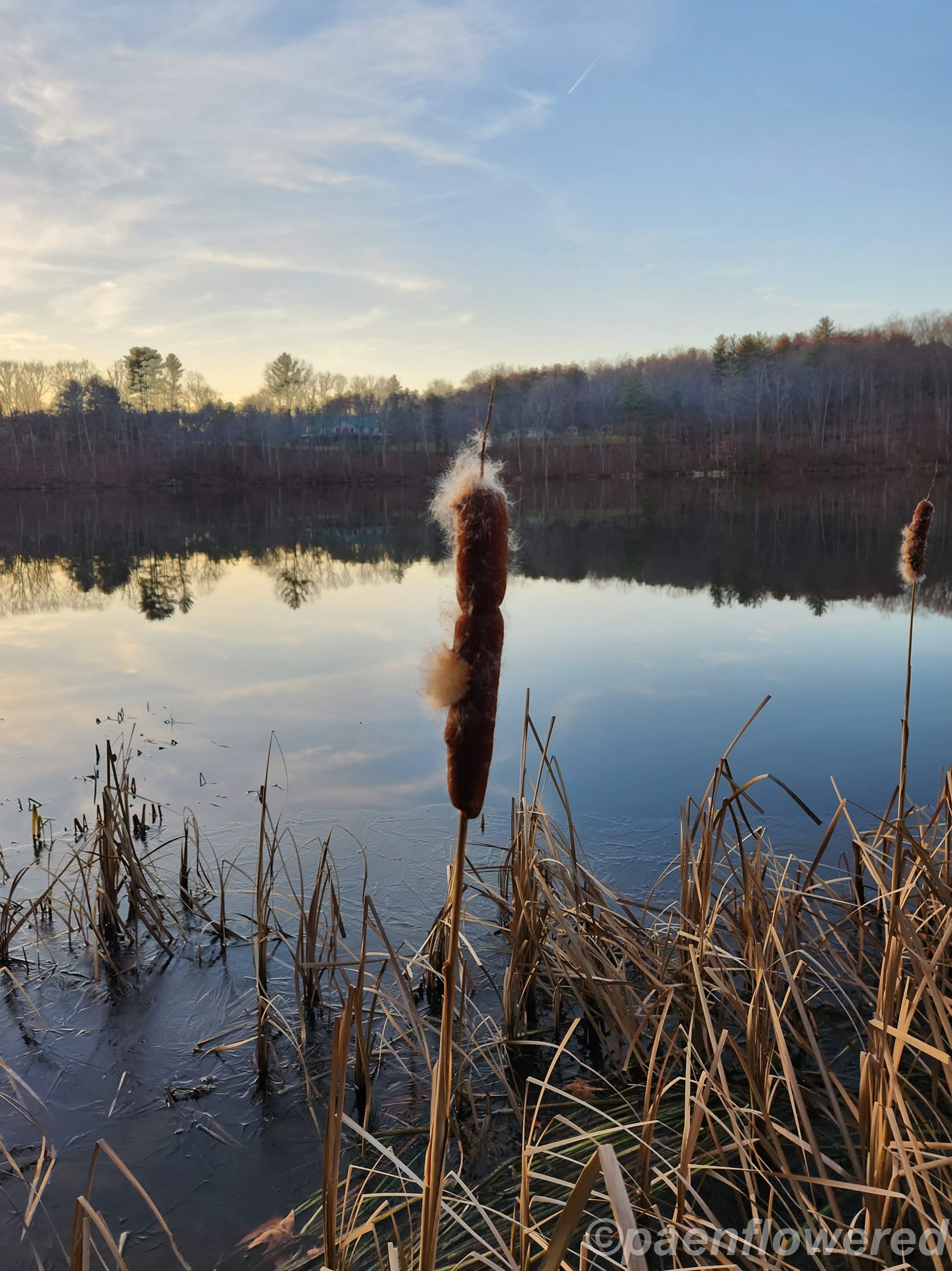
Common Cattail
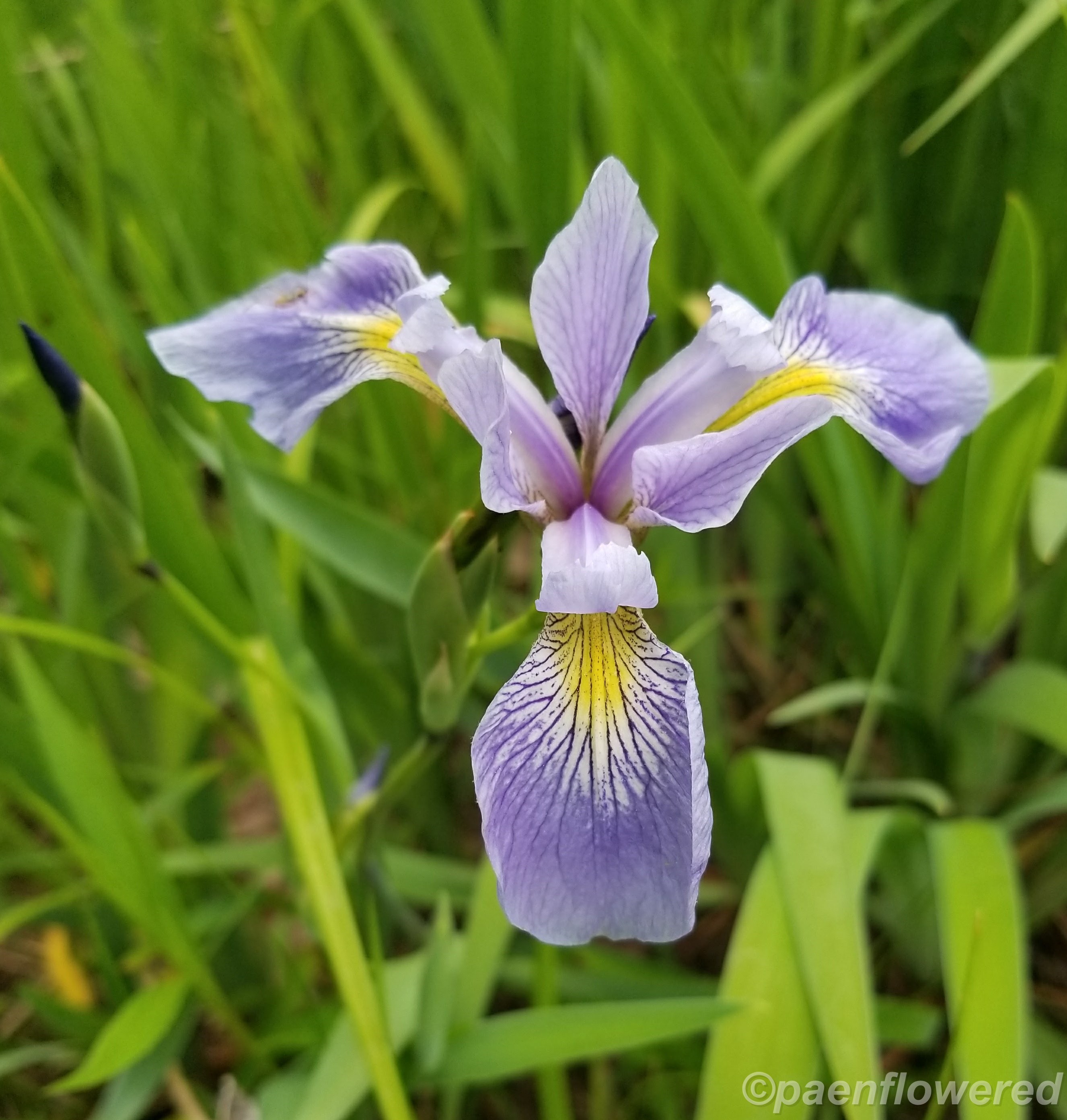
Northern Blueflag
Black Willow (Salix nigra)
Adaptation: Adventitious Roots
My early educational upbringing instilled a basic plant model in my head, with leaves up top and roots down below. Well, if you've ever walked by a black willow speckled with small, reddish, spike-like growths coming out of the bark, then you've witnessed a different type of root: adventitious roots.
Let's go back to that basic plant model. Those central, longitudinal structures that grow downward and branch off form what's known as the root axis. But when a plant is in a wet state – either from heavy rains or prolonged high humidity – roots can develop from the leaves and the stem tissue instead.
This helps gather oxygen and stabilize the plant in soft environments such as wetlands. Adventitious roots can serve other purposes for other plants, such as food storage, increased photosynthesis, physical support, and water uptake.
For black willows, these adventitious roots are designed for aeration and consist of aerenchyma tissue. They are a popular species for streambank stabilization, since they root and survive in wet soil. And again, the oxygen pumped down to the roots makes its way into the surrounding rhizosphere (the area around plant roots) and supports those microbes.
Silver maple (Acer saccharinum), tamarack (Larix laricina), and spotted jewelweed (Impatiens capensis) are a few plants that also produce adventitious roots.
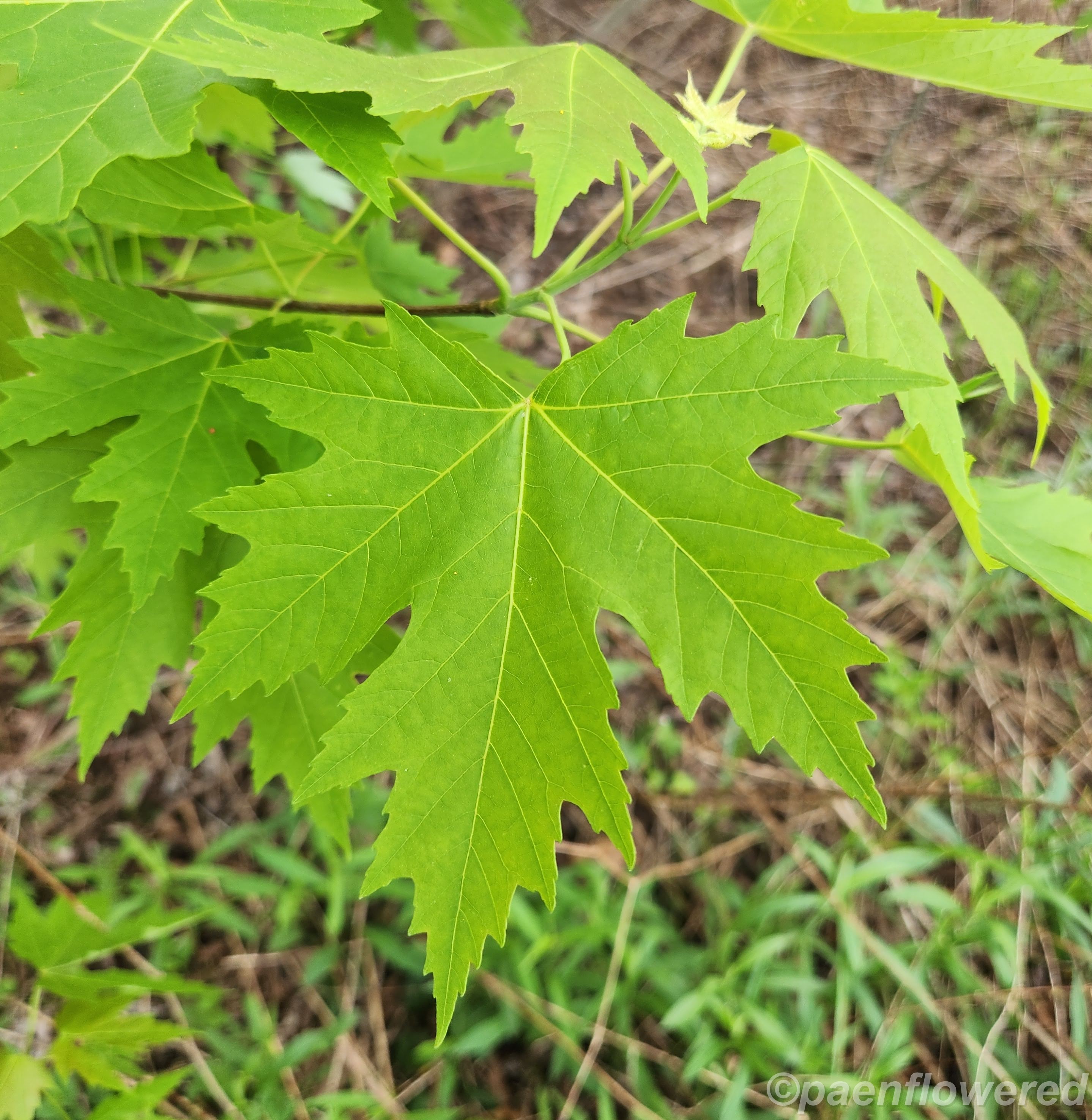
Silver Maple leaf
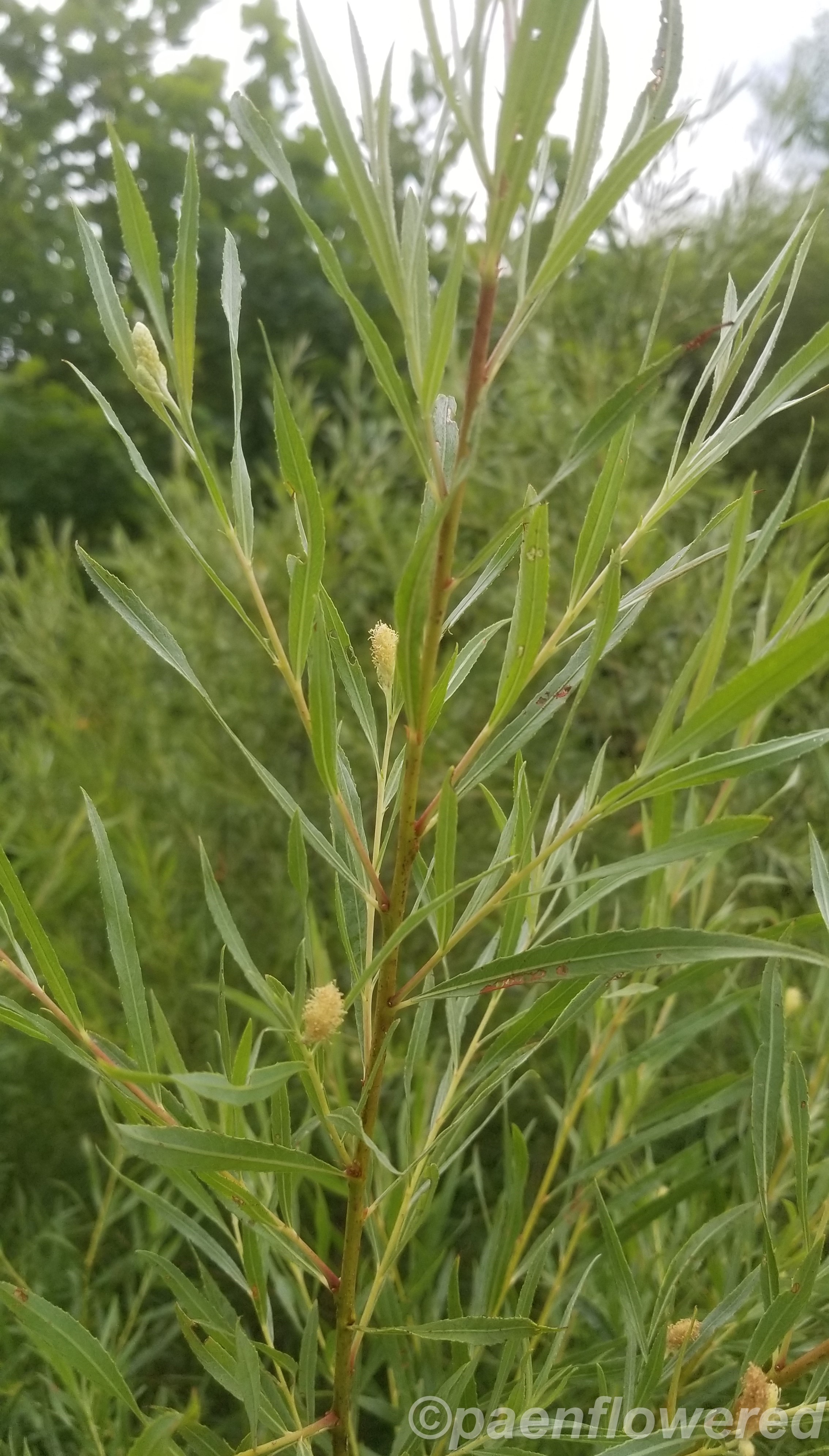
Young Black Willow
Common Buttonbush (Cephalanthus occidentalis)
Adaptation: Elongated Lenticels
The common buttonbush is easy to recognize by its pincushion flower heads, but look past those and give the bark a closer look. On younger stems you'll find small, raised, speckled pores standing out against green-to-reddish bark. As the stem matures and becomes woodier, those little bumps elongate into fissure-like structures across darker brown bark.
Those pores are called lenticels, and they act like breathing holes for the plant. Where bark is typically thick and waterproof, lenticels open a channel to the atmosphere, allowing oxygen, carbon dioxide, and water vapor to move in and out. They're made of a spongy, loosely packed grouping of cells, and you've probably seen them before without realizing it: those little dots on an apple, or the horizontal slits on a young birch tree, are lenticels!
In waterlogged conditions, lenticels can grow. This hypertrophy (enlargement in response to stress) increases the surface area available for gas exchange, compensating for what the flooded roots can no longer access from the soil.
A few other Pennsylvania wetland natives rely on them in a similar way: black willow (Salix nigra) and red osier dogwood (Cornus sericea).
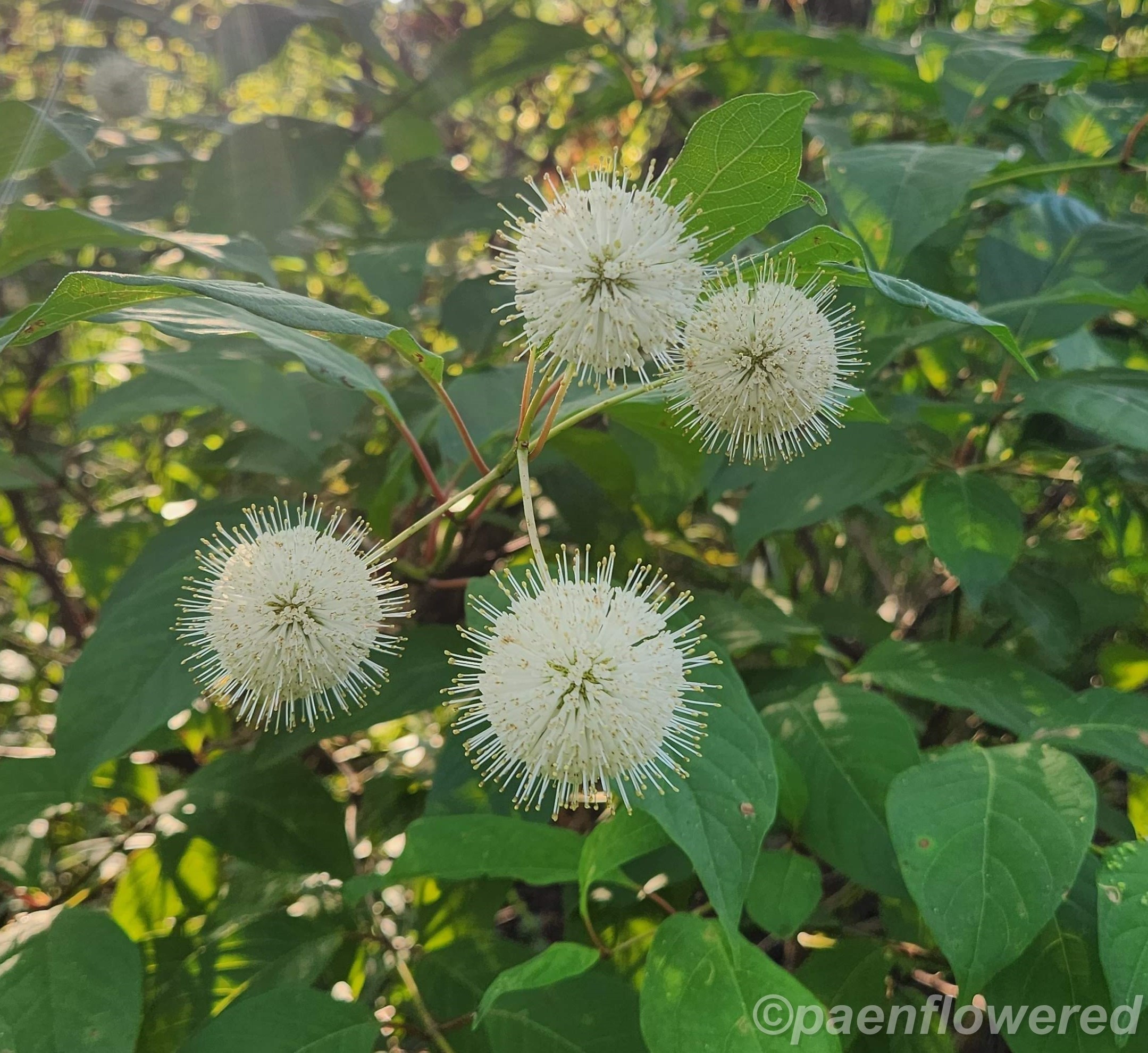
Common Buttonbush
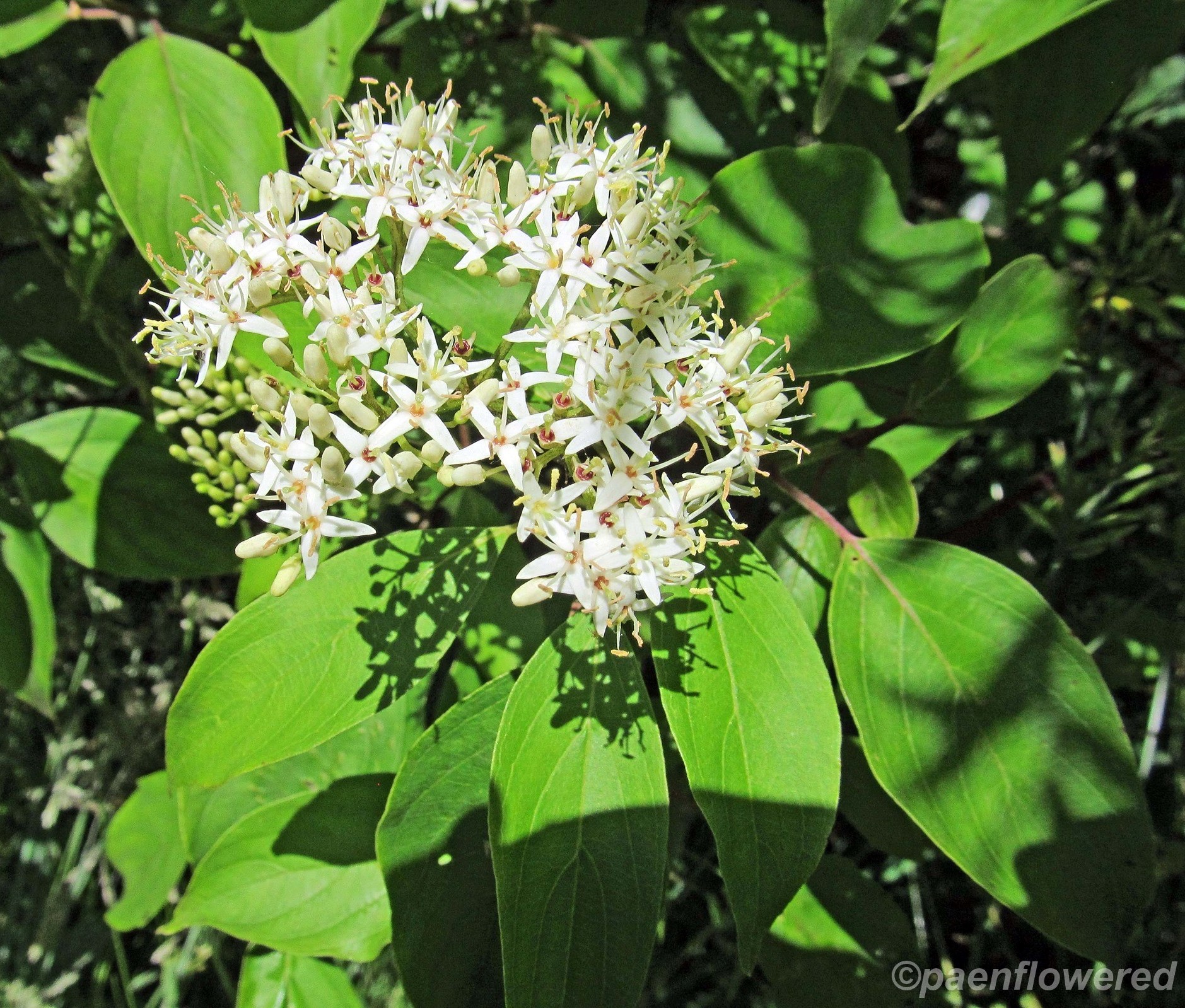
Red Osier Dogwood
American Lotus (Nelumbo lutea)
Adaptation: Superhydrophobic Leaf Surface
The American lotus is stunning with its broad, pale green leaves spread across the water's surface, with creamy yellow flowers emerging in summer. It is one of my favorite plants to see blooming.
To stay light enough to float, lotus leaves rely on aerenchyma tissue keeping their density low. But floating introduces a new problem: water pooling on the leaf surface. Enough pooled water and the leaf gets weighed down, submerged, and cut off from sunlight.
But the lotus has a solution!
Covering the surface of each leaf are microscopic bumps coated in epicuticular wax crystals. These wax crystals are hydrophobic (water-repellent), and instead of spreading out, water forms into nice beads on the surface similar to how water beads up on your rain jacket. These beads then roll right off, carrying any dirt or debris along with them. The result is a surface that is essentially self-cleaning and water-removing.
Note: "Epicuticular" breaks down from the Greek prefix Epi- (epí) meaning "on" or "over," placed atop cuticular. The cuticle is the waxy outer layer that protects plant organs from water loss, UV radiation, and pathogens. Thus, the epicuticular layer is the outermost layer of that outermost layer.
This phenomenon of water beading and rolling off a textured, waxy surface is known as superhydrophobicity, and it's been studied so extensively in the lotus that it now carries its own name: the lotus effect. Engineers have borrowed the concept for everything from low-drag ship surfaces to water-repellent fabrics.
Several other Pennsylvania natives share a similar strategy: skunk cabbage (Symplocarpus foetidus), pickerelweed (Pontederia cordata), and spatterdock (Nuphar lutea) all produce waxy leaf surfaces that help manage water in wetland environments.
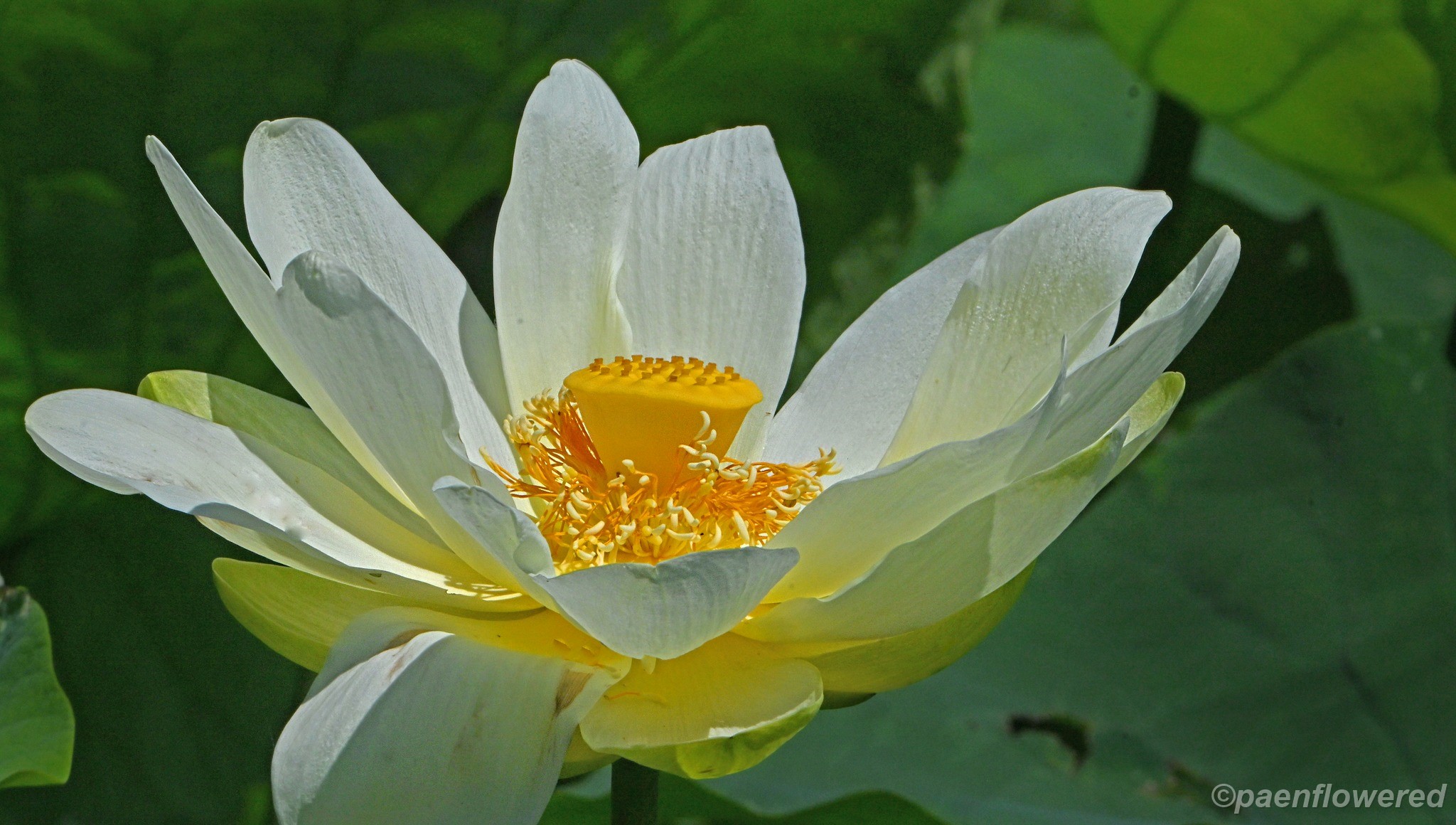
American Lotus flower
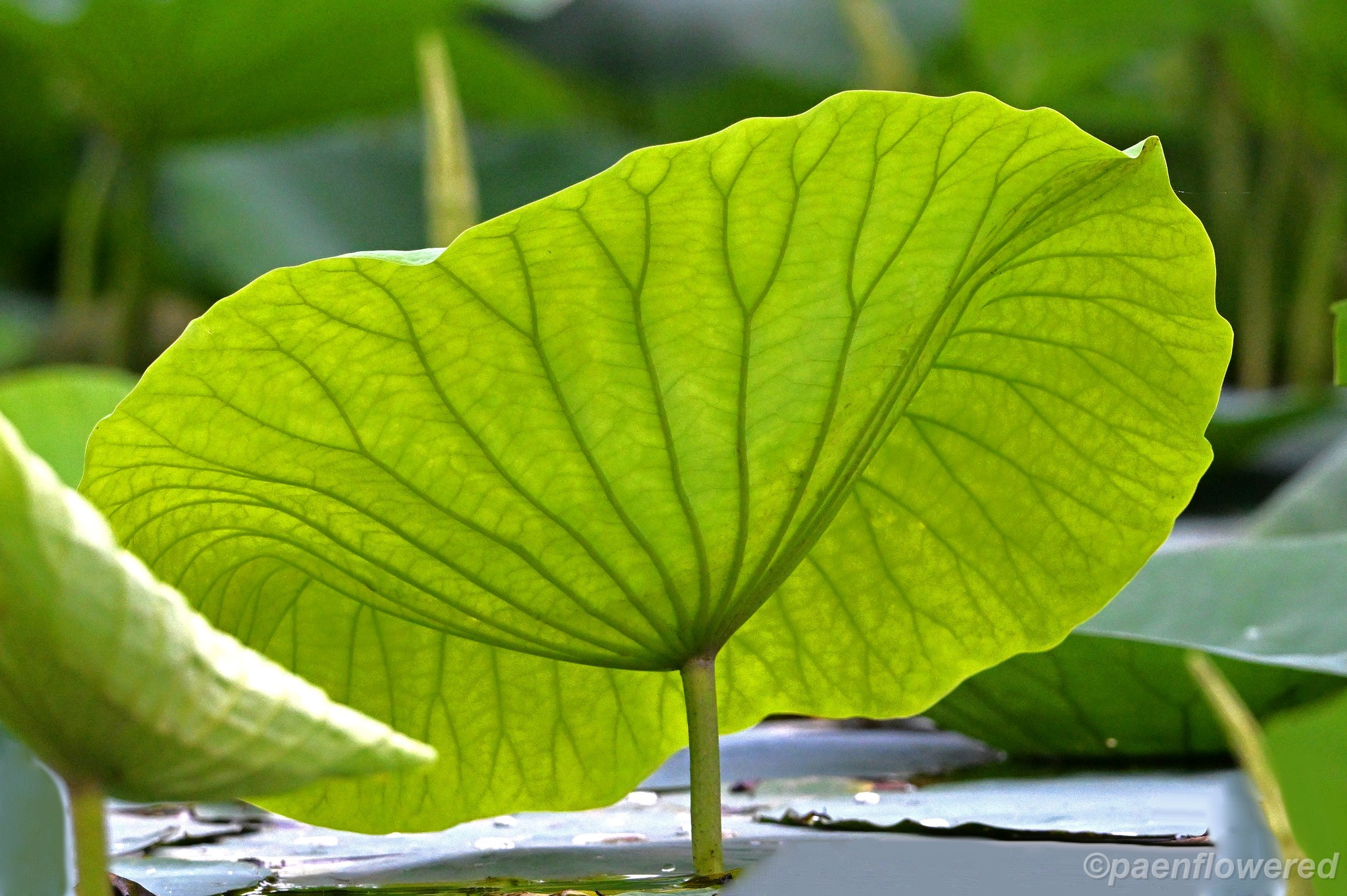
American Lotus leaf underside
Spatulate-Leaf Sundew (Drosera intermedia)
Adaptation: Carnivory
Sundews take on a uniquely beautiful form, with a cluster of hair-like tentacles each tipped with a glistening drop of sticky nectar designed to lure in insects. And that's our next adaptation: carnivory. A curious insect lands, finds itself stuck, and the tentacles slowly curl inward, holding their prey for several days while digestive enzymes do their work. Like any plant, sundews still photosynthesize to produce sugars, but this carnivorous habit fills a different gap, allowing them to harvest nutrients like nitrogen and phosphorus that the waterlogged soil lacks.
There's a crowd of carnivorous plants in Pennsylvania: the purple pitcher plant (Sarracenia purpurea) and the common bladderwort (Utricularia macrorhiza) are two examples. The pitcher plant drowns insects in a pool of digestive fluid collected inside its modified leaves; the bladderwort sets tiny underwater trapdoors that use a vacuum-suction mechanism to capture passing invertebrates. All of these carnivorous methods are ways of obtaining vital nutrients.
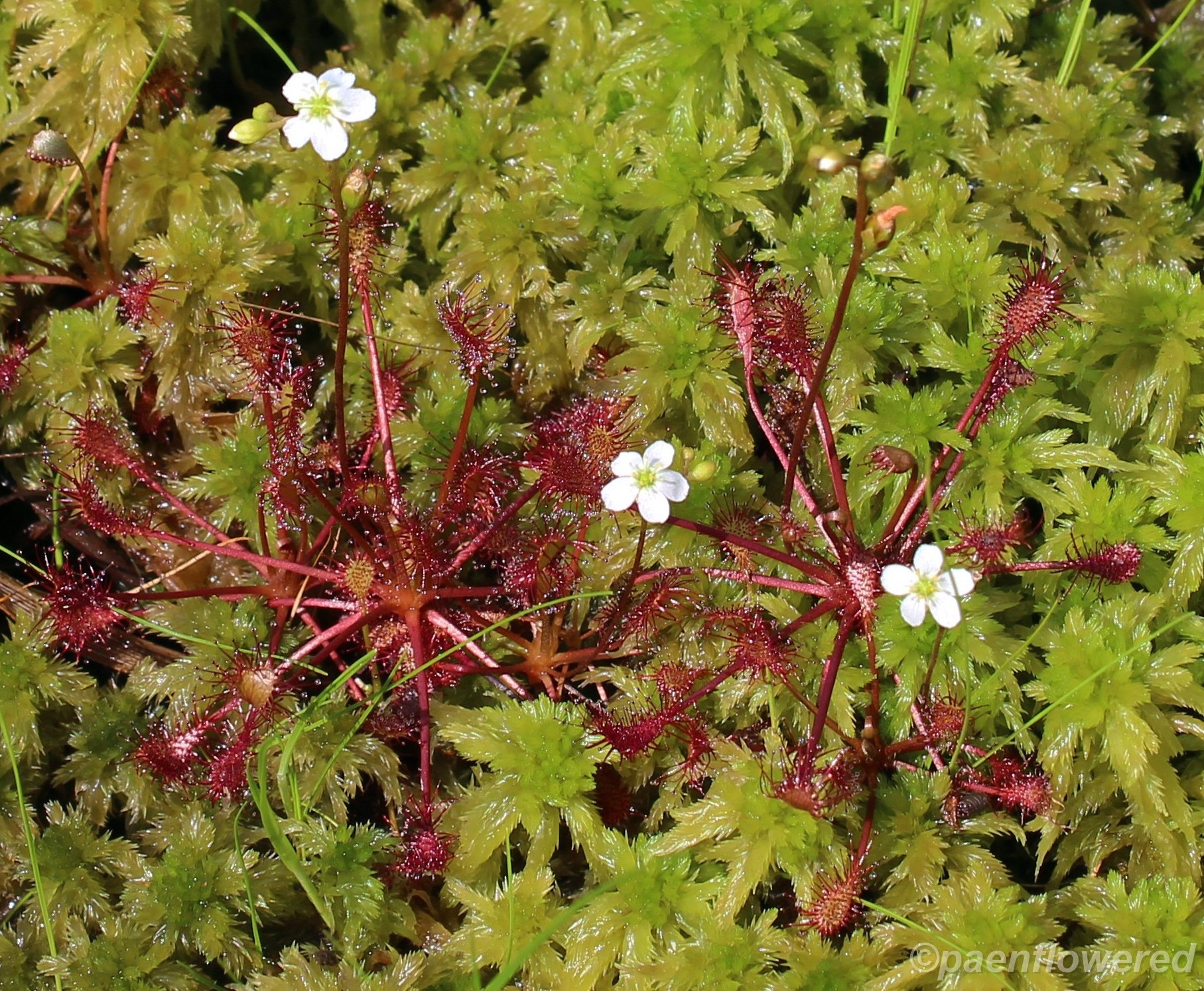
Spatulate-leaf sundew
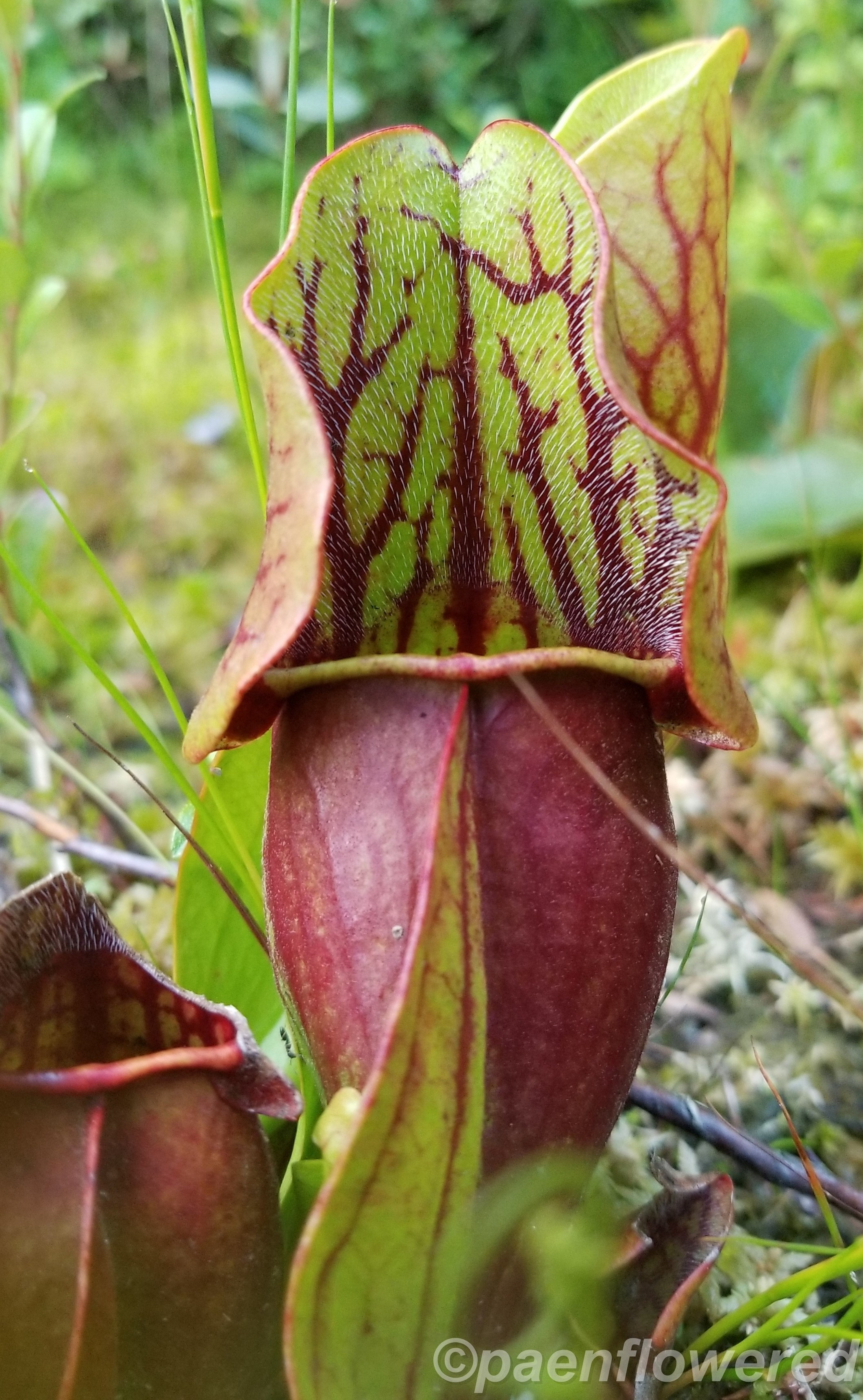
Purple Pitcherplant leaf detail
Why It Matters
It is fascinating to consider the structural adaptations these plants developed to survive in submerged, oxygen-starved, nutrient-deficient habitats. Zoom in, and you find tiny air channels and dew-covered tips – such small, elegant solutions to wetland conditions. Zoom out, and those same adaptations ripple through the broader ecosystem. The oxygen leaking from a plant's roots shapes which microbes can survive nearby and which compounds get detoxified. For carnivorous plants, the relationship with insects isn't always so one-sided, as some studies suggest that insects exploit these plants for food and shelter, shifting what seems like a predator-prey dynamic into something more mutualistic.
Pennsylvania currently holds just over 400,000 acres of wetlands, down from a historical estimate of 1,127,000 acres. Conservation efforts through easement programs and landowner partnerships are working to reverse that loss, but awareness matters too. The plants discussed here barely scratch the surface of what wetlands support, and it is easy to fall deep into the literature on everything they provide. That, though, is a tangent for another day.
I dare you to put on your boots and go explore your local wetland. Maybe bring a change of clothes...just in case you slip...