Field Notes from the Spring Woods
In this edition we explore the woodland spring ephemerals - plants that complete their entire life cycle in the narrow window between thawing ground and leafing trees. From hepaticas to trout lilies, these specialists of early light reveal the intricate timing and resilience of Pennsylvania’s spring forests.
Spring Ephemerals
Anyone who has an appreciation for nature can find beauty and fulfillment throughout all of the seasons, including winter. However nothing seems more wondrous and exhilarating than the emergence of the first wildflowers of new year, the spring ephemerals. The days have been getting longer, the temperature has been creeping up, migratory birds are starting to appear but spring doesn’t feel as if it has officially arrived until the first tiny wildflowers start to emerge in the forest and the woodland spring ephemerals are ready to bring some color back to the forest floor. Soon the tree canopy is full with green leaves shading the forest floor in muted light and the mosquitos are out in full force.
What actually is a spring ephemeral that we look forward to seeing each spring? An ephemeral is defined as a plant with a very short life cycle and specific growing conditions for their particular life cycle. They will grow, flower and fruit (reproduce/go to seed) in just a few weeks when conditions are right. There are four types of ephemerals; desert, mud-flat, weedy and of
course the woodland spring ephemerals which emerge every spring in forests throughout Pennsylvania. The woodland spring ephemerals will emerge as soon as the temperature warms to their liking and will have gone to seed and largely disappeared shortly after or slightly before the trees have fully leafed out, closing the canopy above and preventing much of the sun’s
energy from reaching the forest floor.
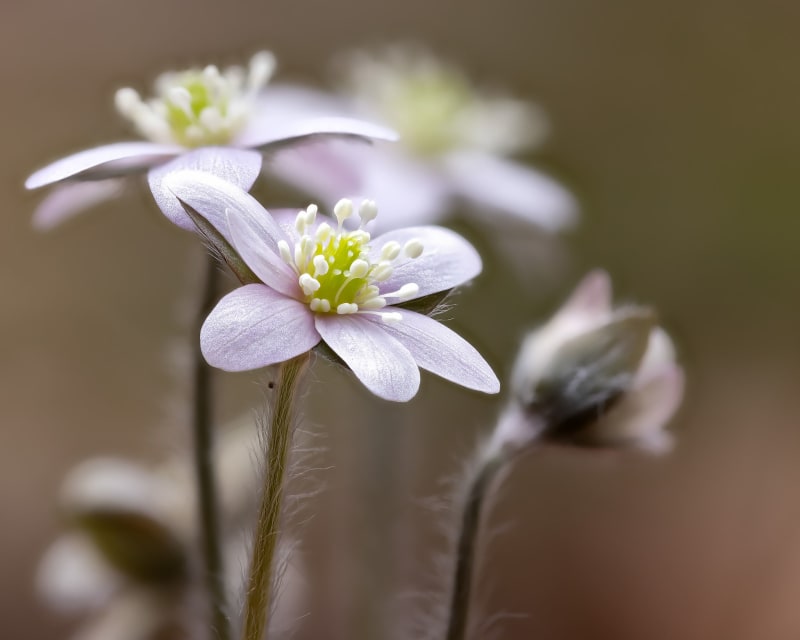
Hepatica
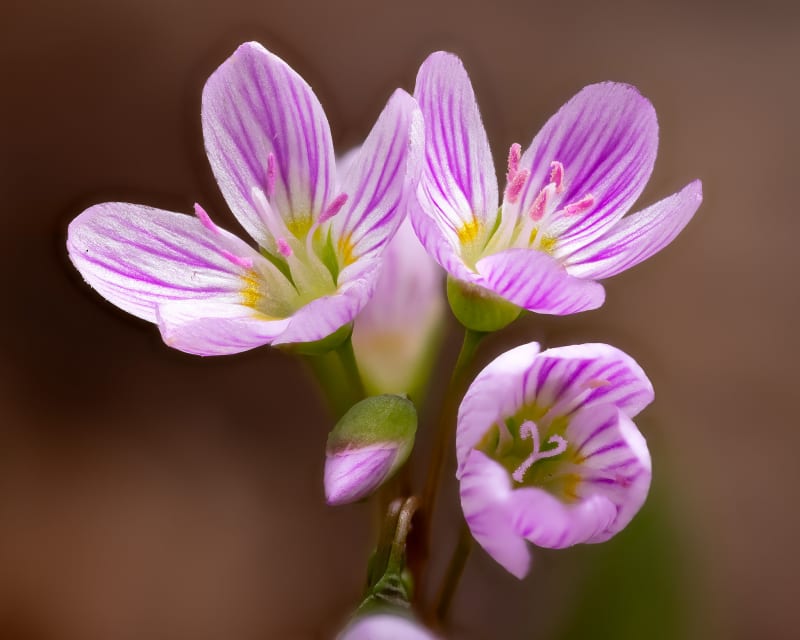
Springbeauty
The spring ephemerals are not alone on their mission to complete their life cycle in this short period early in the spring. They are joined by early emerging insects that help pollinate their flowers and distribute their seeds. Yet the insects actually seem more dependent on the nourishment from the pollen, nectar and fruit of the spring ephemerals than the ephemerals depend on the insects. Spring ephemerals often rely more on vegetative reproduction than pollination and they are very proficient at vegetative reproduction. Common insects reliant on the spring ephemerals include queen bumble bees preparing to start a colony (workers come later), mason bees, mining bees, syrphid and other fly species. Ants play a critical role for many spring ephemerals by aiding in seed distribution. Birds, mice, and box turtles, which are key dispersers of Mayapple (Podophyllum peltatum) also help move seeds, along with other wildlife species. This mutualism is one of many fascinating examples of coevolution filling a small niche in the ecology of Pennsylvania forests.
Spring beauties are typically the first of the spring ephemerals I see in my area. We have two species of spring beauties in Pennsylvania: Carolina Spring Beauty (Claytonia caroliniana) and the Virginia Spring Beauty (Claytonia virginica). The best way to tell them apart is by checking the leaves. Carolina spring beauties have broader more spatulate shaped leaves while the Virginia spring beauty has lance shaped leaves. Spring beauties are high nectar producers which attract many species of bees, flies and other pollinators. The seeds of spring beauties have a protein and lipid rich appendage called an elaiosome which is attractive to ants. The ants will take the seed back to their nest, consume the elaiosome and leave the seed intact where it will have a good start towards germination. Elaiosomes are a fairly common feature among the spring ephemerals. Spring beauties also have corms, a form of vegetative reproduction. Corms are underground, bulb-like modified stems that can be separated from the parent plant to give rise to new plants.
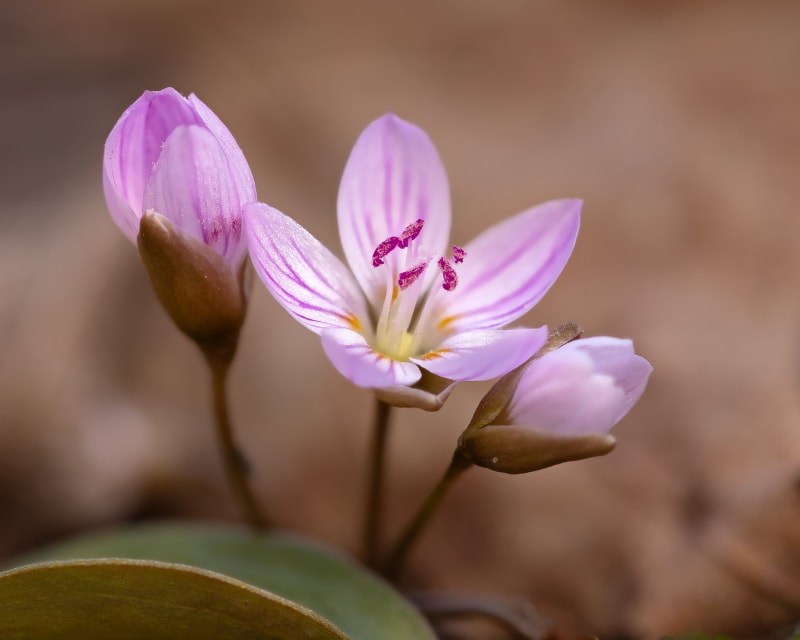
Carolina Springbeauty (C. caroliniana)
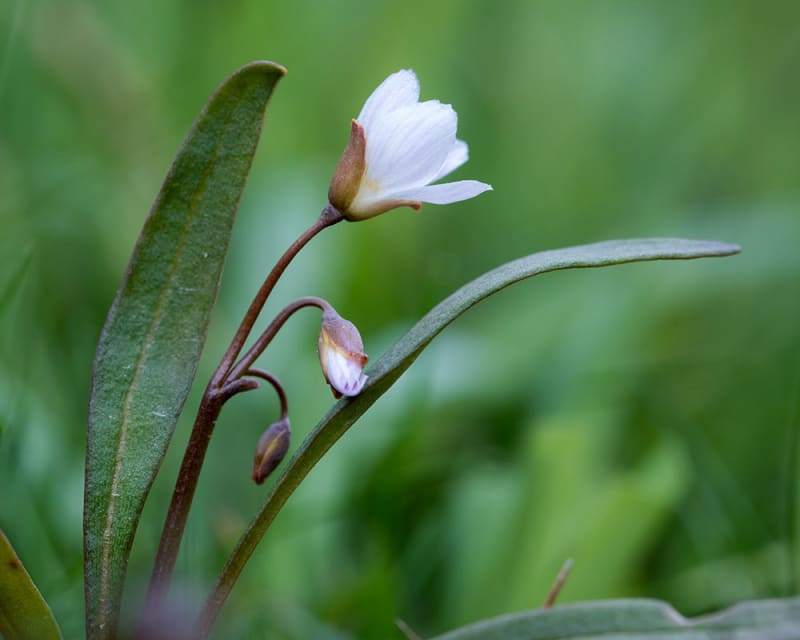
Virginia Springbeauty (C. virginica)
Like the spring beauties, hepaticas are early to bloom. Unlike the spring beauties and most other spring ephemerals, the flowers of the hepaticas will appear first followed by the leaves later. The leaves of the hepaticas are actually evergreen and will continue to photosynthesize until shortly before flowering the next spring when they will finally wither away. There are two species of hepatica in Pennsylvania forests: Sharp-lobed hepatica (Hepatica acutiloba) with pointed leaves and Round-lobed hepatica (Hepatica americana) with very blunt/rounded leaves. Hepatica flowers lack nectar (energy saver) but are still attractive to many early pollinators which are still interested in the pollen. To aid in propagation, hepaticas often self-pollinate which produces less seeds but is a valuable ability when filling a niche role in the ecosystem and contending with variable spring weather. Hepaticas also have rhizomes (vegetative reproduction) which are modified underground stems growing horizontally that can store nutrients and also send out shoots that will give rise to new plants at nodes. Year around photosynthesis, self-pollination and rhizomes set hepaticas up well for long term survival.
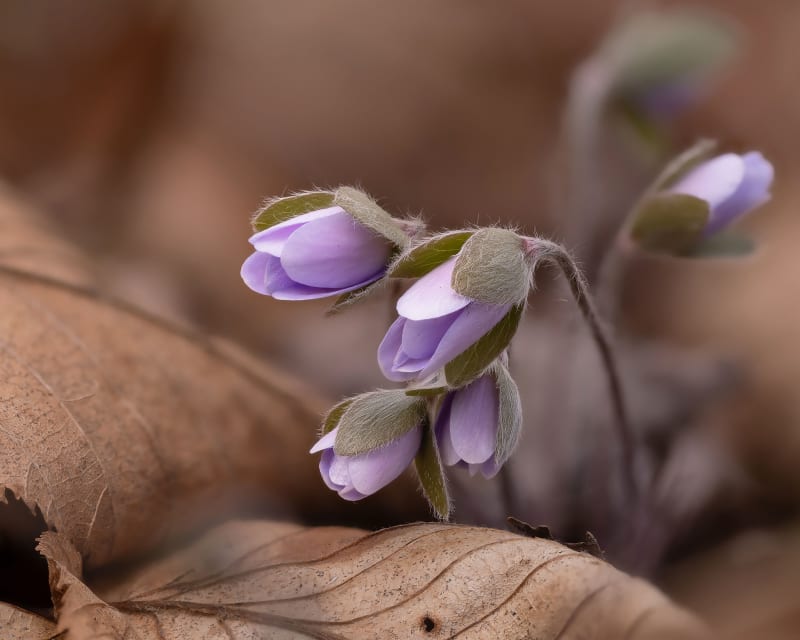
Roundleaf Hepatica
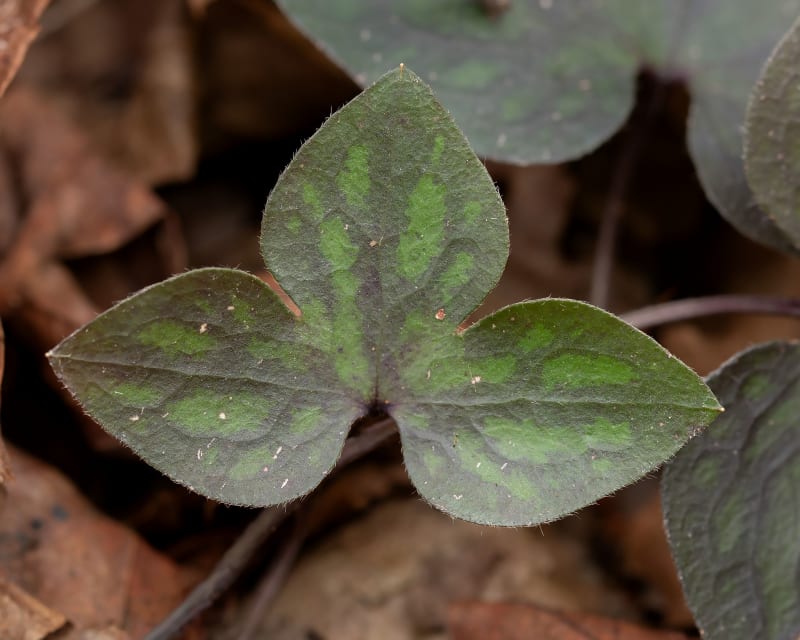
Sharp-lobed Hepatica
Yellow trout lilies (Erythronium americanum) are another fascinating woodland spring ephemeral. Their thick mottled leaves are easy to distinguish as they begin to emerge each spring followed shortly by a bright yellow flower. The flowers are high in nectar which is attractive to pollinators and they even have a miner bee (Adrena erythronii) that specializes in trout lilies. Yet trout lilies reproduce very little by pollination, even with their own specialist. Most of their reproduction is vegetative. Trout lilies have corms which will send out “droppers” - underground stems (stolons) that will form another corm at the tip to give rise to a new plant. This form of vegetative reproduction is so effective that trout lilies seem to be in no hurry to produce flowers, 4-7 years will go by before a new plant will flower. Some of the large colonies of yellow trout lilies you may come across could be hundreds of years old, and from little to no seeds.To help disperse the few seeds produced, trout lilies have the ant attracting elaiosomes on their seeds. There is a second species of trout lily in Pennsylvania - the white trout lily (Erythronium albidum) but it is extremely rare and only found in a few small areas of western Pennsylvania.
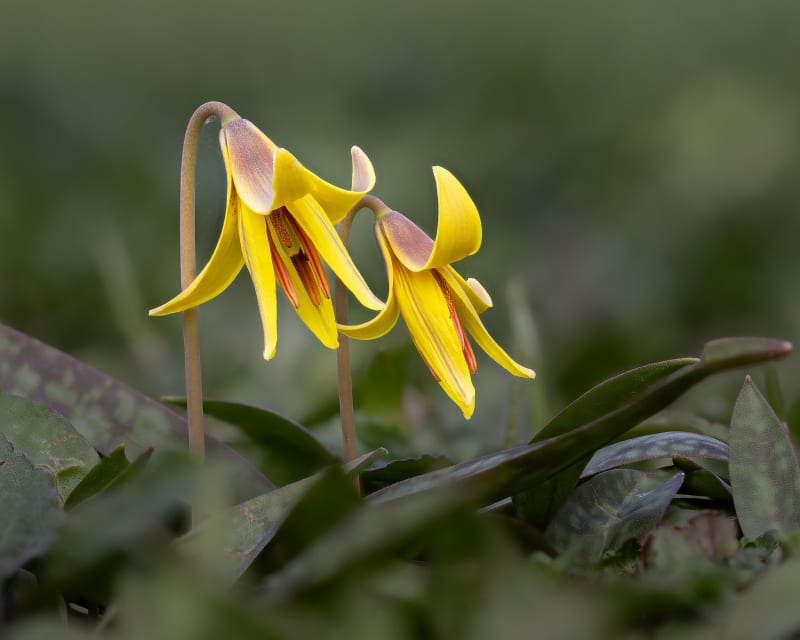
Yellow Trout Lily (E. americanum)
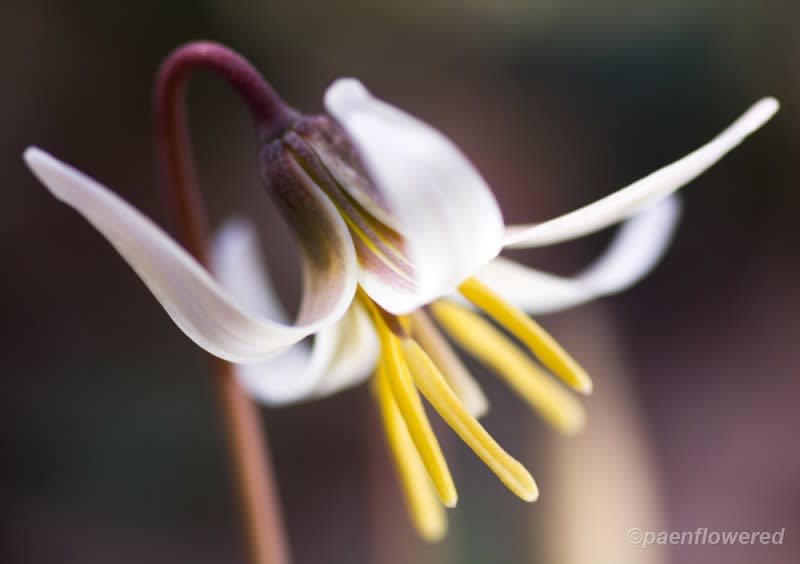
White Trout Lily (E. albidum)
The most unique looking flowers and probably the most amazing leaves of the woodland spring ephemerals belong to the genus Dicentra of which we have three species in Pennsylvania. Squirrel corn (Dicentra canadensis) flowers look like narrow, inflated, white hearts. Dutchman’s breeches (Dicentra cucullaria) flowers look like upside-down inflated white pants. Our third species is the wild bleeding heart (Dicentra eximia) which has pink, narrow heart shaped flowers which is very rare and endangered in Pennsylvania. All three of these species have deeply veined fern-like leaves which are soft to the touch.
Queen bumble bees are the main pollinator of dicentras. The queen bumble bees use their strong front legs to pry open the oddly shaped flowers and need to use their long tongues to reach the nectar deep in the flower. There are other species bees and wasps that will bite holes in the flowers to steal the nectar but by doing so they do not aid in pollination. All three species utilize vegetative reproduction. Squirrel corn has yellow tubers while dutchman’s breeches have pink tubers and the wild bleeding heart will propagate by rhizomes. The tubers and rhizomes, again, allow for the production of new plants with no pollination or seed production. The seeds produced by all three species have eliosomes for recruiting ants for dispersal.
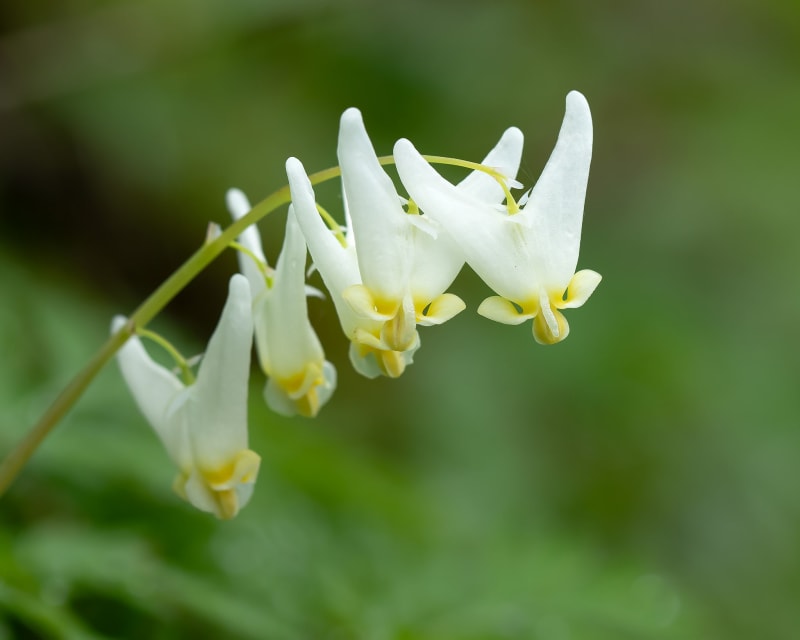
Dutchman's Breeches (D. cucullaria)
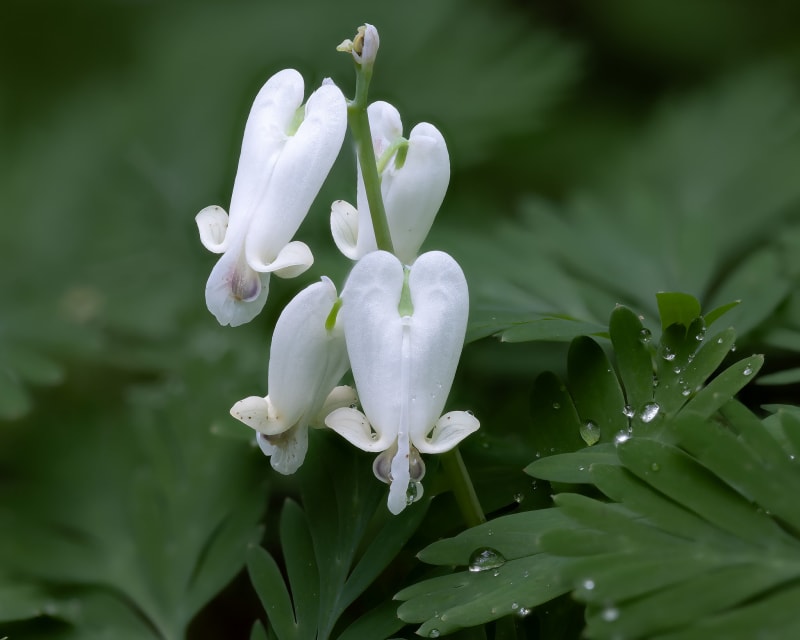
Squirrel Corn (D. canadensis)
Trilliums are another group of our woodland spring ephemerals. There are eight species of trillium in Pennsylvania, more if you include introduced species and hybrids. The most common species is purple trillium (Trillium erectum) although it has many other common names. The flowers of purple trillium are typically maroon and do not produce nectar but the plant does produce a foul odor giving it one of its other common names, stinking benjamin. The odor will attract typical pollinators like bees and butterflies but also carrion flies. Other trillium species are nectar producers and all trilliums produce seeds with elaiosomes attracting ants for seed dispersal. Trilliums are another group of plants that will reproduce vegetatively via rhizomes. Interestingly, trilliums do not have true stems or leaves. The leaves are actually leaf-like bracts and the stem is a scape (a flower stalk from the root).
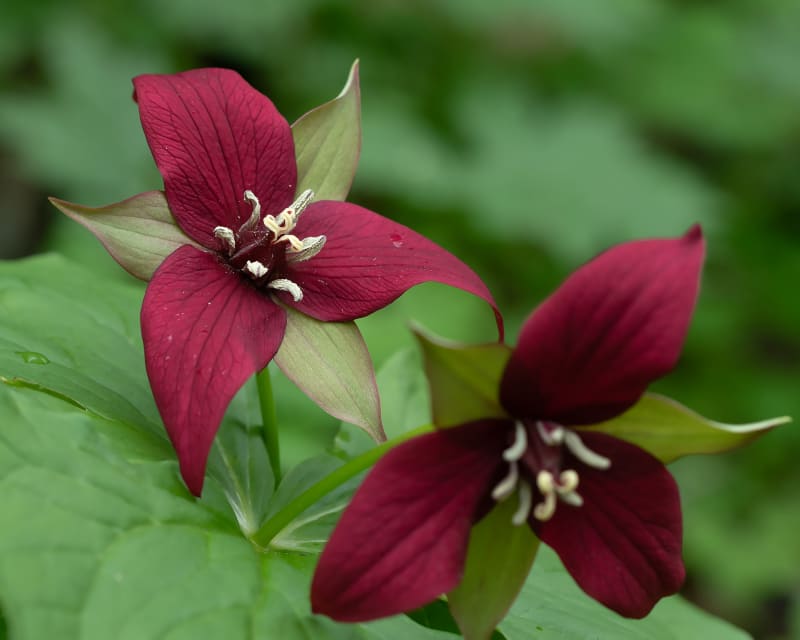
Purple Trillium (T. erectum)
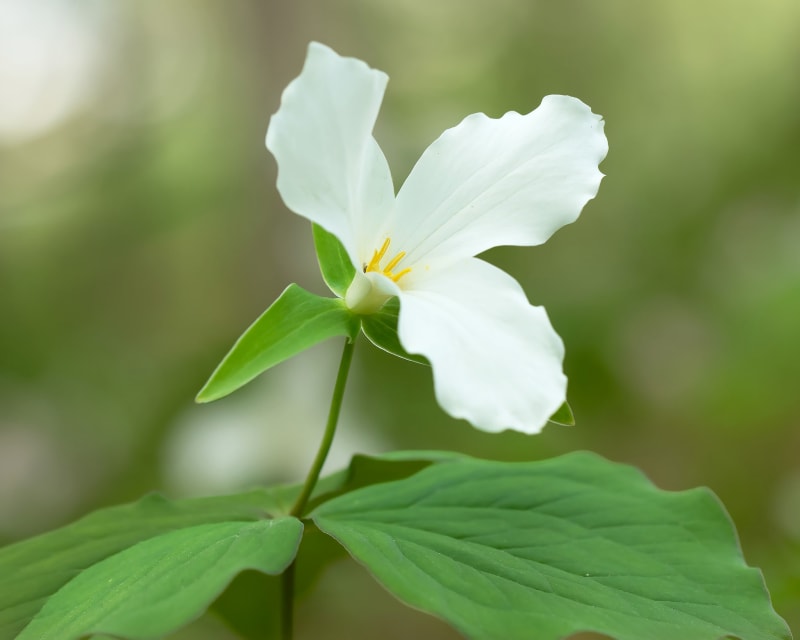
White Trillium (T. grandiflorum)
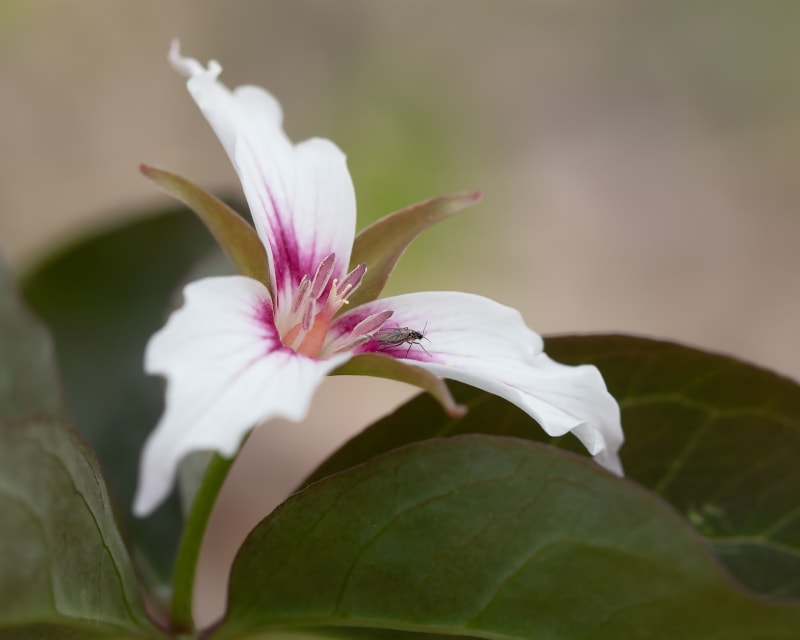
Pained Trillium (T. undulatum)
One current concern regarding the well being of the woodland spring ephemerals is the potential effects of climate change and a warming planet. There are three primary events involved potentially impacting spring ephemeral reproduction and survival: time of flower emergence, pollinator emergence, and tree canopy closure. The effects of climate change between the pollinators and plants has been well studied and the spring ephemerals and their pollinators are so closely connected that climate change does not seem to be disrupting their interactions. The timing of flowering and the emergence of the pollinators appears to be remaining in sync. Although as we have seen, the insects are potentially more dependent on the spring ephemerals for survival than the ephemerals are dependent on the insects. Integrating the third factor of early canopy closure has not been well studied at this point.
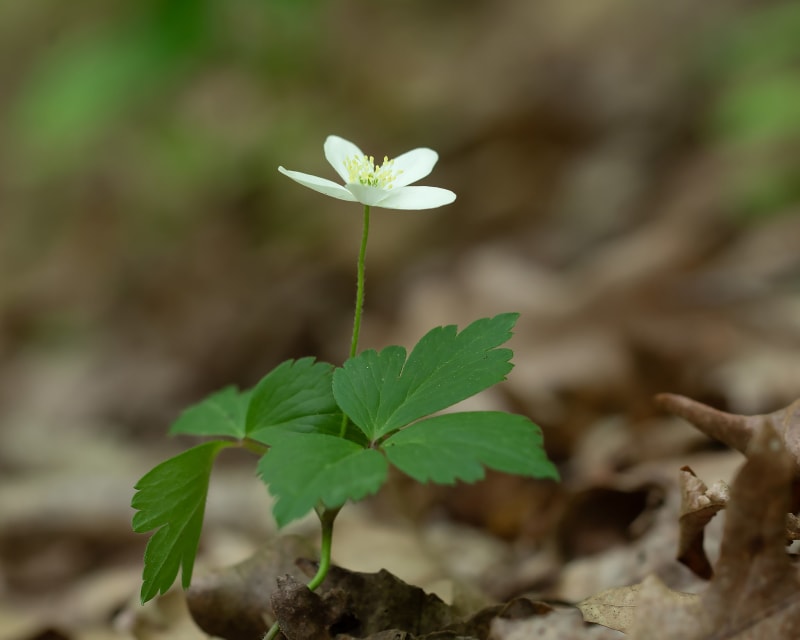
Wood Anemone (A. quinquefolia)
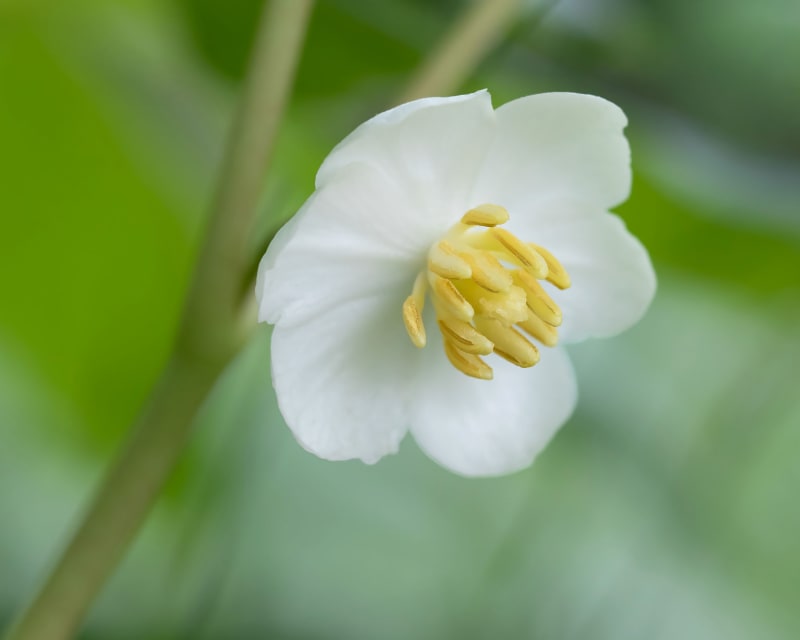
Mayapple (P. peltatum)
It has been shown that trees seem to be more sensitive to warming temperatures, leafing out and closing the canopy earlier with rising temperatures. Earlier canopy closure could potentially give the woodland spring ephemerals a shorter period of time to gather the energy from the sun needed for their growth, reproduction and nutrient storage. Many other factors come into play as well like the amount of winter precipitation, early spring precipitation, small differences in elevation can have significant impacts, and the degree of climate change can vary greatly over a region. There are also already natural variations of flowering times within species populations which could aid or hinder in survivability. Given the multiple strategies spring ephemerals have to thrive in their small niche of highly variable early spring weather, I am hopeful and confident that they can cope with climate change. The largest threat to any of our flora and fauna presently continues to be habitat loss, which can be influenced by the changing climate, but the physical destruction of habitat is still extremely difficult to overcome.
This has just been a small sample of the many woodland spring ephemerals that can be found in Pennsylvania forests.There are many other amazing spring ephemerals that can be found and I tried to at least give a glimpse into the lives of a few of the more common species. The more one looks into the details of how these amazing plants survive and propagate the more interesting and wonderful they become. I would encourage anyone interested in nature to go beyond simply identifying the plants, as I have always done, and take a look into their biology and how they fit into their particular ecosystem. It will be a fascinating journey.